
Art guide:
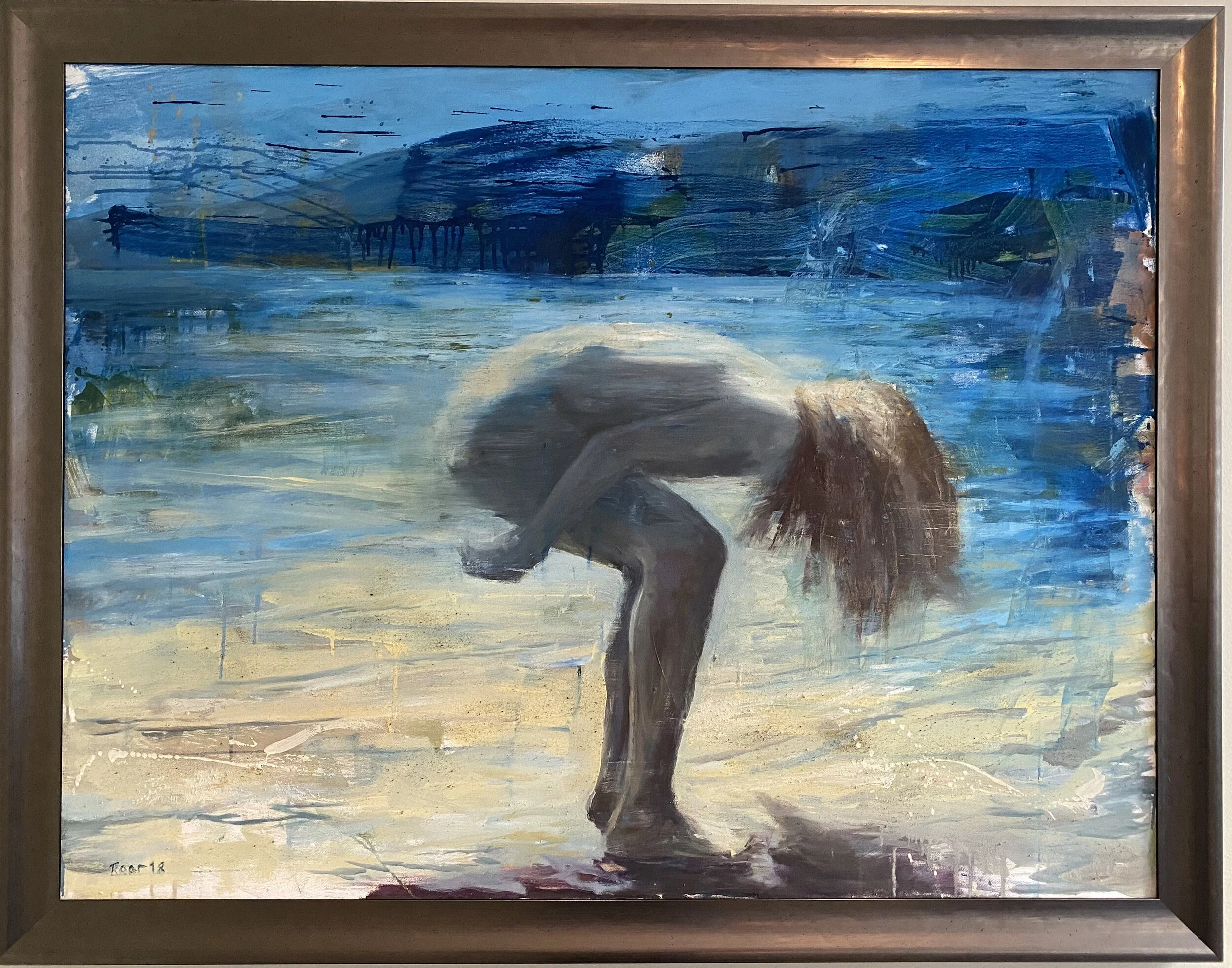
Roar Kjærnstad - Bathing Girl
Roar Kjærnstad is a Norwegian visual artist based in Stange, with a studio in Oslo affiliated with the Center for Free Arts. He works with oil painting, drawing, graphics and prints, in a classical figurative tradition with an emphasis on craftsmanship. Kjærnstad is educated at the Nansen School of Art and the Royal Art Academy in Antwerp.
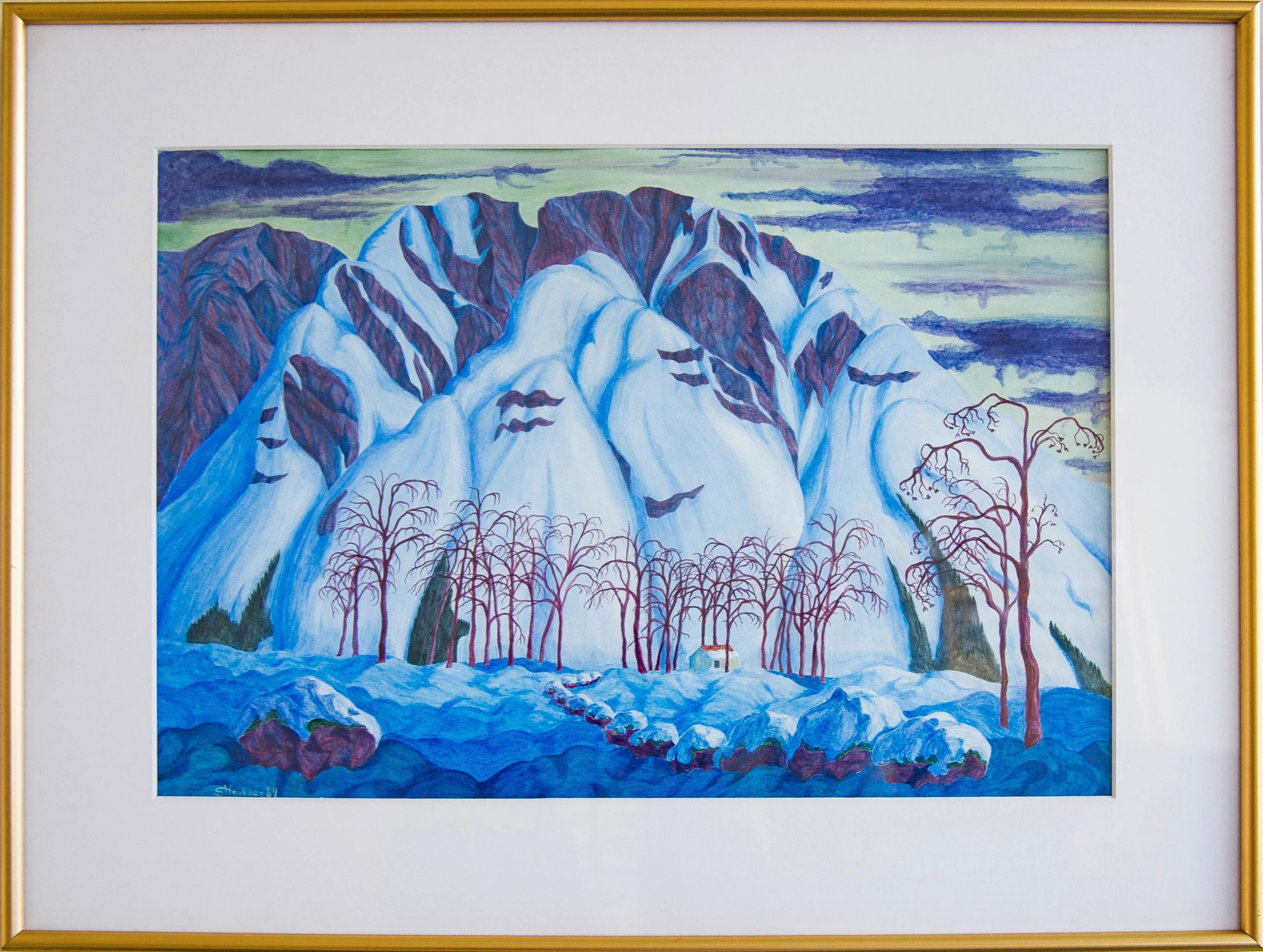
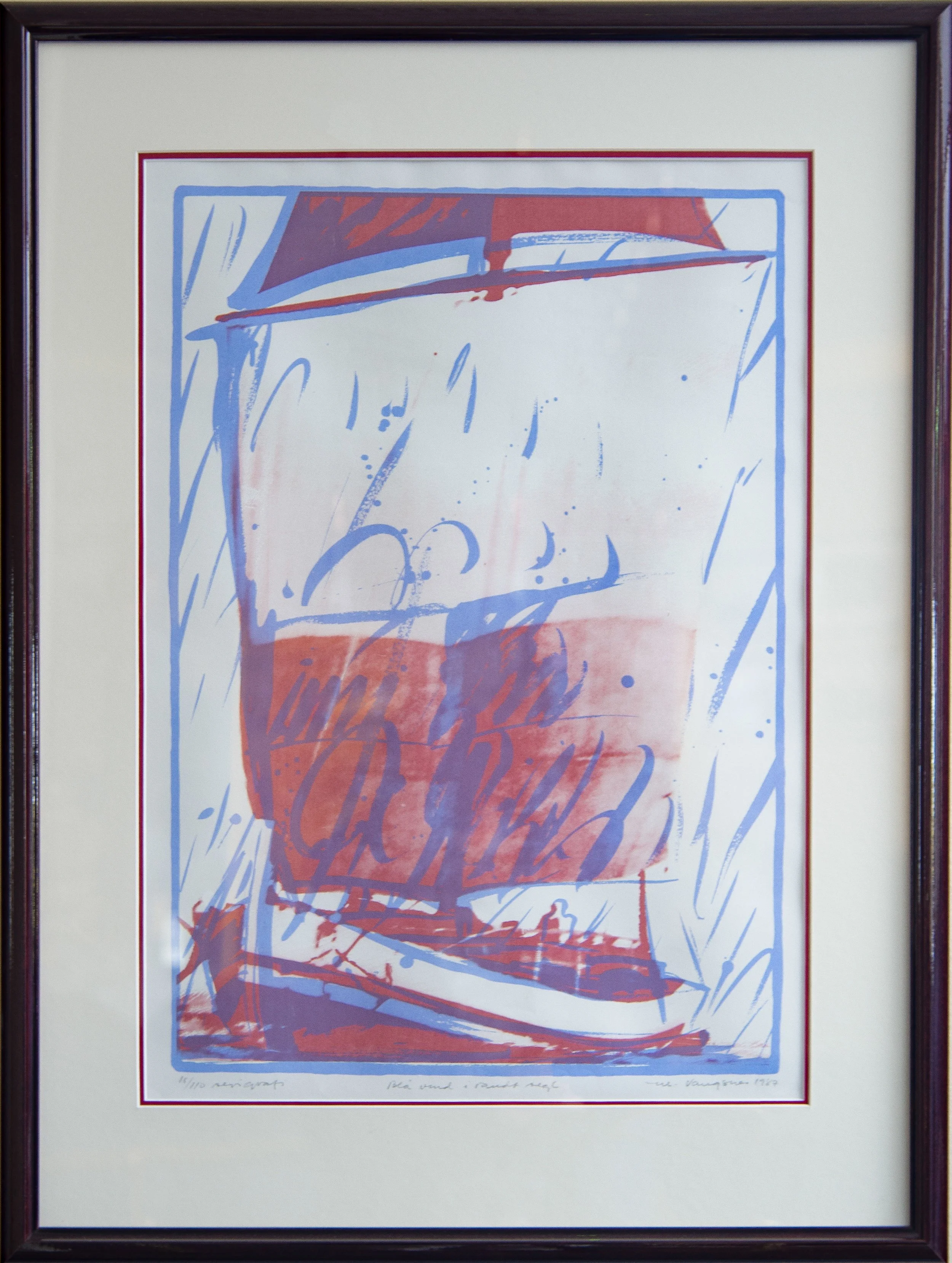
M. Vangsnes - unknown motive
Magne Vangsnes
Magne Oddvin Vangsnes, born 1945 in Vangsnes, is a visual artist who works with graphics, material images, land art and installations.
Trained as a teacher at Hamar Teachers' College and as a design teacher at Stord Teachers' College. Has also trained as an artist in Norway and during study stays in Germany and the USA. Debuted at the Vestlands-utstillinga in 1972, and has since been a frequent participant in this and the State Autumn Exhibition.
One of Magne Vangsnes's "land art" works: "Blue pear tree" in Leikanger.
He has had several solo exhibitions in the largest Norwegian cities and in Sogn og Fjordane, and has participated in a number of group exhibitions in Norway and abroad - including the USA, Germany, China, Denmark and Slovakia. His work has been purchased by the Norwegian Arts Council, Bergen Municipality's Art Collections and Sogn og Fjordane Art Museum. In Sogn og Fjordane he has had decoration assignments at the Medical School in Førde and at Årdalstangen Torg.
Among the material works, Ma's sculptural "breastplates" made of homemade paper have attracted attention, and in the field of "land art" Vangsnes Ma has carried out the project "Hes" at Fjærlandsfjorden in 1990.
Vangsnes was a co-owner of BK Sogn og Fjordane and of Sogn og Fjordane Kunstnarsenter, and has held board positions in both. He was coordinator of the large Environmental Art Week in Førde in 1989. He has been a board member of Norske Grafikere and a jury member for the Vestlandsutstillinga several times, and chairman of the jury for the Haustutstillinga 2002-2003. Director of the Sogn og Fjordane Art Museum 1999 -2001. Has held a three-year State work grant.
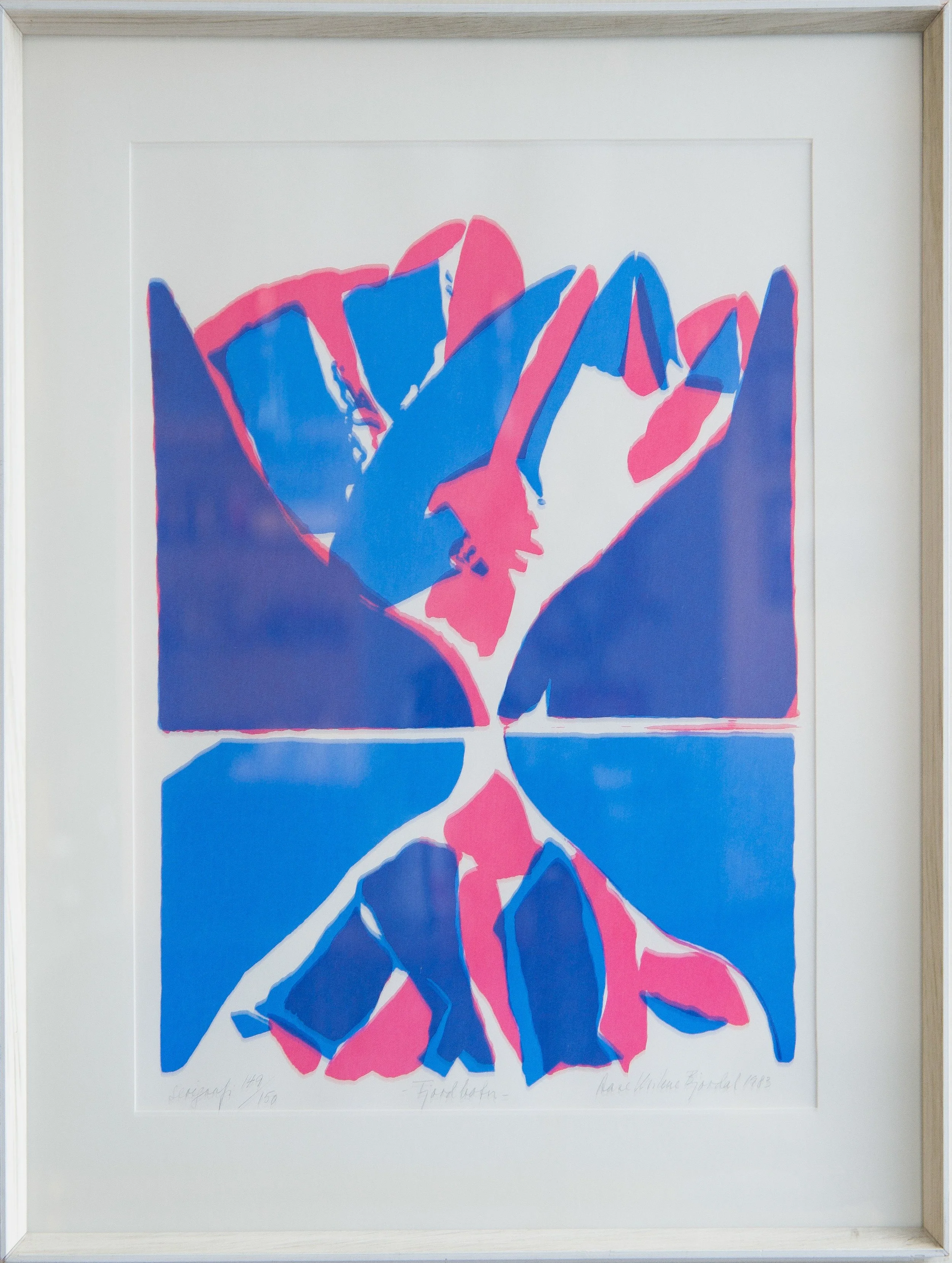
Aase Kvikne Bjordal - Fjordbotn
(1921 - 2009)
Bjordal was born and raised in Balestrand, and is the daughter of Sigurd and Marta Kvikne, who owned Kvikne's Hotel. She is educated at the State School of Crafts and Arts in Oslo, the Vestlandske kunstakade in Bergen and the Bergen kunstakadeskule. Bjordal finds her motifs in the old rural environment. Techniques such as cold needle, aquatint, etching and serigraphy are well suited to these motifs. She has done many decorative assignments, and has had many exhibitions.
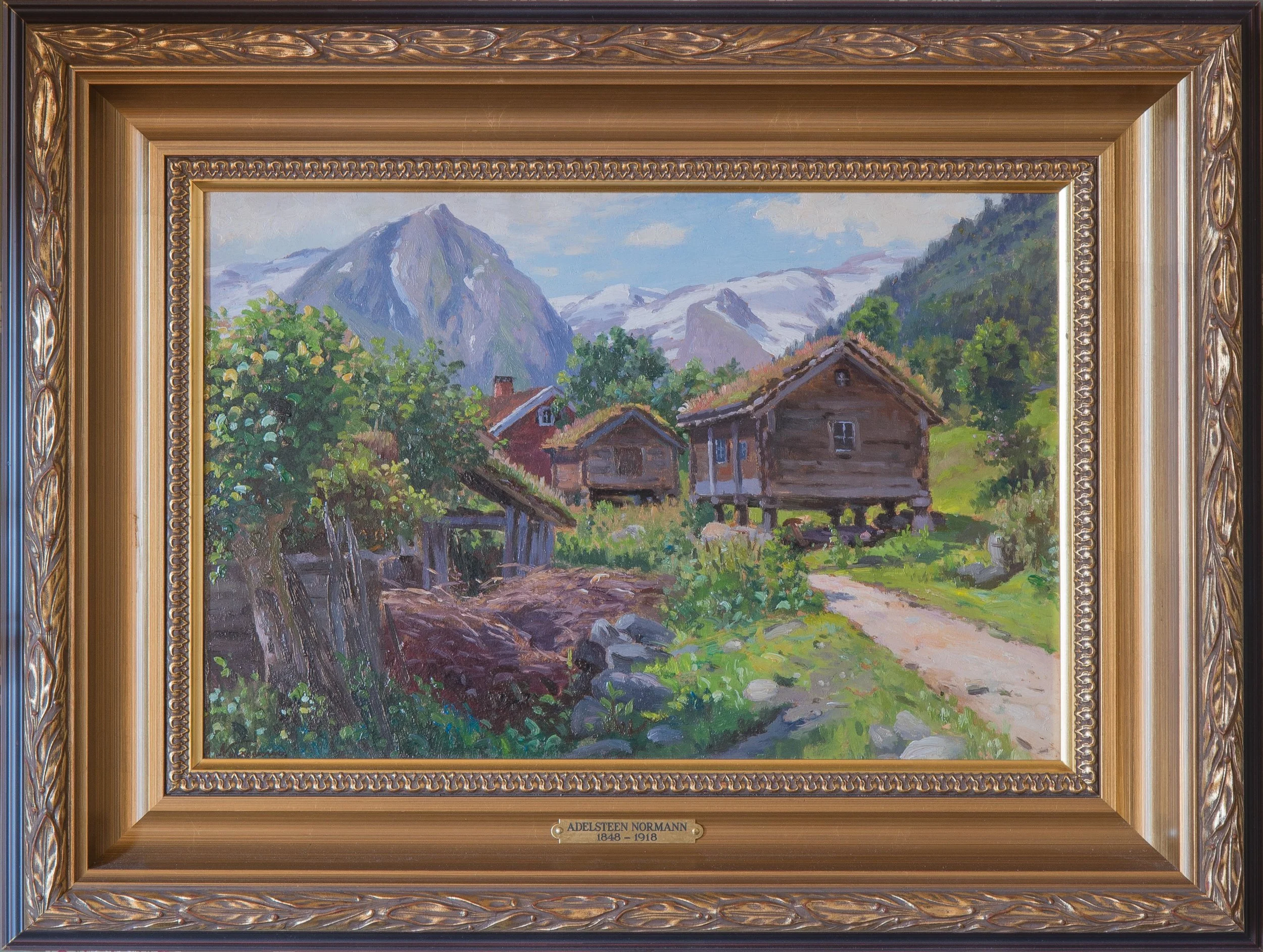
Adelsteen Normann - Tjugum against Esefjella
(1848 - 1918)
Eilert Adelsteen Normann (1 May 1848–26 December 1918) was a Norwegian painter. He was educated in Düsseldorf, Germany, and settled there. During the summer he traveled around Northern Norway and made sketches. He specialized in romantic fjord landscapes, often with a small steamboat or sailboat on a mirror-like sea. Normann was the first from Northern Norway to establish himself as a painter.
Normann was the son of a farmer and merchant on Vågøya in Bodin. After working as a journeyman for merchant Koch in Bodø, he traveled to Bergen and later Copenhagen to learn the trade. During his studies in Copenhagen, his interest in art took over. From 1869 to 1873, he studied at the Academy of Fine Arts in Düsseldorf, where he was greatly influenced by the tradition of his compatriot Hans Gude. He thus became a typical late Düsseldorfer. Normann also found a spouse and permanent address in the Rhine city, at a time when other Norwegian painters were seeking Paris.
With his background from Nordland, Normann specialized in Norwegian fjord landscapes. He found motifs especially in Lofoten and Northern Norway, as well as around the Sognefjord. On his study trips in Norway, he made sketches that he used to compose large-format landscape paintings. His fjord motifs are often characterized by steep mountains over sunny fjords and sea. Light played a major role in Normann's paintings; he was one of the first Norwegian painters to use the midnight sun as a motif. He is said to be the originator of the term "land of the midnight sun". His paintings became very popular with the German art public.
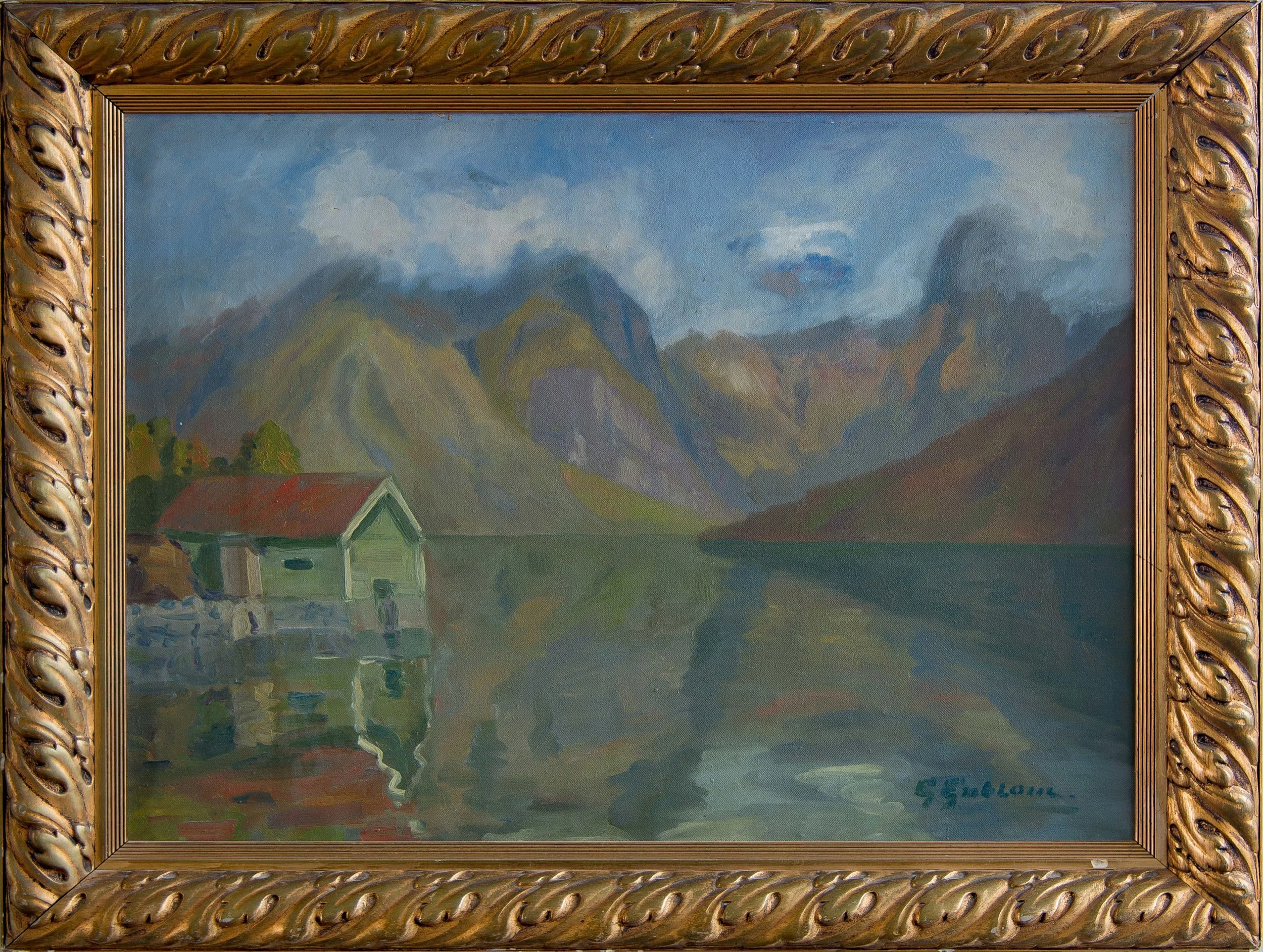
Einar Enblom - From Fjærland
(1900-1936)
Emblom was Swedish, and was born in Stockholm. Despite his Swedish origin, it is correct to call Emblom "Balholm painter". We know that Emblom stayed in Balestrand for long periods. He was, among other things, a good friend of Sigurd Kvikne d. e., and was called Uncle Einar by the Kvikne family. He was in Balestrand in the summer, and in Switzerland in the winter. Emblom died in Switzerland at only 36 years old.
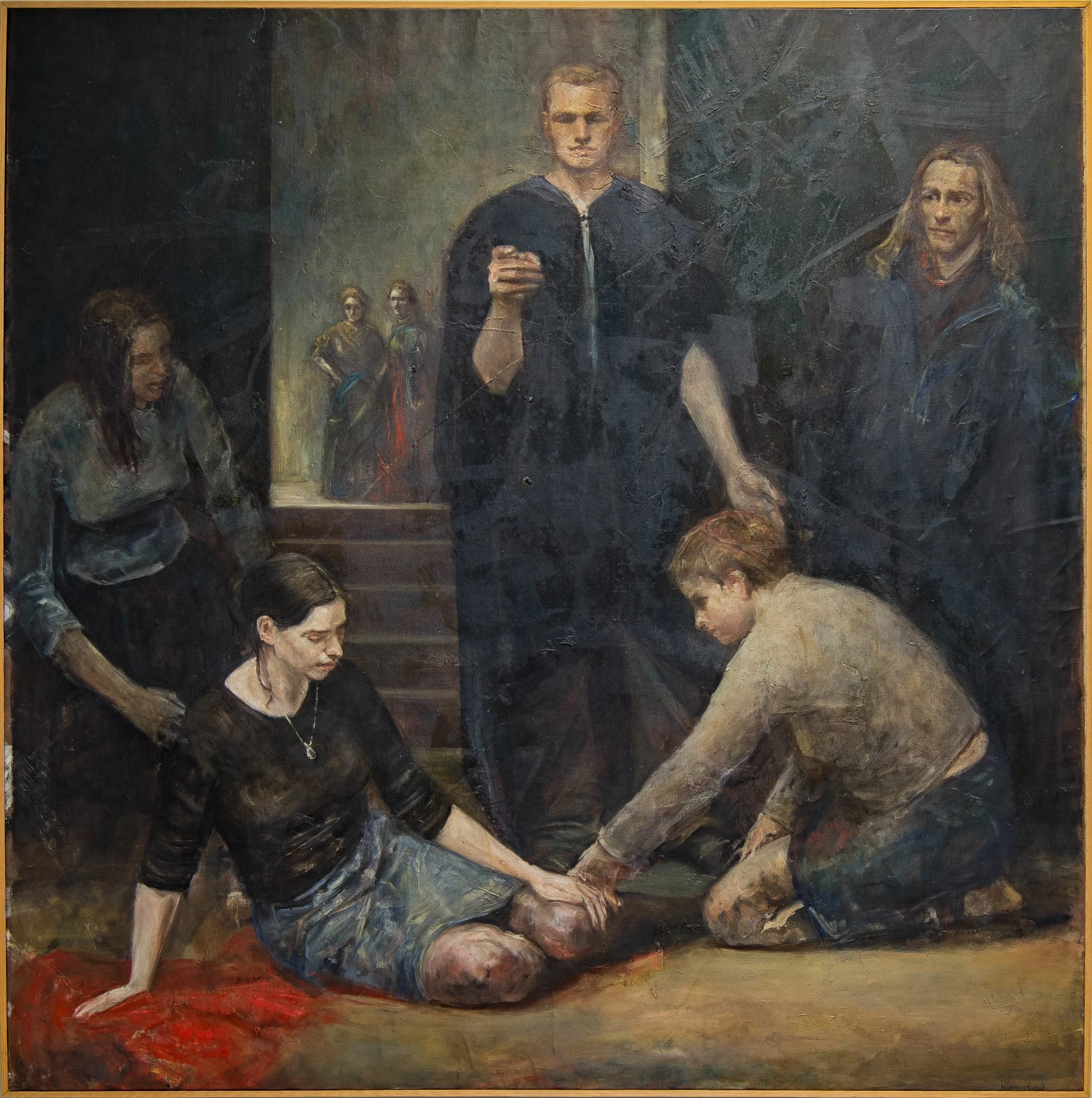
Roar Kjærnstad - The Judgment
Roar Kjærnstad is a Norwegian visual artist based in Stange, with a studio in Oslo affiliated with the Center for Free Arts. He works with oil painting, drawing, graphics and prints, in a classical figurative tradition with an emphasis on craftsmanship. Kjærnstad is educated at the Nansen School of Art and the Royal Art Academy in Antwerp.
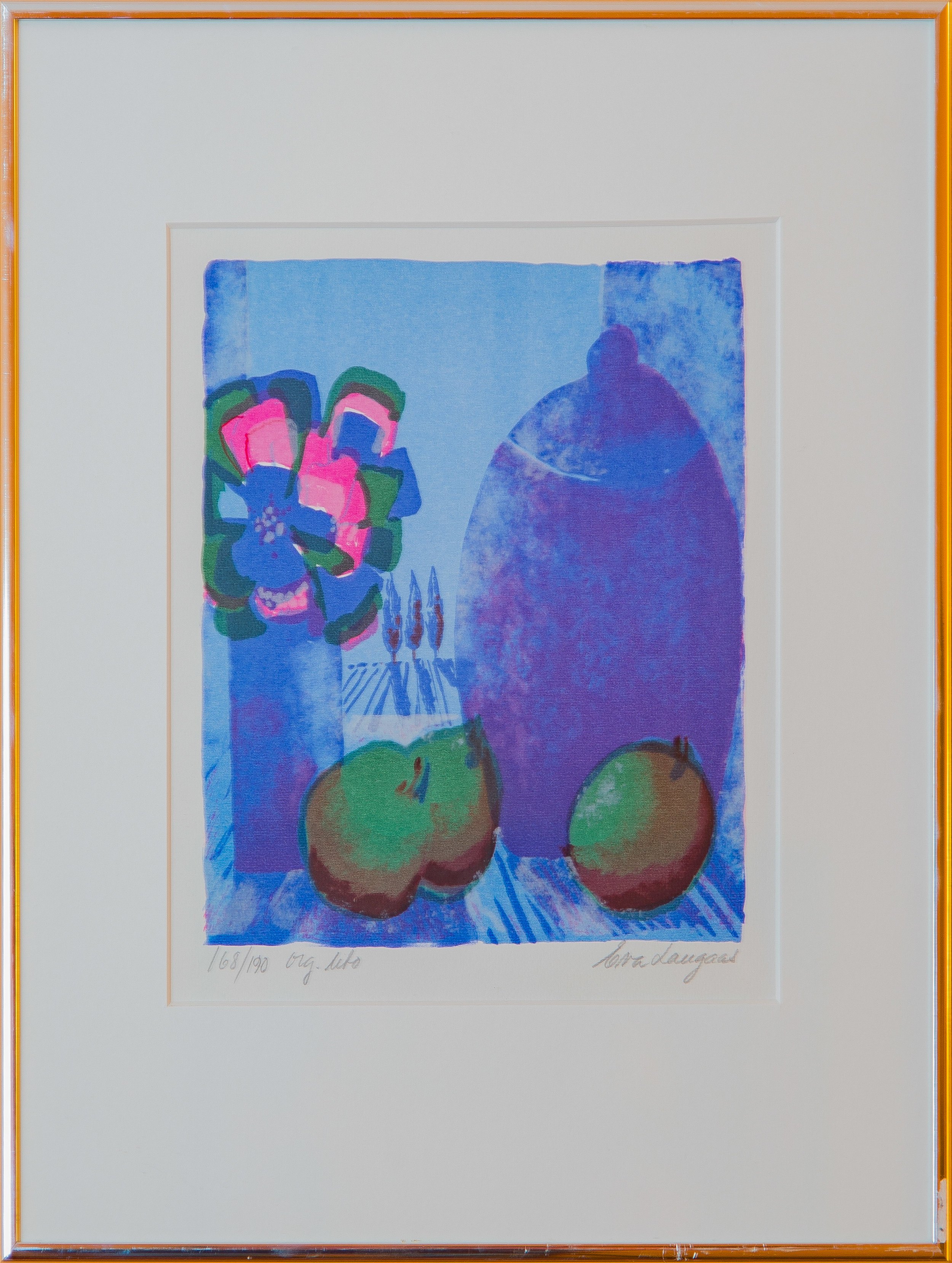
Eva Langaas - unknown motive
Eva Langaas (1940 - 2016) was an artist with international appeal and whose graphics are characterized by sensual forms in lush color play. Langaas was originally trained as a textile artist, but many years of heavy physical work in the textile profession contributed to her starting to work with graphics and paintings. Her lithographs nevertheless bear traces of a textile artist.
Langaas had a charisma and an ability to create well-being around her, which is reflected in her colorful lithographs. The motifs and color surfaces provide room for reflection, and to go on a journey of discovery in space. Her nature pictures are dramatic and lie on the border between the abstract and figurative, often with elements of well-known symbols. Eva Langaas debuted at the autumn exhibition in Oslo in 1972 and had her first solo exhibition at the prestigious gallery in Helland Kungsträdgården in Stockholm a few years later. She has also had exhibitions in Rome, Geneva, Singapore, New York and Paris.
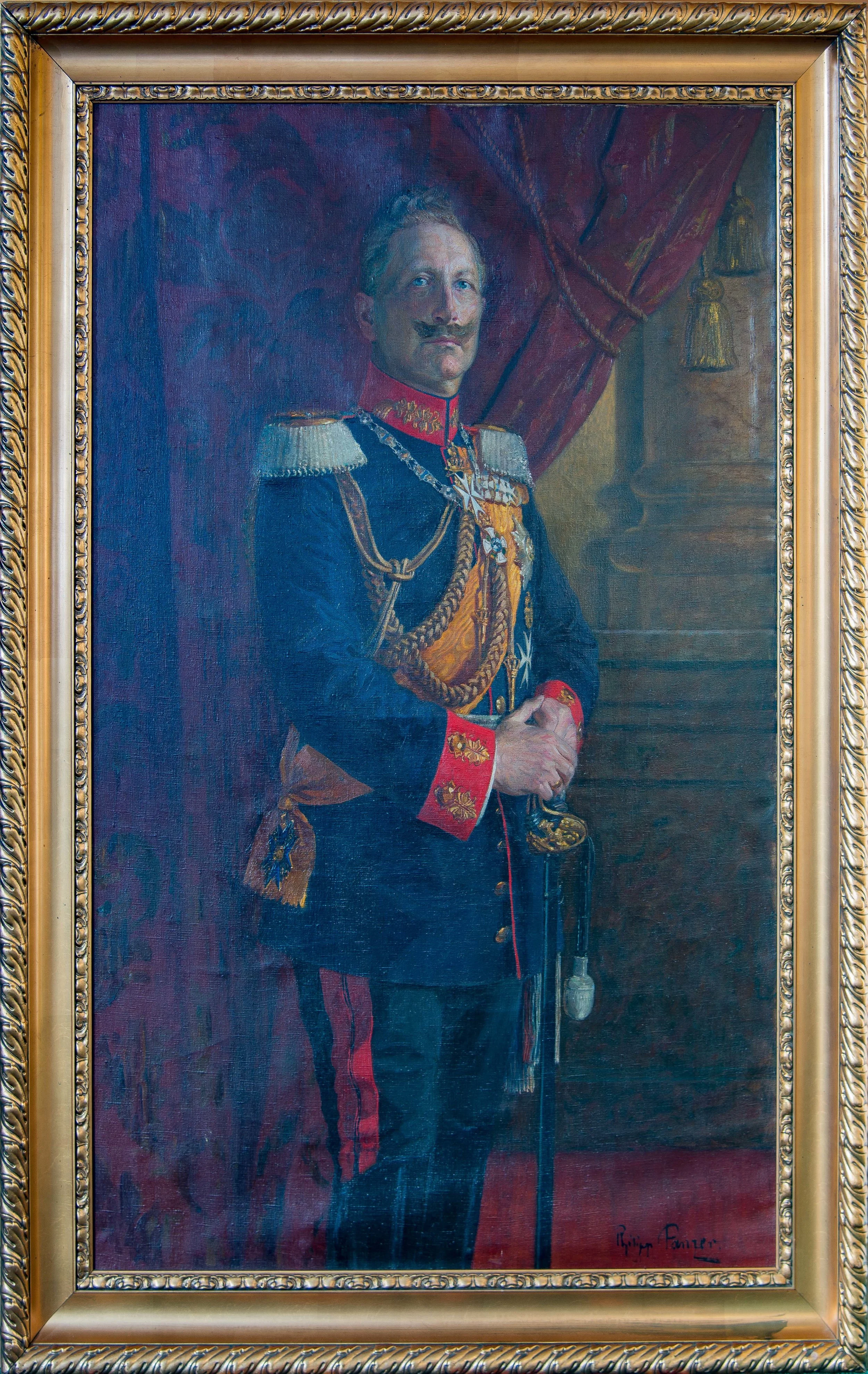
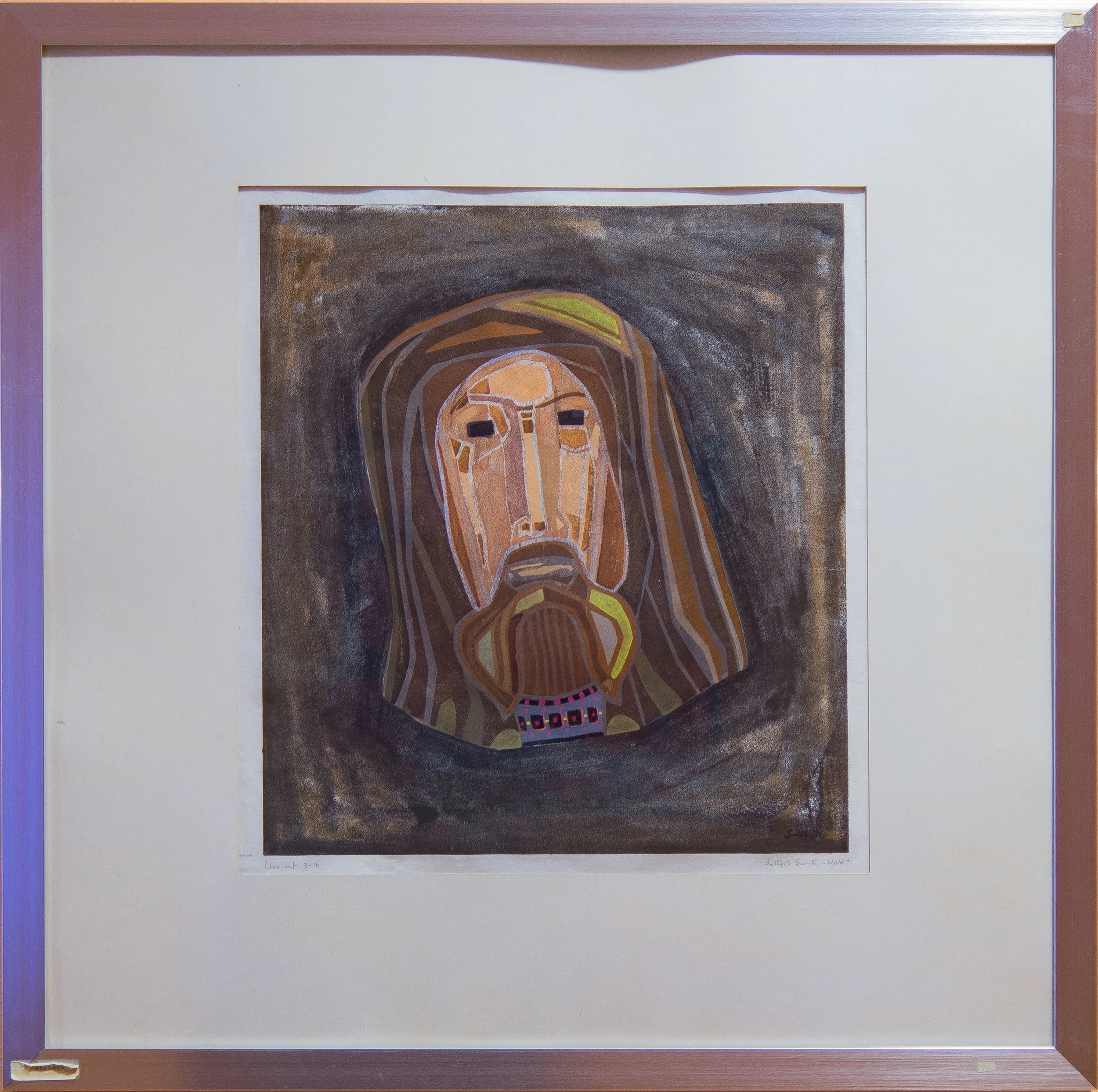
F. Smith-Hald
Frithjof Smith-Hald
Girl with a carriage and a pretzel. Frithjof Smith-Hald. 1887. Digitalt Museum Dag Andre Ivarsøy/National Museum. Reproduced with permission
S.-H. began to use both of his parents' surnames early on. He was to become a businessman, but soon decided on an artistic career and received his education at the Drawing School and JF Eckersberg's Painting School in Kristiania 1865 - 70. Christian Skredsvig has given an enjoyable portrayal of him during these years. Then followed studies in Karlsruhe and Düsseldorf 1871 - 78. A visit to Paris just after New Year's 1876 opened his eyes to the new French art, and S.-H. moved to Paris in 1878, where he readily adopted French salon realism with its gray-toned value painting and folk motifs. S.-H. often obtained these from Norway, and he preferred to paint beach and seascapes with staffage of fishermen and sailors. He often painted atmospheric pictures with moonlight and sunsets in summer and winter. He obtained other motifs from the French and English Channel coasts. These pictures became very popular, and in the early 1980s S.-H. represented Norwegian landscape art almost alone at the Paris Salon, where he participated annually. He received favorable criticism from French art critics and was purchased by a number of the country's museums, including some German and Dutch ones. Thus, the museum in Lille acquired Steamship Station in Norway (1880), The Hague Winter Evening by the Sea (1882), Reims Summer Night in Norway (1888), Rouen Garnrensning, Louvre, Paris The Old Fishing Net, La Rochelle Garnet, Bordeaux October Evening in Norway, Montpellier Home from Work. Other works came to Boulogne and Le Havre, to German collections, e.g. in Cologne (Home from Fishing, 1880) and Danzig and to the Agnew Gallery, London (Morning in Cornwall and Anxiety). S.-H. also sold to large private collections in Paris, London and the USA. In Norway, there are relatively few works by S.-H., a good deal was destroyed when his son's house in Bergen burned down.
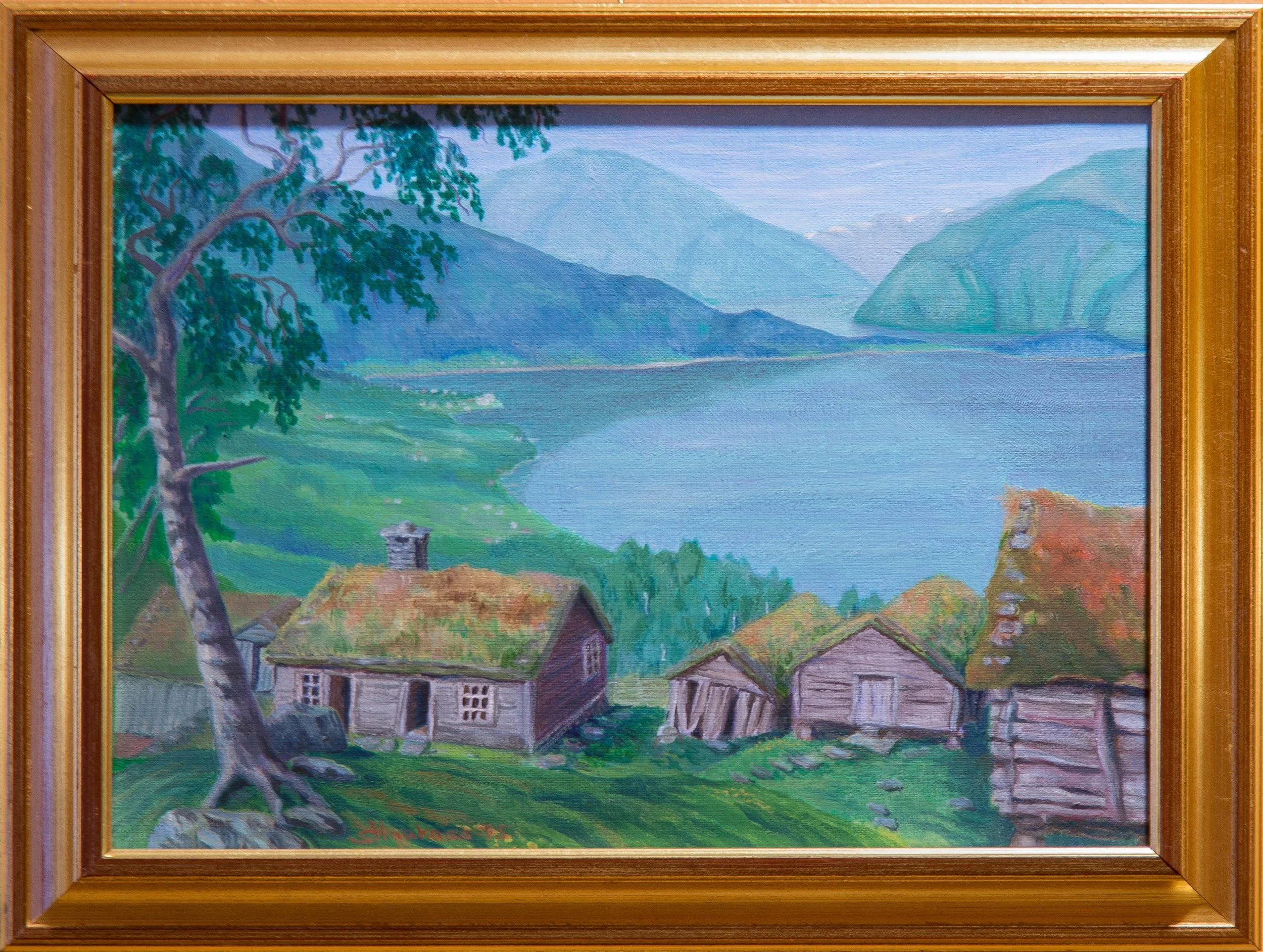
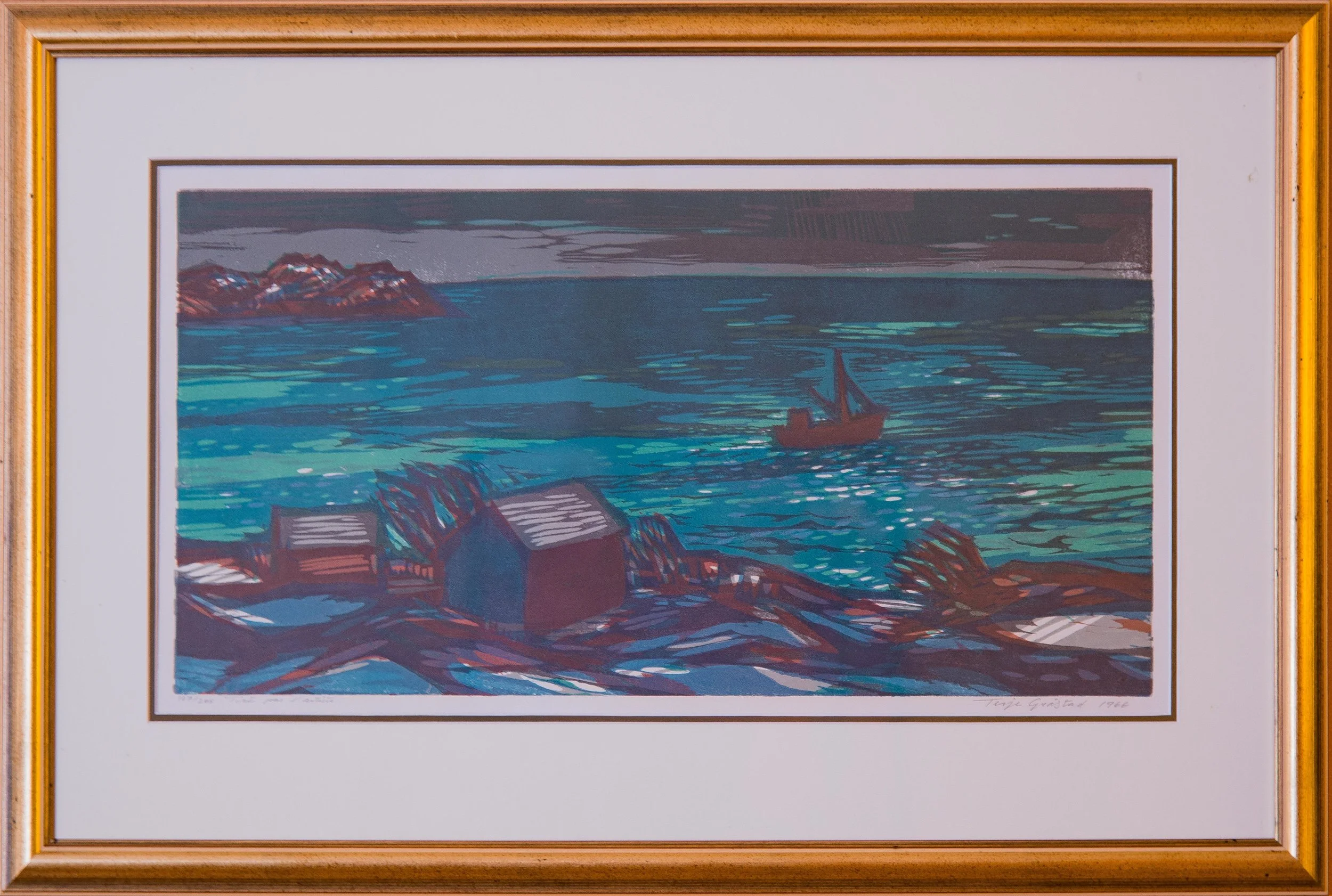
Terje Grødstad - unknown motive
Terje Grøstad was a Norwegian graphic artist from Seljord in Telemark. His father was a bookseller, and Terje Grøstad grew up in Drammen. The family settled in Oslo in 1945. That same year, Grøstad became a student at the Norwegian School of Crafts and Art and Design under Karl Høgberg.
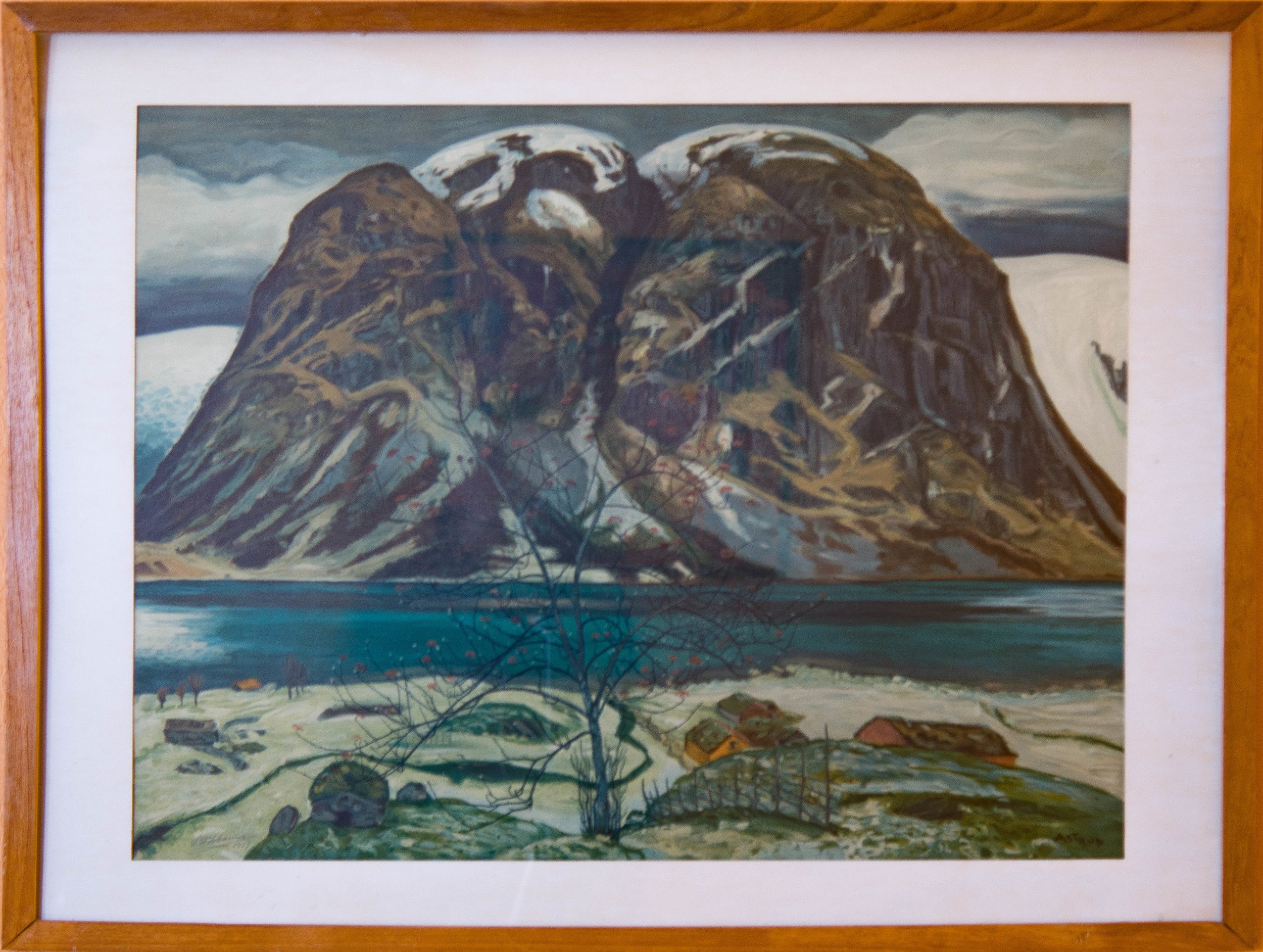
Astrup - unknown motive
The painter Nikolai Astrup worked from around 1900 to the late 1920s. He lived and worked in Jølster in Sogn og Fjordane, the village where he grew up, and his paintings and graphics are strongly influenced by nature and the rural environment. He developed a rich and personal art with a coloristic style, marked by a mystical and emphasized experience of nature. The painting of a midsummer bonfire from 1902–12 is among his best-known works. His home, Astruptunet south of Jølstervatnet, is now a museum.
He was a student of Harriet Backer 1899–1901 and the following year of Christian Krohg in Paris. Apart from brief trips to England, Spain and Algeria, Astrup lived from 1905 until his death on his farm in Jølster.
In intimate interaction with nature and the distinctive rural environment, Nikolai Astrup created a colorfully rich, strongly personal art, filled with a mystically emphasized, almost pantheistic experience of nature. A deep romantic tone characterizes many of his early works, such as Vårkveldsol (1902) and the various editions of Jonsokbål, from the years 1902–12.
This painting is a posthumous reproduction of a painting that can be found in the Rasmus Meyer collections, at Kode in Bergen. You can read more about the original in their digital catalog: Nikolai Astrup, Kollen, Oil on canvas, 1905 - 1906. Rasmus Meyer collections, Kode Art museums and composers' homes.
Astrup's art is particularly well represented in the Bergen Art Museum, where a very extensive collection of paintings, drawings and prints is on long-term deposit by the DNB Savings Bank Foundation. Astrup is also represented with a number of key works in the Rasmus Meyer Collections. Later, his art became lighter in tone, often lyrically dreamy as in the many spring evening paintings and lush green summer landscapes. They often have a certain naive feel, partly inspired by Henri Rousseau.
Astrup was a pioneer in his color woodcuts. They are available in many color variations, often retouched with a brush: Bird on Stone, Fox Bells, Soleinatt, Plognatten and Kvennagongsvatten. Astrup illustrated HE Kinck's Vestlandsnoveller (published 1942).
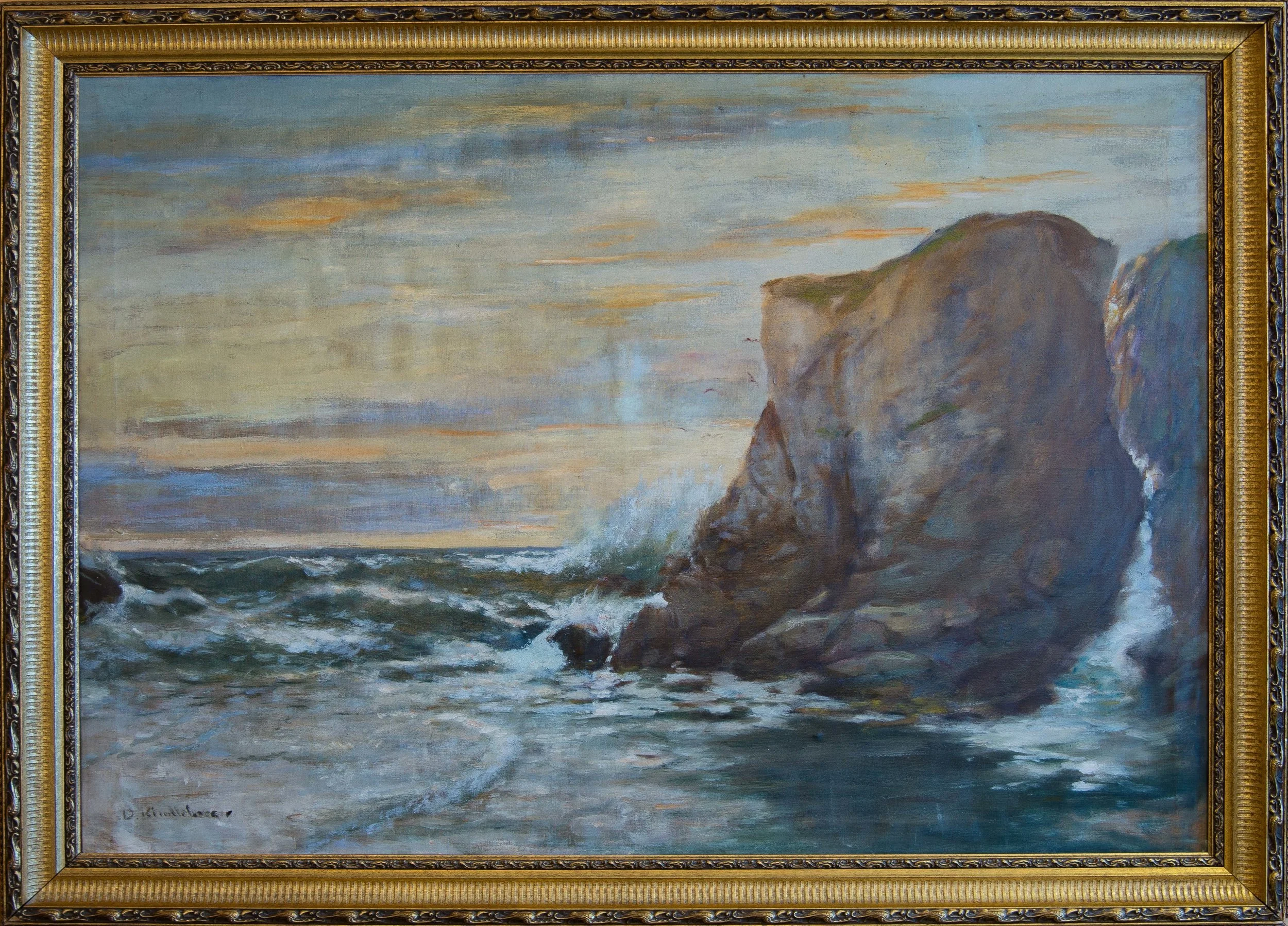
Kindelberger - unknown motive
David Kindleberger (1834-1921)
American naval doctor and hobby painter who settled in Balestrand in the 20th century. David was born in Smithville, Oregon. After studying at Wittenberg College, he joined the USN in 1859 as a naval doctor. He had a long military career, and even after he retired he held several positions in the American Medical Service, including chief of the US Naval Hospital in Philadelphia and chief of the Naval Hospital in Guatemala (1914). There is little information given that Kindleberger was a painter, but for Balestrand he is best known as a painter. He naturally fell in with the other painters who built dragon-style villas here. He was not a great painter, but at his best he could create great works of e.g. Balestrand.
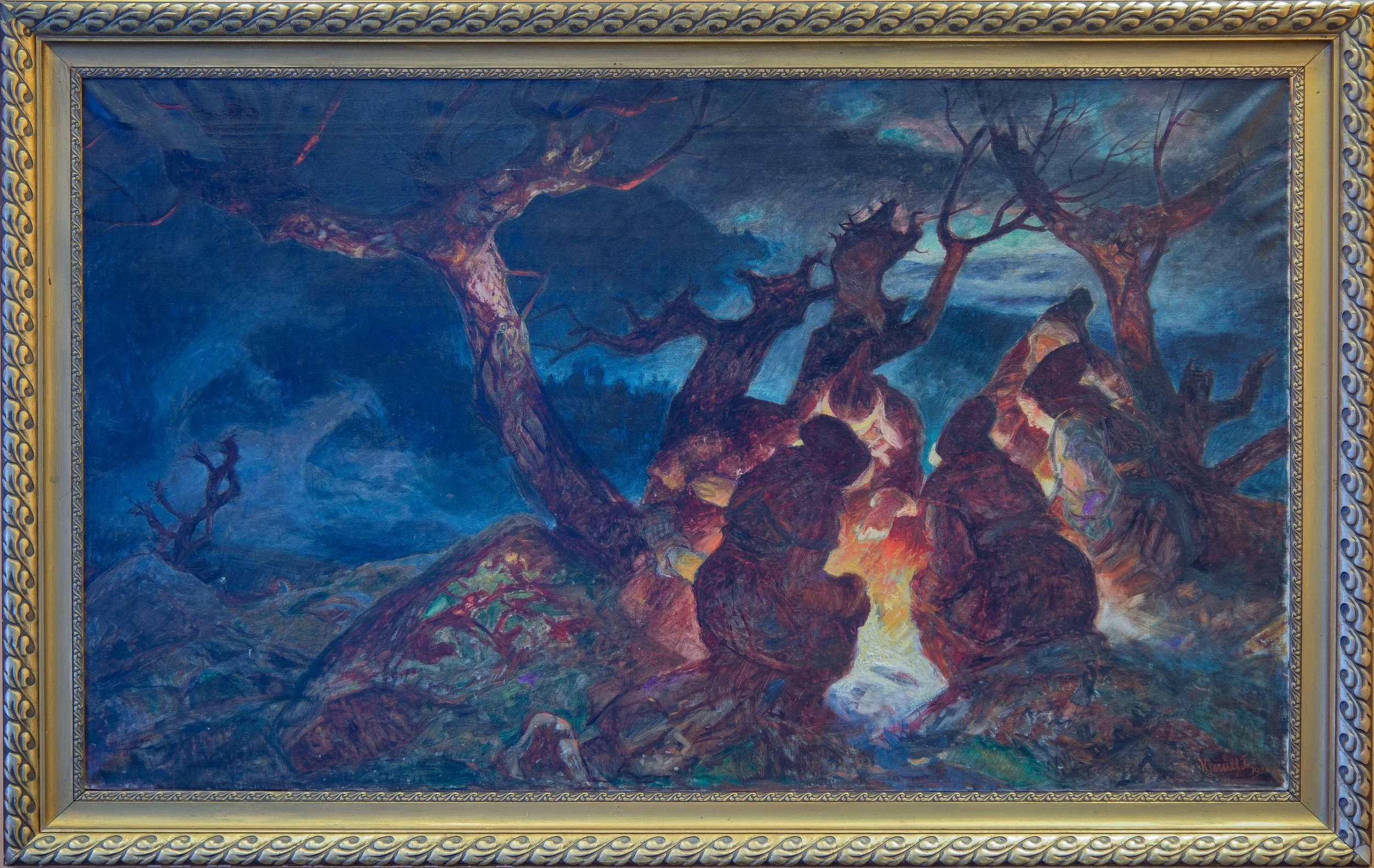
Kjerulf Tranås - The Pig House
Tranås grew up in Førde, lived most of his life in Stryn, Nordfjord, and spent his last years in Lillehammer. He was a multifaceted talent, was considered a promising painter as a young man, and wrote three books in the years 1900-10. During his stay in Copenhagen, he gave a number of lectures in student societies and artists' associations. Tranås painted several dramatic figure compositions (Too Late, 1905, and Jernbyrden, before 1920), and a number of landscape motifs from Nord- and Sunnfjord, in which he alternated between a distinctive romantic mysticism and quiet and sensitively perceived nature studies.
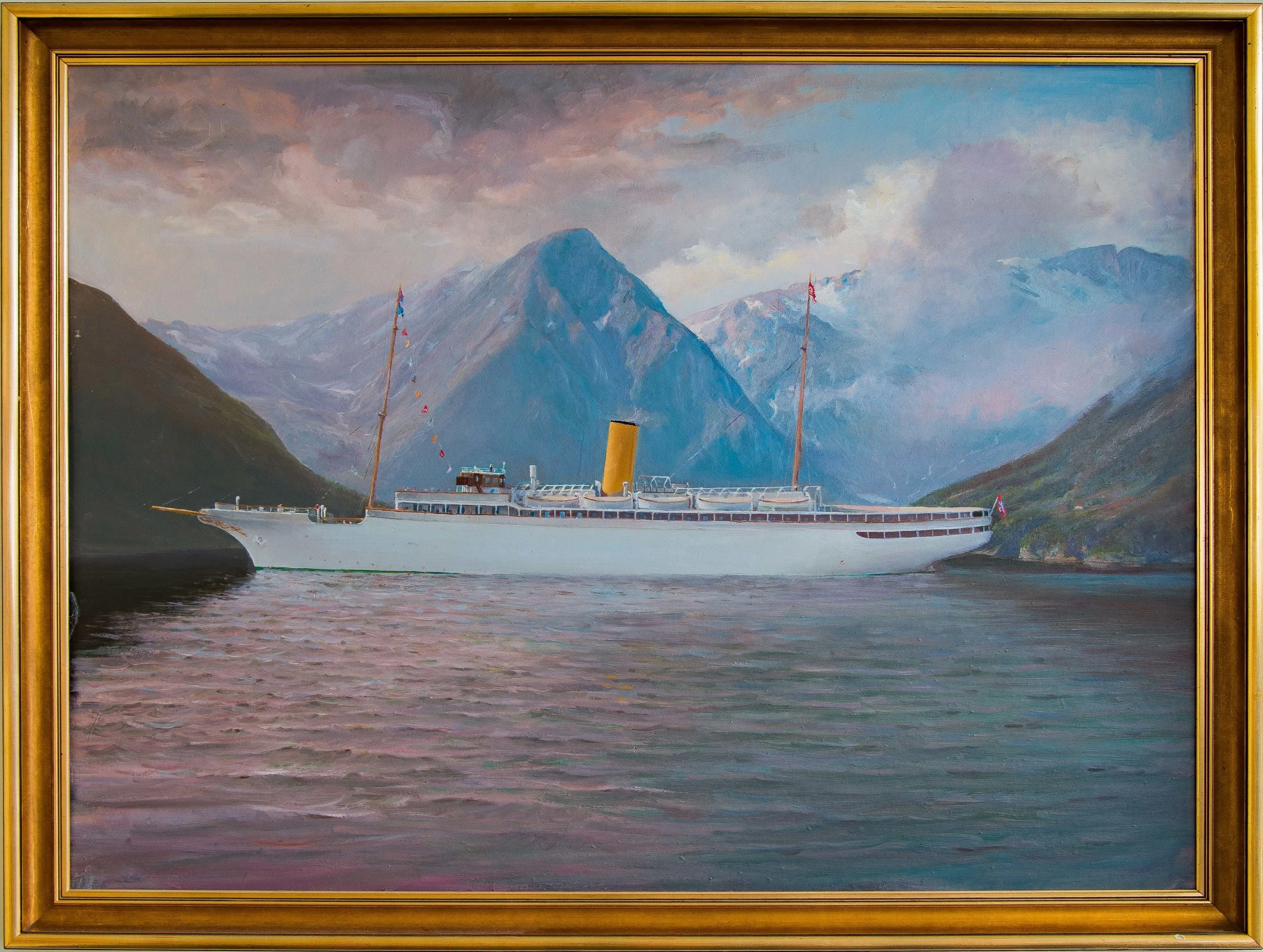
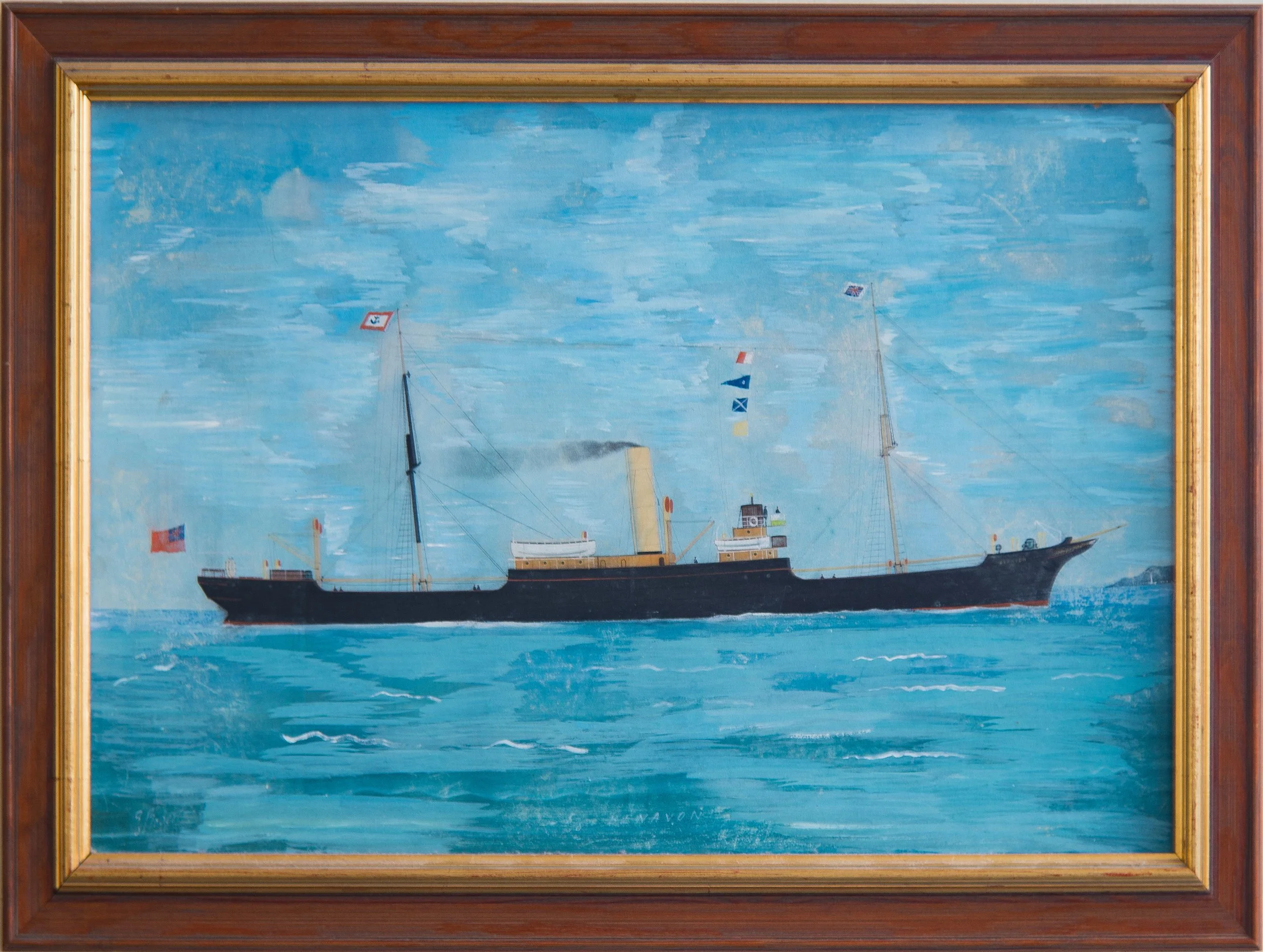
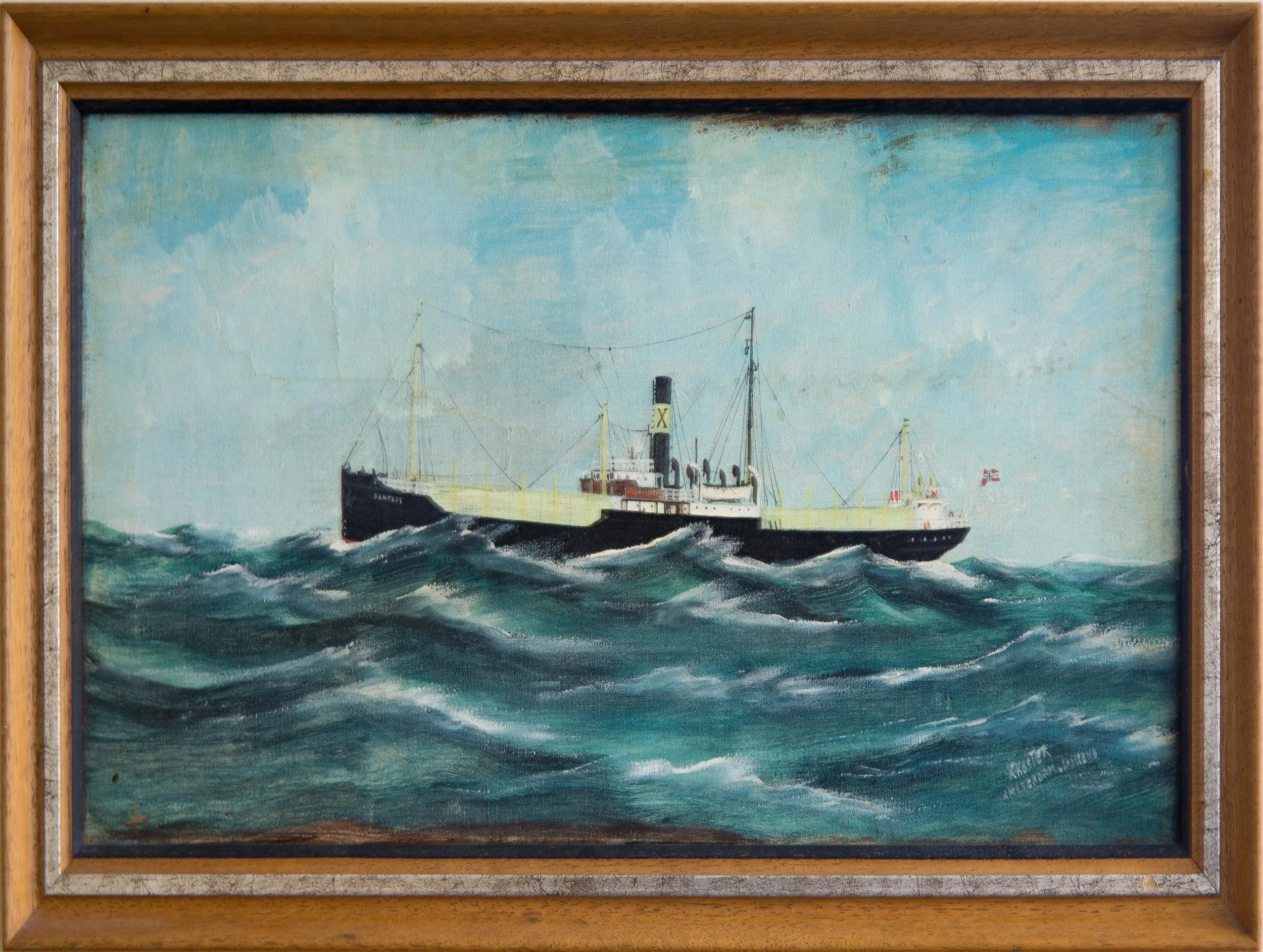
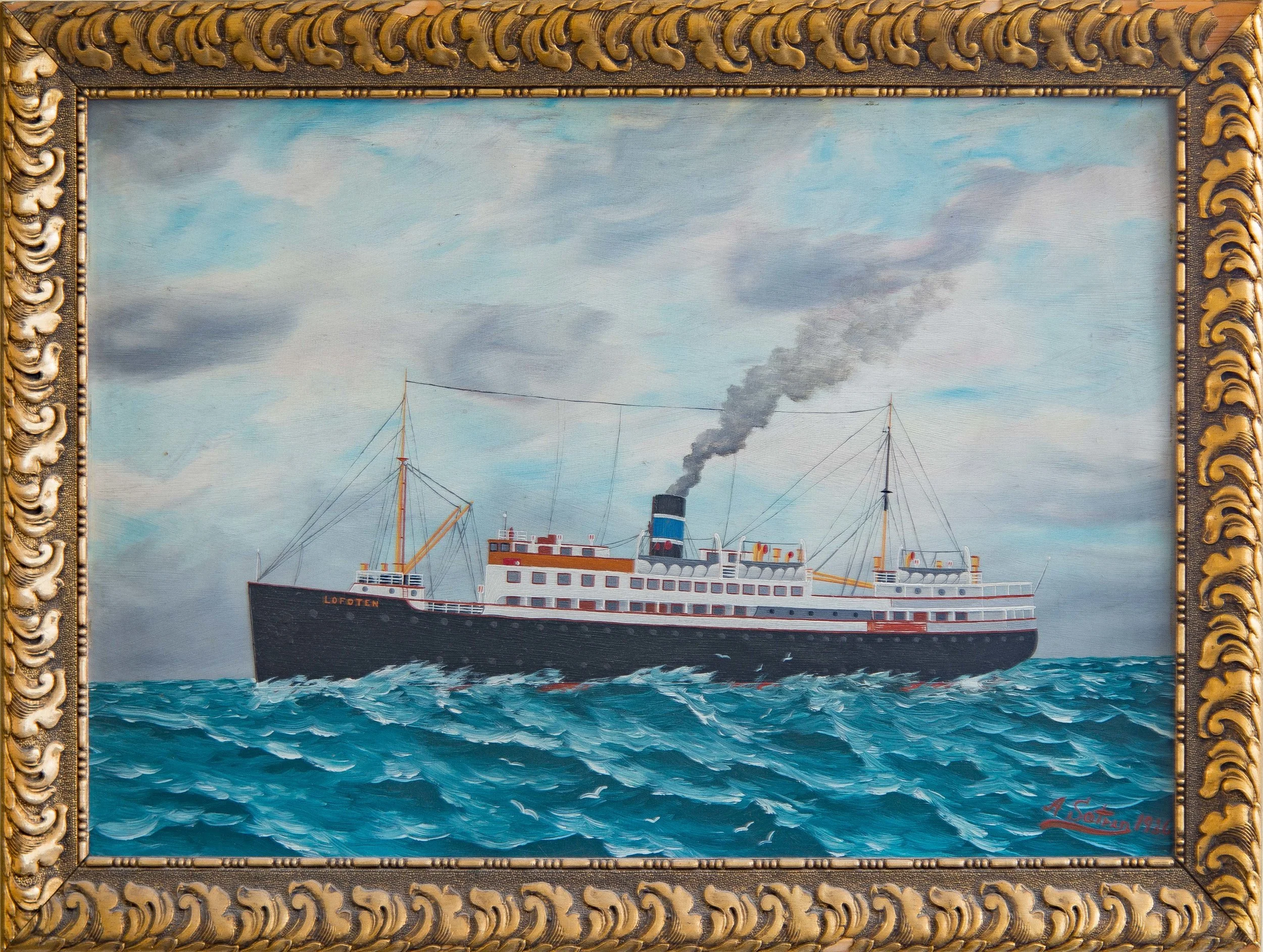
Abraham Saetren
(1914 - 1976)
Abraham Sætren was born out to sea on the island of Vågsøy just south of Stadt, and was named Abraham Refvik after his father. Here, fishing and farming provided the bare necessities. In addition to helping in the barn and out at sea, Abraham drew and painted whenever he had a free moment, if there were no meetings in the Scout Association, which he was very busy with. In the 1930s, he moved to Gloppen in Nordfjord and took the name Sætren there. His health was not so good, his finances were bad, but his spirits were always good. Abraham's main income came from selling paintings, but at times he supplemented his finances with extra short-term jobs.
Abraham rarely painted from photographs, but preferred to make sketches of what he was going to paint and would often include in the sketches which colors were to be used here and there. Since he mostly painted paintings of fjords and mountains, Abraham was an outdoorsman. To transport himself around, he preferred to use a bicycle, but he made annual trips to Jotunheimen to paint from there. He also made some portraits of ships, and these were probably commissioned by the ship owners themselves.
Abraham Sætren probably had no schooling beyond elementary school, nor in drawing and painting. He was an autodidact who studied paintings by other painters and made the best of it. Paintings made by Sætren can be found in Western Norway, and most of all in Nordfjord. He never had a major breakthrough as an artist. In the fall of 1976, Sætren died and was buried at the church where he grew up. Out towards the sea.
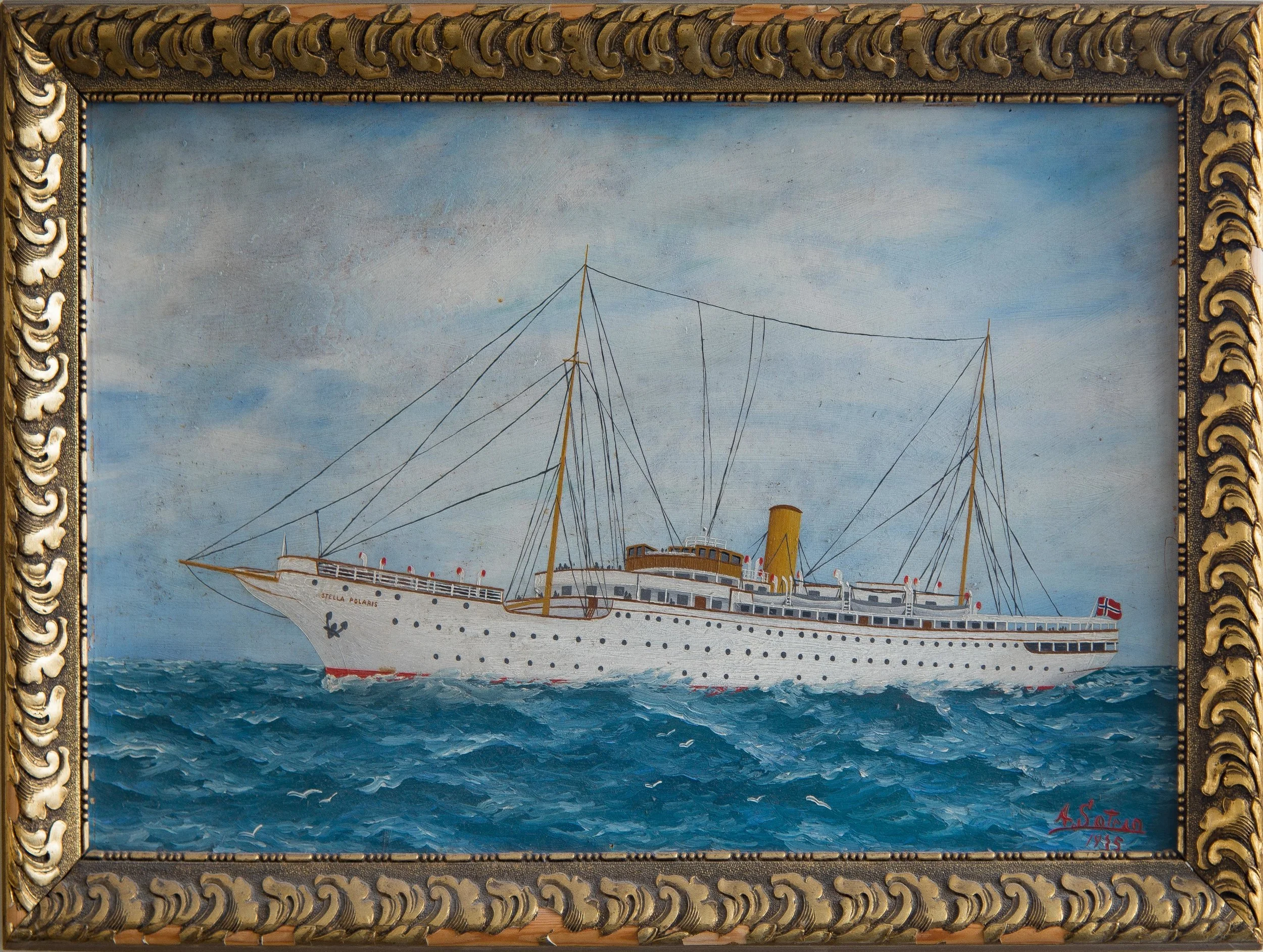
Abraham Saetren
(1914 - 1976)
Abraham Sætren was born out to sea on the island of Vågsøy just south of Stadt, and was named Abraham Refvik after his father. Here, fishing and farming provided the bare necessities. In addition to helping in the barn and out at sea, Abraham drew and painted whenever he had a free moment, if there were no meetings in the Scout Association, which he was very busy with. In the 1930s, he moved to Gloppen in Nordfjord and took the name Sætren there. His health was not so good, his finances were bad, but his spirits were always good. Abraham's main income came from selling paintings, but at times he supplemented his finances with extra short-term jobs.
Abraham rarely painted from photographs, but preferred to make sketches of what he was going to paint and would often include in the sketches which colors were to be used here and there. Since he mostly painted paintings of fjords and mountains, Abraham was an outdoorsman. To transport himself around, he preferred to use a bicycle, but he made annual trips to Jotunheimen to paint from there. He also made some portraits of ships, and these were probably commissioned by the ship owners themselves.
Abraham Sætren probably had no schooling beyond elementary school, nor in drawing and painting. He was an autodidact who studied paintings by other painters and made the best of it. Paintings made by Sætren can be found in Western Norway, and most of all in Nordfjord. He never had a major breakthrough as an artist. In the fall of 1976, Sætren died and was buried at the church where he grew up. Out towards the sea.