Art guide:
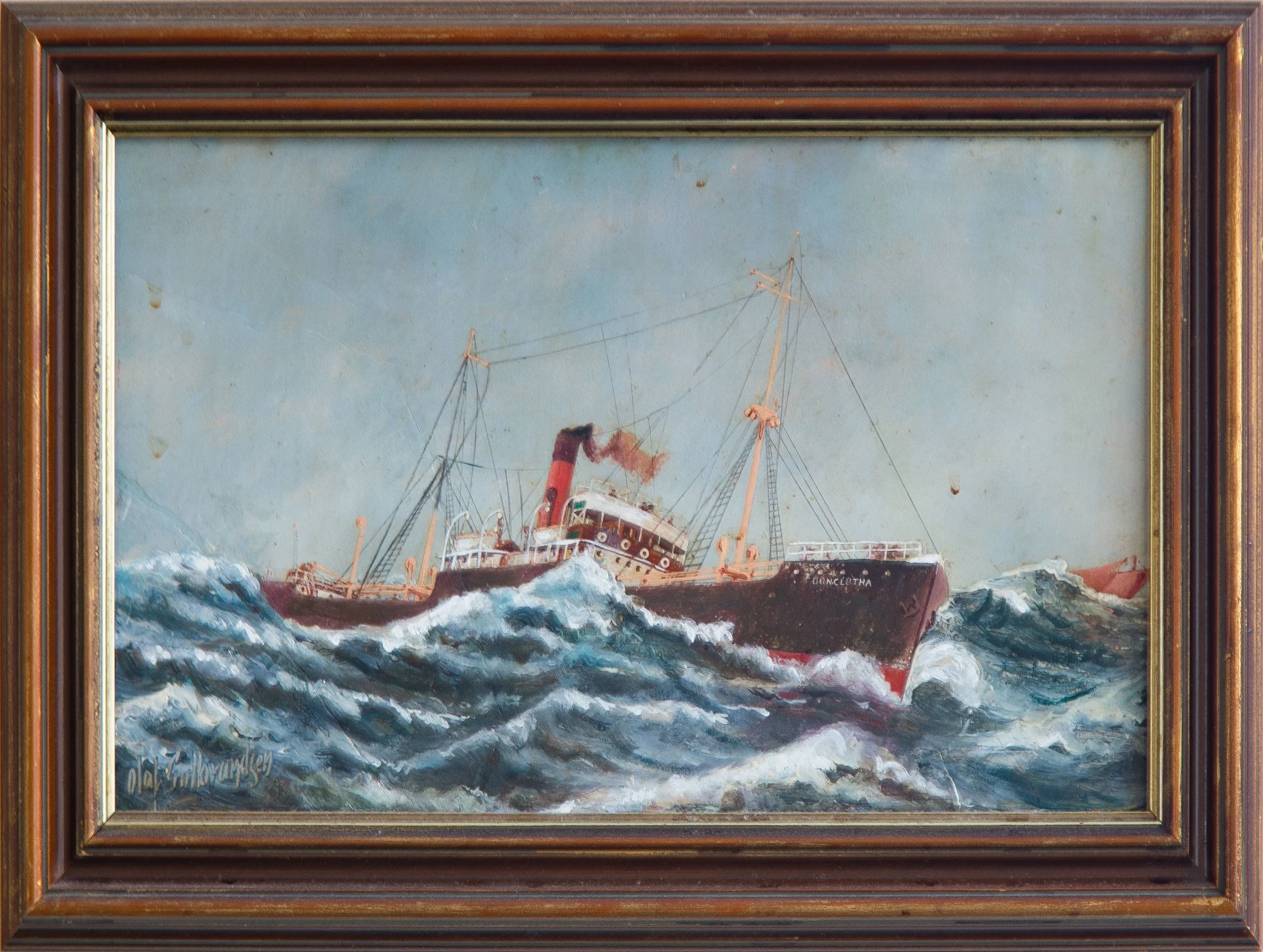
Bernt Olaf Gulbrandsen
(1864 - 1924)
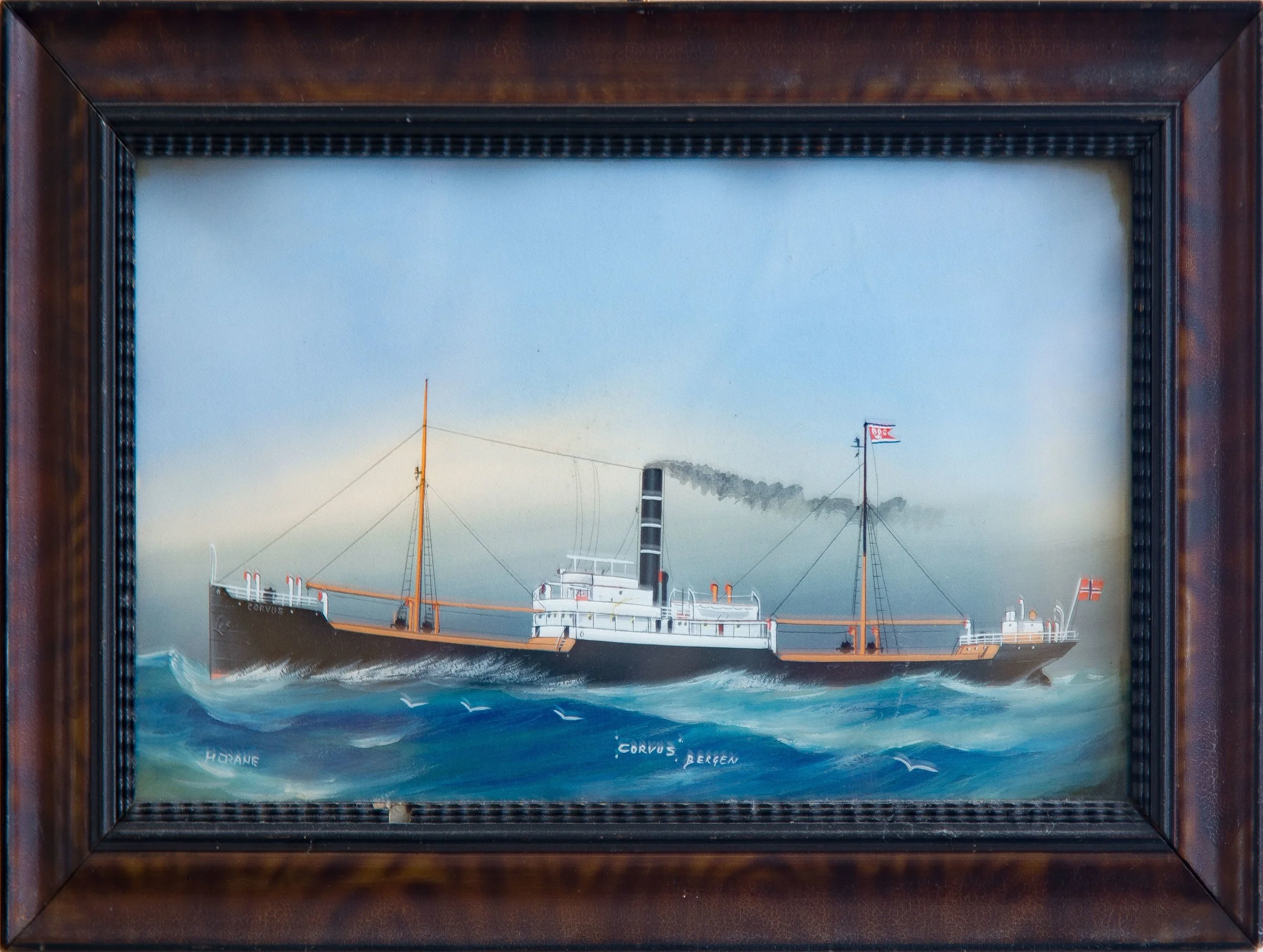
Bernt Olaf (Oluf in the church book at baptism) Gulbrandsen was born in Greenland in Kristiania in 1864. His parents were Ole Gulbrandsen and Anne Sophie Michelsdatter. Olaf sailed at sea, worked as a sailmaker and received his trade certificate in the early 1890s. He is said to have already painted ship portraits by then, if we are to believe his own advertisement from 1914 where he wrote that he had 25 years of experience. The oldest ship portraits we have seen from Olaf Gulbrandsen's hand are from the late 1890s. The pictures from this period are well made, but compared to his later production they are stiffer in expression. During this period he ran a frame and roller blind business in Kristiania at the same time as he had a large production of ship portraits.
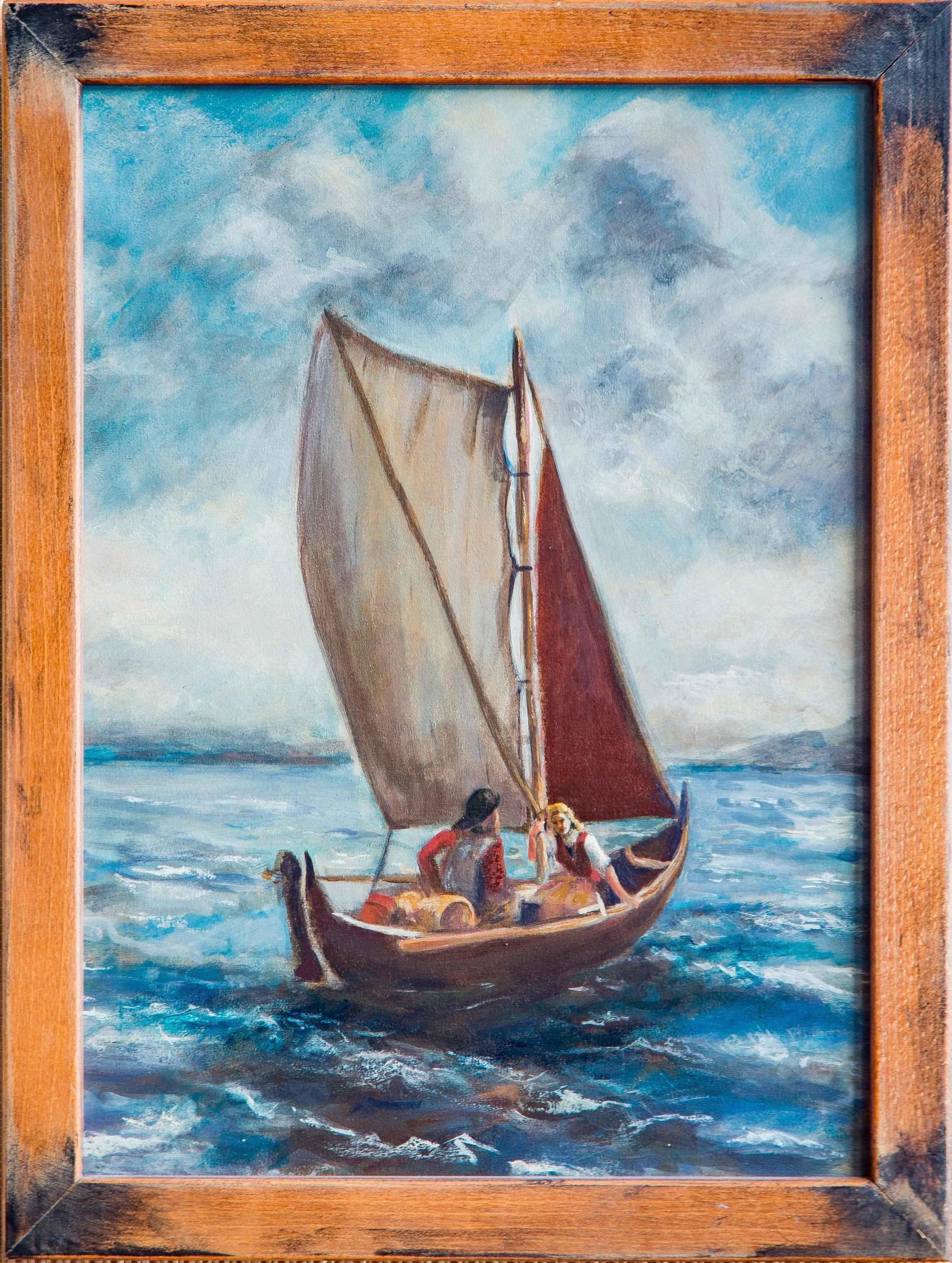
In 1900, Olaf served six months in prison, and was then given the title of Portier. Towards the end of the new century, the number of paintings increased. He used the title of marine painter, but also engaged in other trades. In both 1905 and 1918, he was listed as a tobacconist, and his life in Kristiania was coming to an end. He separated and moved to Bergen, where his son Ragnar lived. Olaf also painted ship portraits here, and the last ones are dated 1924, the same year he died. During his career, Olaf painted many steamships, some sailing ships and some motor ships. At first, he stuck to the classic portrait where we see the ship from the side, while later he became a little freer in his style and painted many where the ship is seen obliquely from the front, working through the sea. Some of these seem as if he had put extra effort into them, and they are very beautiful.
Olaf Gulbrandsen signs his paintings in the corner at the end where the stern of the vessel is. Usually in the bottom right. Most of the paintings are signed with Olaf Gulbrandsen Kra:årstall. The F and K have a line that comes under the name and year.
Olaf and his wife Aagot Johane Fredrikke (née Eliassen) have 8 children. Of the 5 boys, 2 of them, Ragnar and Erling, continue in their father's footsteps and create ship portraits. In the first half of the 20th century, Olaf and his two sons were very active and prominent in their genre. There are countless paintings by them, both in museums and in private ownership. His son Aage Bernt is training in painting and participates in exhibitions.
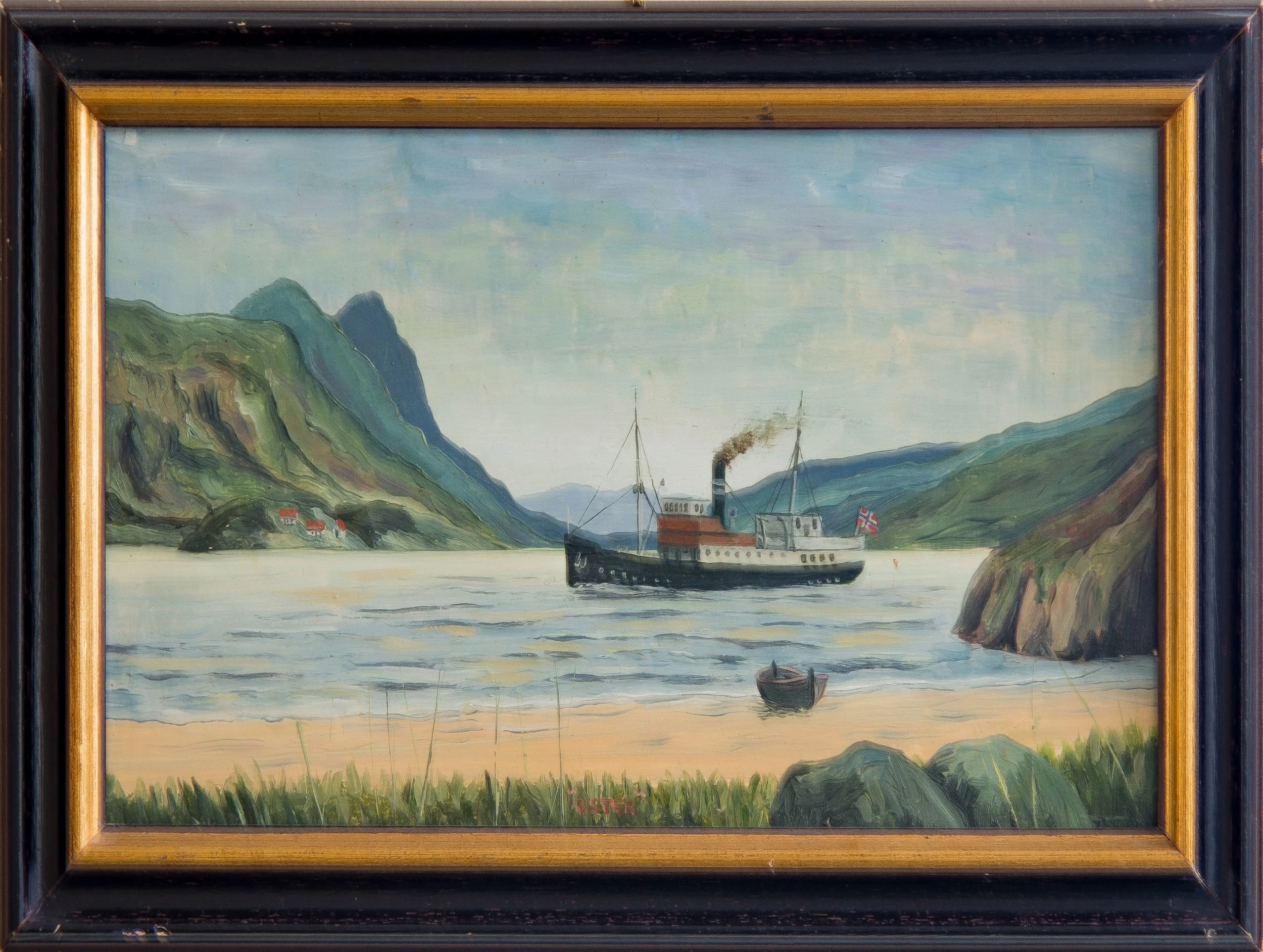
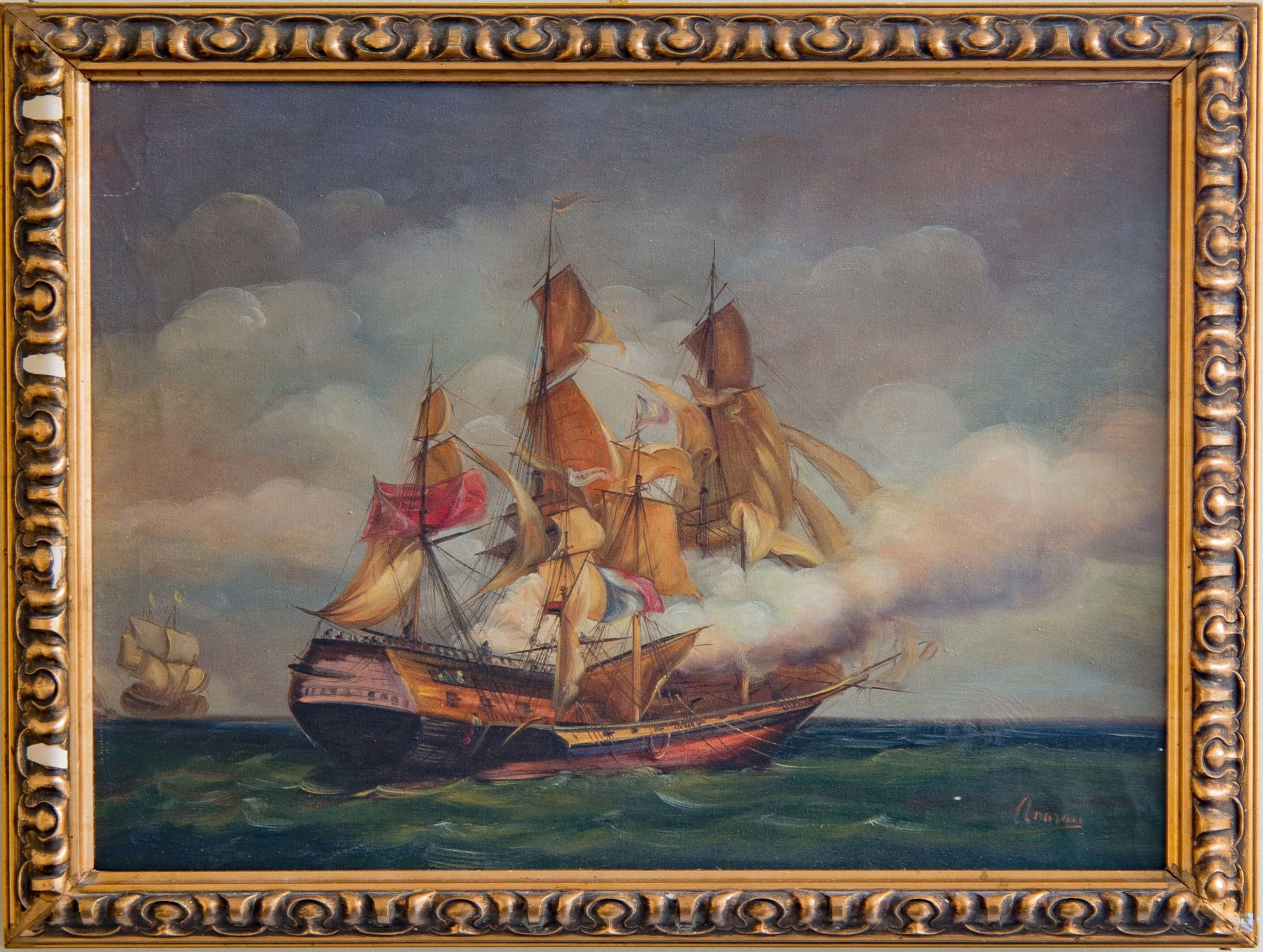
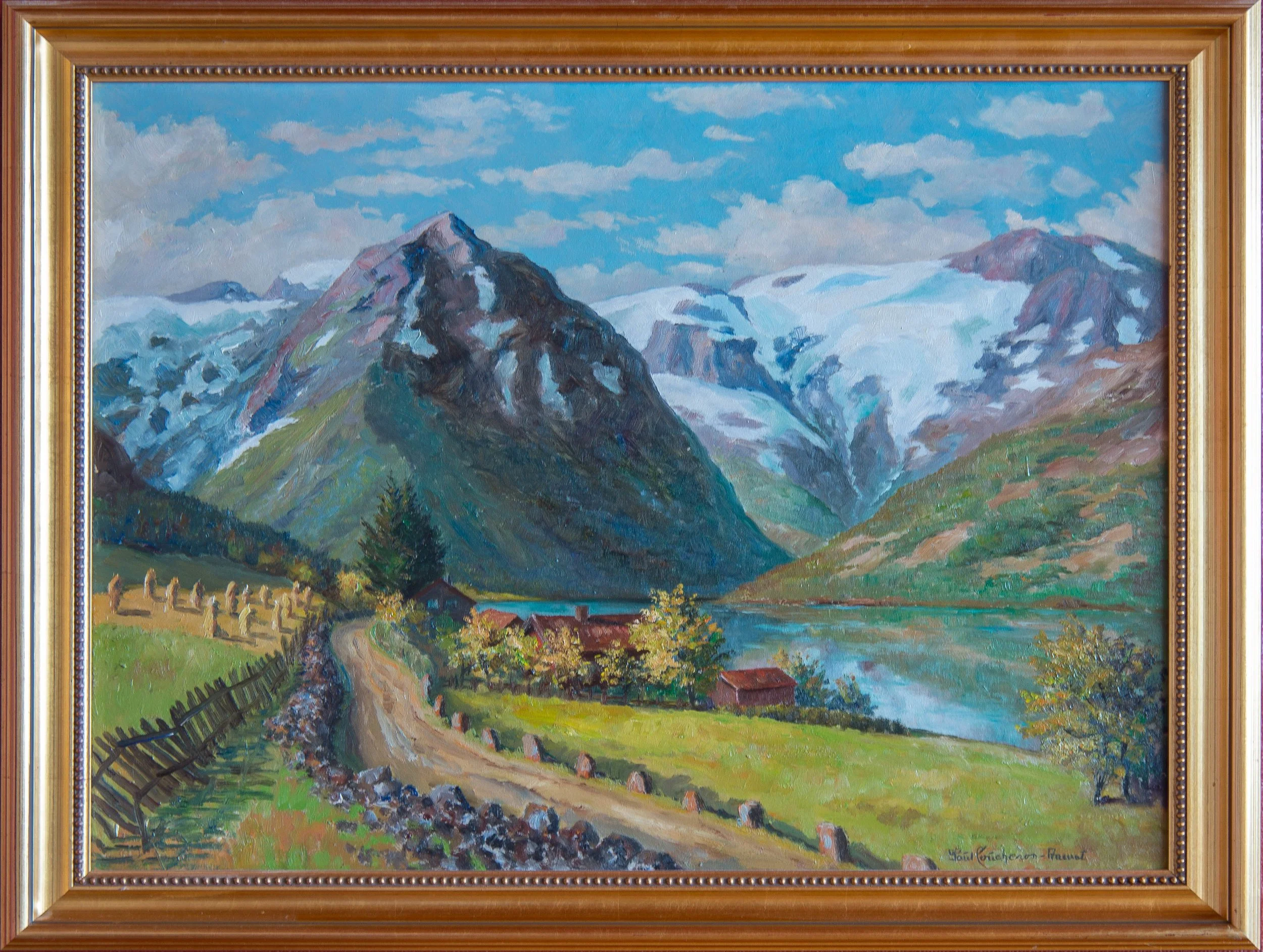
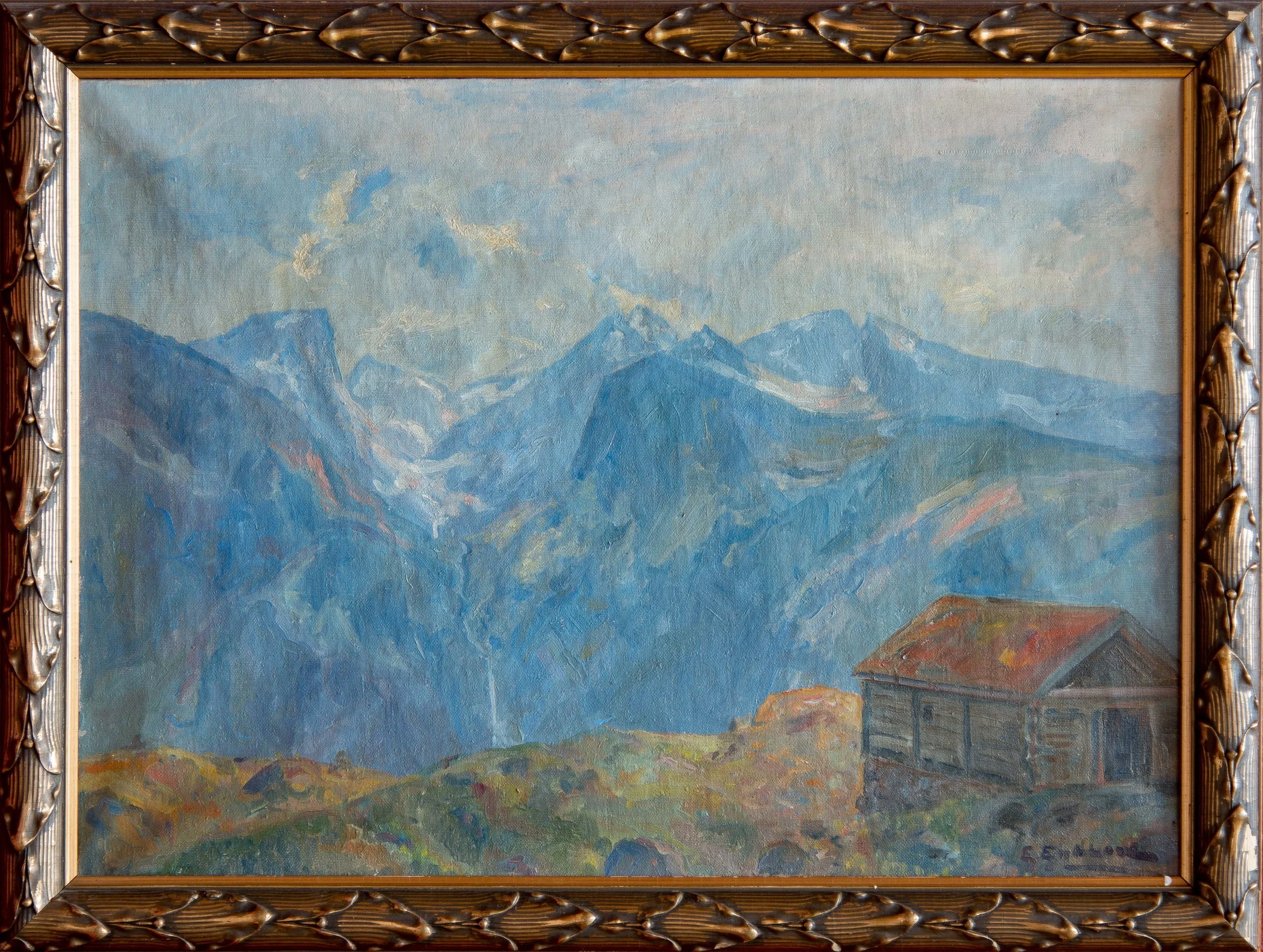
Einar Enblom - Landscape
(1900-1936)
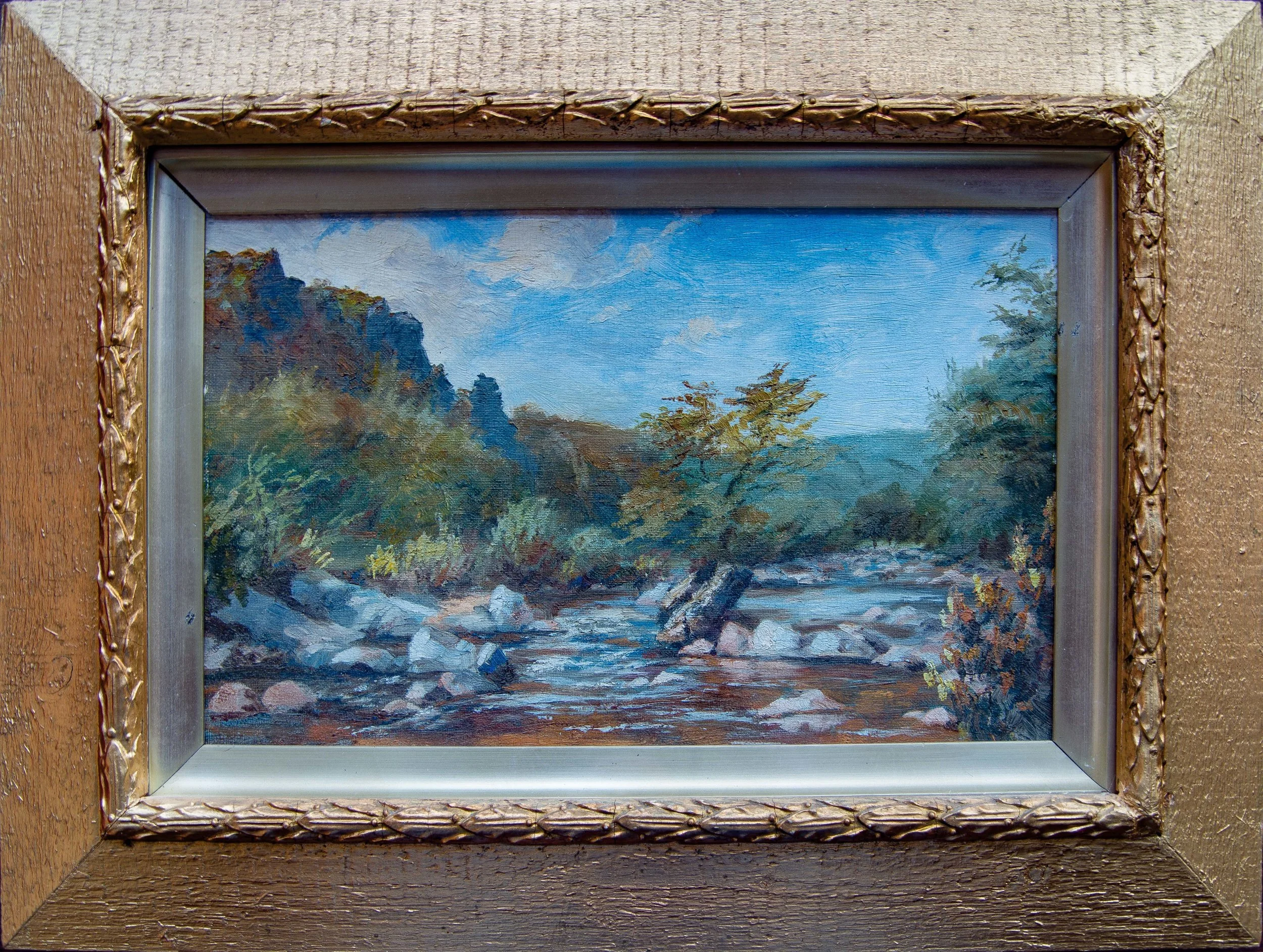
Enblom was Swedish, and was born in Stockholm. Despite his Swedish origin, it is correct to call Enblom "Balholm painter". We know that Enblom stayed in Balestrand for long periods. He was, among other things, a good friend of Sigurd Kvikne, and was called Uncle Einar by the Kvikne family.
He was in Balestrand in the summer, and in Switzerland in the winter. Enblom died in Switzerland at only 36 years old.
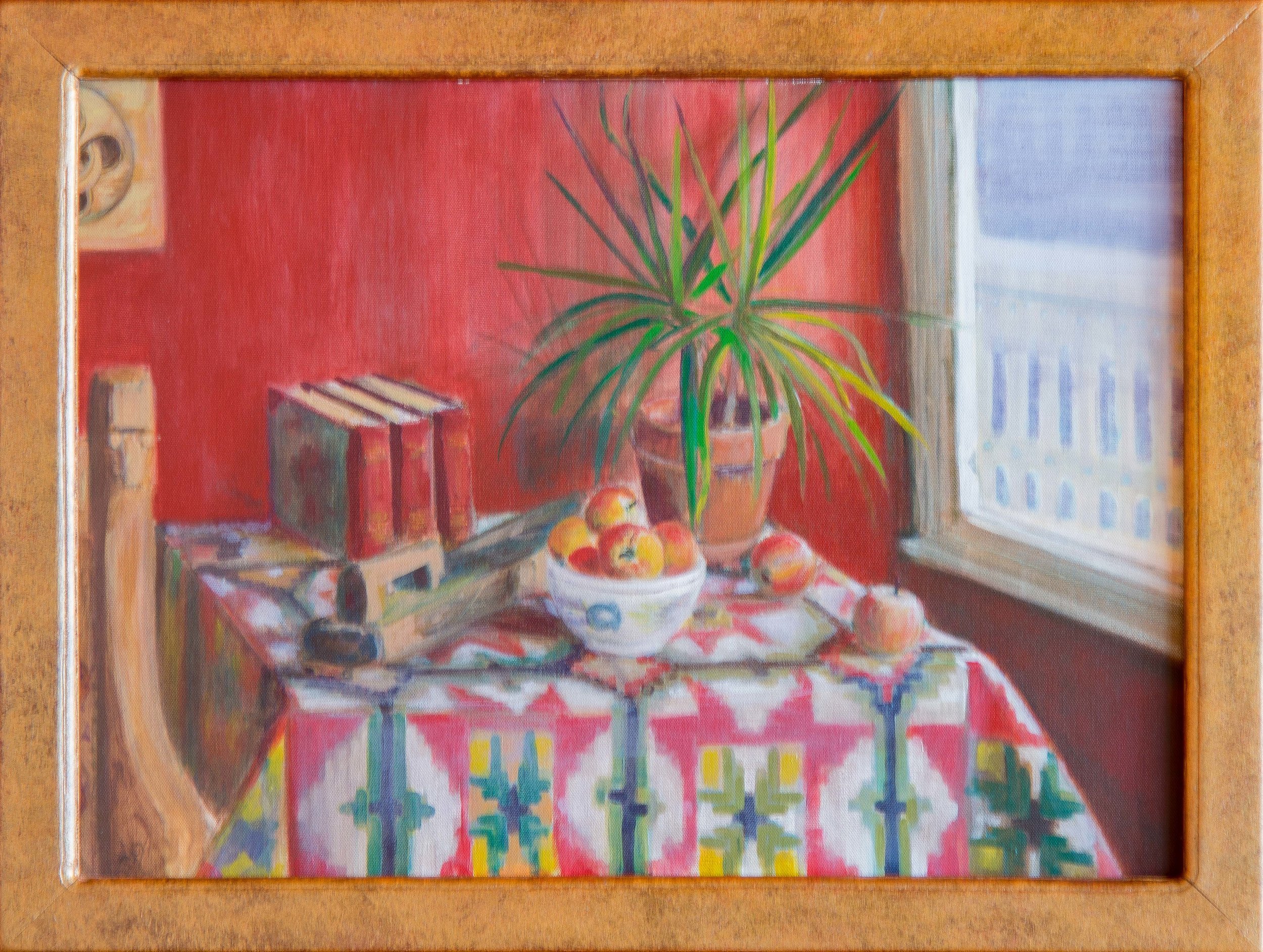
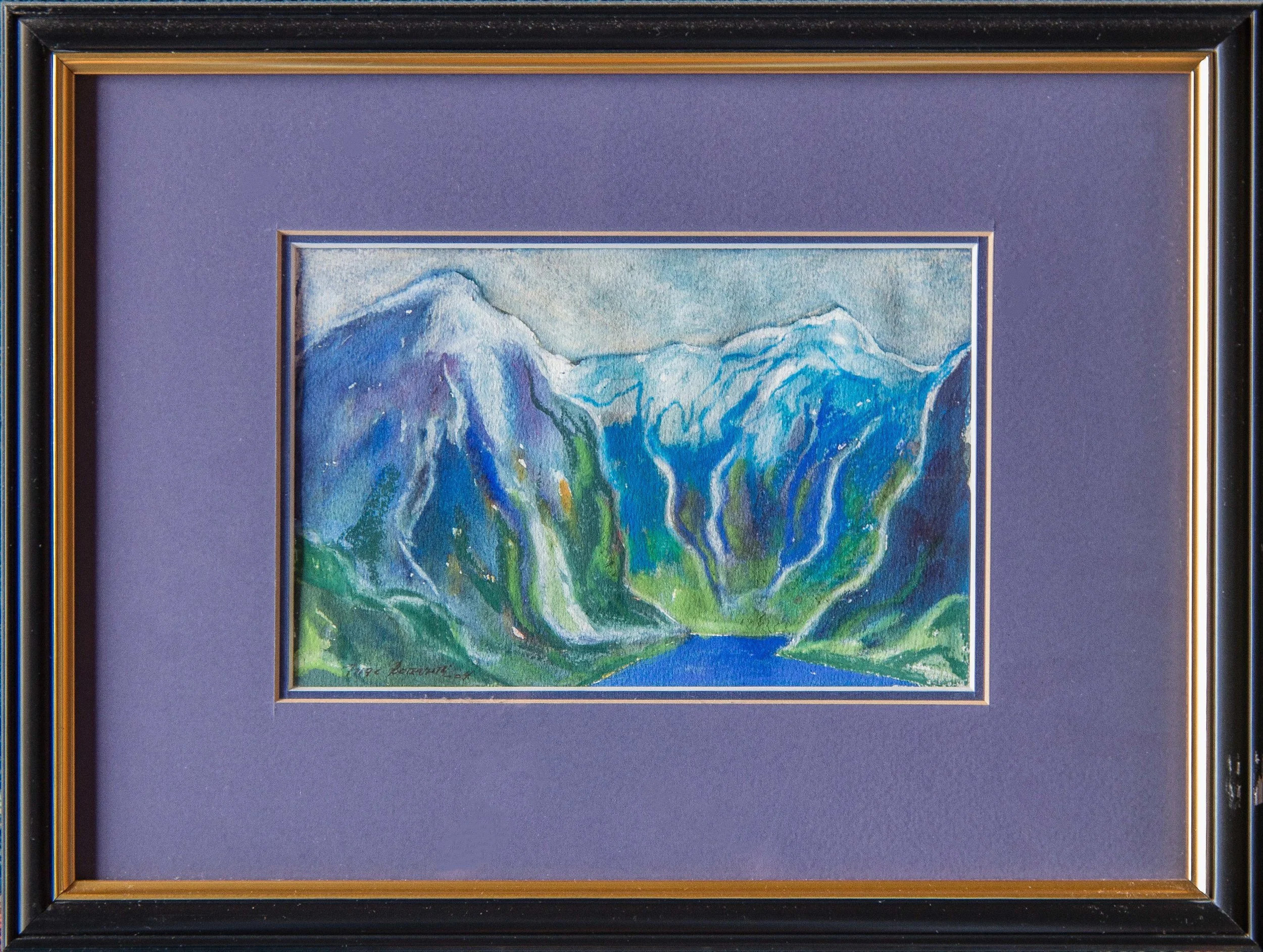
Inge Rotevatn - unknown motive
Rotevant is primarily known as a draftsman and graphic artist, but he also works with larger paintings in ink, tempera, watercolor and oil. His pictorial world has its starting point in classical cultural history. During his time at the academy, he cultivated a strongly abstracted idiom with Gothic architectural forms and classical temple facades as recurring themes. His stays in Paris, Greece, Italy and Spain were of decisive importance for this development, which culminated in a series of Notre Dame motifs from the 1960s. In these paintings, the architectural fragments appear both as symbols and as structures in a strict pictorial composition, e.g. The Iconostasis (watercolor and tempera, Autumn Exhibition 1963). Here, the building is decomposed into rectangular color fields that fill the entire picture surface in parallel planes. The muted, smoldering colors vary between transparent and dense areas and create a sense of space seen in a vibrating half-light. In pen drawings and etchings, the same city, house and architectural motifs are treated in a characteristically fine-line technique of dense, intersecting lines. The human figures often appear as small details in the overwhelming structures.
Rotevatn's more dramatic and painterly renderings of a number of literary motifs such as the Song of Solomon , La Divina Commedia , Daphne , Daphne , Cloë and Orpheus and Eurydice, as well as motifs from Kristin Lavransdatter. From the 1970s onwards, his images were largely characterised by a softer line, but the form of expression often depends on the technique he uses. Rotevatn works as a graphic artist with cold-needle etchings, etchings on plastic plate, and lithographs that are processed by hand after printing. He also uses ink and scratch techniques, e.g. in the illustrations for Per Lønning's Tora-dråpa, where a more decorative flat style is used. The series The Passion of St. Matthew (1980), on the other hand, are fleeting, poetic impressions from Italy, executed in ink with a quill pen. Rotevatn's work is distinguished by a precise and well-worked form and execution. The retrospective exhibitions, Classical Fragments, from 1981 and -82, showed that his range of motifs was still concentrated on a human environment with architecture as the supporting element. In 1974, Rotevatn took over the old magistrate's farm Løken in Nordfjordeid, where he and Siv Jørstad run the Leikvin art center and gallery.
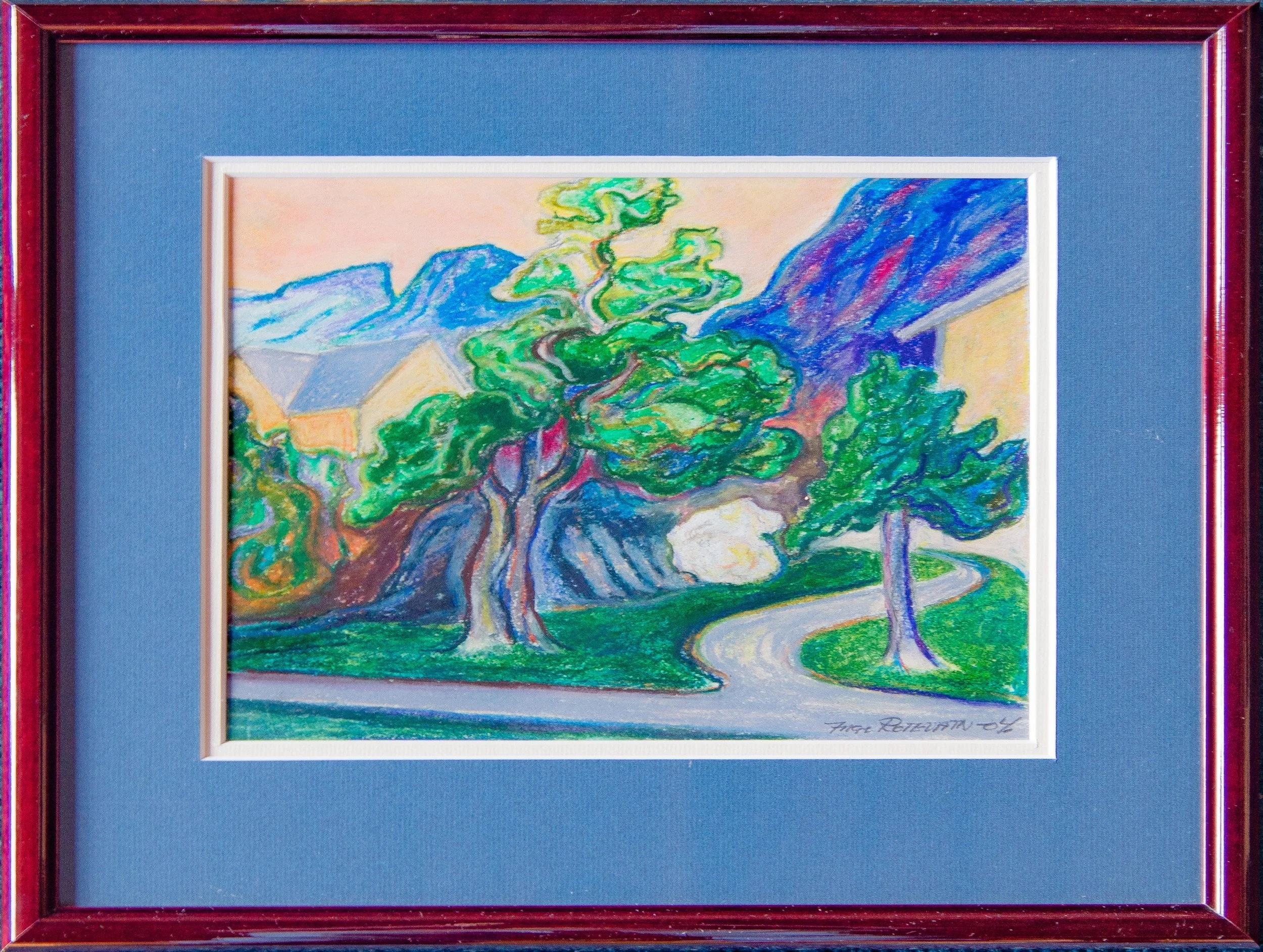
Inge Rotevatn - unknown motive
Rotevant is primarily known as a draftsman and graphic artist, but he also works with larger paintings in ink, tempera, watercolor and oil. His pictorial world has its starting point in classical cultural history. During his time at the academy, he cultivated a strongly abstracted idiom with Gothic architectural forms and classical temple facades as recurring themes. His stays in Paris, Greece, Italy and Spain were of decisive importance for this development, which culminated in a series of Notre Dame motifs from the 1960s. In these paintings, the architectural fragments appear both as symbols and as structures in a strict pictorial composition, e.g. The Iconostasis (watercolor and tempera, Autumn Exhibition 1963). Here, the building is decomposed into rectangular color fields that fill the entire picture surface in parallel planes. The muted, smoldering colors vary between transparent and dense areas and create a sense of space seen in a vibrating half-light. In pen drawings and etchings, the same city, house and architectural motifs are treated in a characteristically fine-line technique of dense, intersecting lines. The human figures often appear as small details in the overwhelming structures.
Rotevatn's more dramatic and painterly renderings of a number of literary motifs such as the Song of Solomon , La Divina Commedia , Daphne , Daphne , Cloë and Orpheus and Eurydice, as well as motifs from Kristin Lavransdatter. From the 1970s onwards, his images were largely characterised by a softer line, but the form of expression often depends on the technique he uses. Rotevatn works as a graphic artist with cold-needle etchings, etchings on plastic plate, and lithographs that are processed by hand after printing. He also uses ink and scratch techniques, e.g. in the illustrations for Per Lønning's Tora-dråpa, where a more decorative flat style is used. The series The Passion of St. Matthew (1980), on the other hand, are fleeting, poetic impressions from Italy, executed in ink with a quill pen. Rotevatn's work is distinguished by a precise and well-worked form and execution. The retrospective exhibitions, Classical Fragments, from 1981 and -82, showed that his range of motifs was still concentrated on a human environment with architecture as the supporting element. In 1974, Rotevatn took over the old magistrate's farm Løken in Nordfjordeid, where he and Siv Jørstad run the Leikvin art center and gallery.
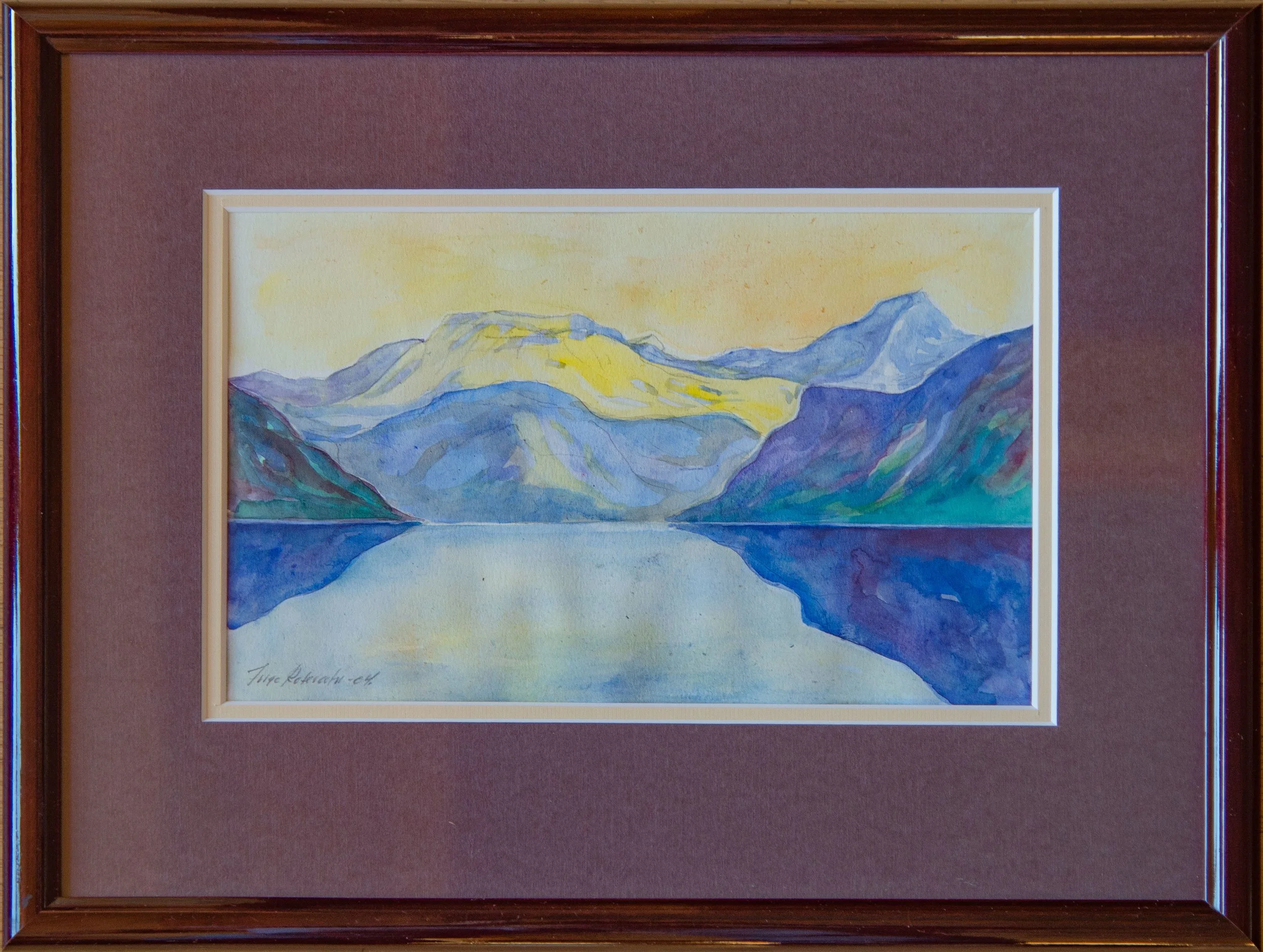
Inge Rotevatn - unknown motive
Rotevant is primarily known as a draftsman and graphic artist, but he also works with larger paintings in ink, tempera, watercolor and oil. His pictorial world has its starting point in classical cultural history. During his time at the academy, he cultivated a strongly abstracted idiom with Gothic architectural forms and classical temple facades as recurring themes. His stays in Paris, Greece, Italy and Spain were of decisive importance for this development, which culminated in a series of Notre Dame motifs from the 1960s. In these paintings, the architectural fragments appear both as symbols and as structures in a strict pictorial composition, e.g. The Iconostasis (watercolor and tempera, Autumn Exhibition 1963). Here, the building is decomposed into rectangular color fields that fill the entire picture surface in parallel planes. The muted, smoldering colors vary between transparent and dense areas and create a sense of space seen in a vibrating half-light. In pen drawings and etchings, the same city, house and architectural motifs are treated in a characteristically fine-line technique of dense, intersecting lines. The human figures often appear as small details in the overwhelming structures.
Rotevatn's more dramatic and painterly renderings of a number of literary motifs such as the Song of Solomon , La Divina Commedia , Daphne , Daphne , Cloë and Orpheus and Eurydice, as well as motifs from Kristin Lavransdatter. From the 1970s onwards, his images were largely characterised by a softer line, but the form of expression often depends on the technique he uses. Rotevatn works as a graphic artist with cold-needle etchings, etchings on plastic plate, and lithographs that are processed by hand after printing. He also uses ink and scratch techniques, e.g. in the illustrations for Per Lønning's Tora-dråpa, where a more decorative flat style is used. The series The Passion of St. Matthew (1980), on the other hand, are fleeting, poetic impressions from Italy, executed in ink with a quill pen. Rotevatn's work is distinguished by a precise and well-worked form and execution. The retrospective exhibitions, Classical Fragments, from 1981 and -82, showed that his range of motifs was still concentrated on a human environment with architecture as the supporting element. In 1974, Rotevatn took over the old magistrate's farm Løken in Nordfjordeid, where he and Siv Jørstad run the Leikvin art center and gallery.