
Art guide:
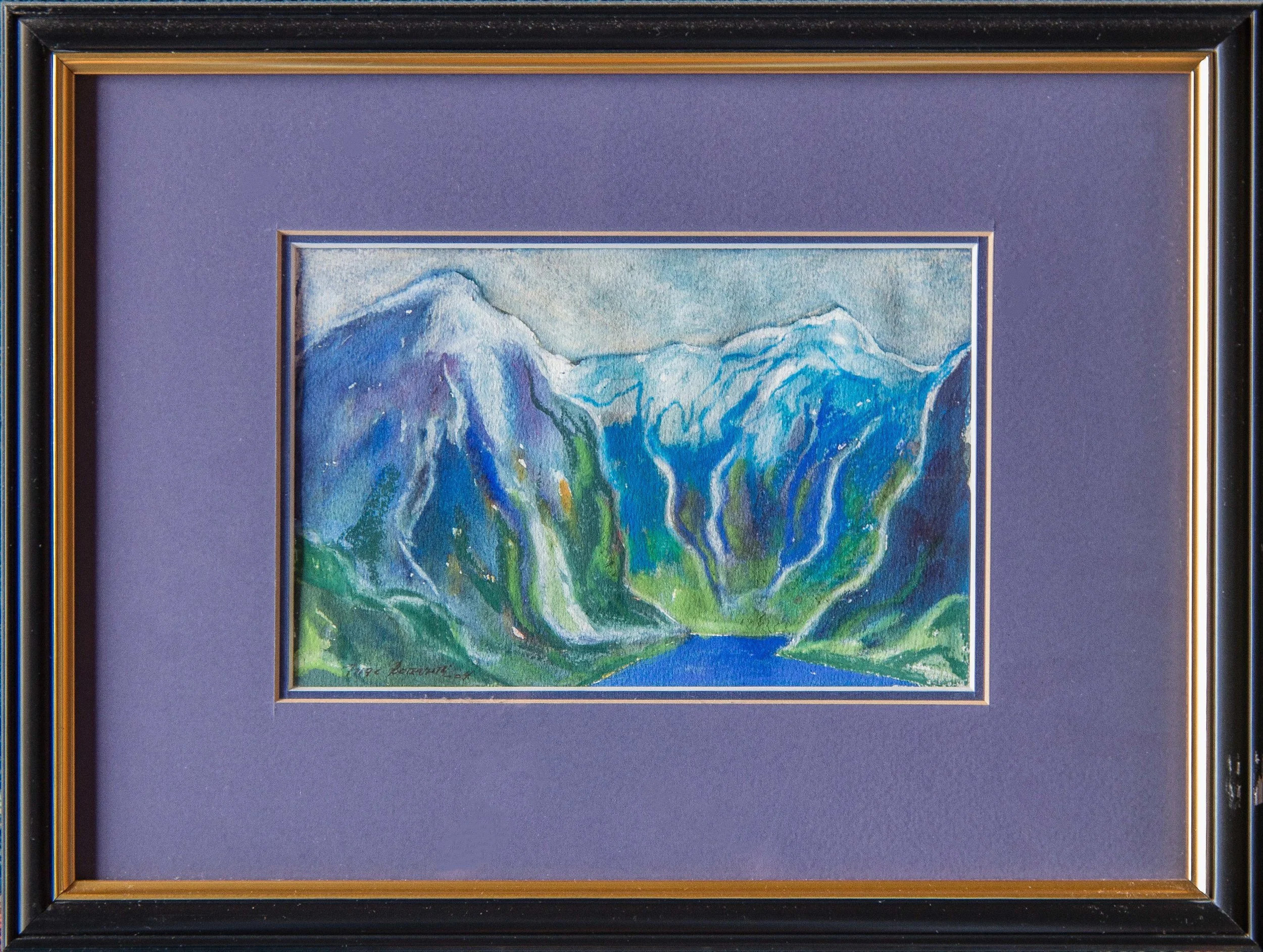
Inge Rotevatn - unknown motive
Rotevant is primarily known as a draftsman and graphic artist, but he also works with larger paintings in ink, tempera, watercolor and oil. His pictorial world has its starting point in classical cultural history. During his time at the academy, he cultivated a strongly abstracted idiom with Gothic architectural forms and classical temple facades as recurring themes. His stays in Paris, Greece, Italy and Spain were of decisive importance for this development, which culminated in a series of Notre Dame motifs from the 1960s. In these paintings, the architectural fragments appear both as symbols and as structures in a strict pictorial composition, e.g. The Iconostasis (watercolor and tempera, Autumn Exhibition 1963). Here, the building is decomposed into rectangular color fields that fill the entire picture surface in parallel planes. The muted, smoldering colors vary between transparent and dense areas and create a sense of space seen in a vibrating half-light. In pen drawings and etchings, the same city, house and architectural motifs are treated in a characteristically fine-line technique of dense, intersecting lines. The human figures often appear as small details in the overwhelming structures.
Rotevatn's more dramatic and painterly renderings of a number of literary motifs such as the Song of Solomon , La Divina Commedia , Daphne , Daphne , Cloë and Orpheus and Eurydice, as well as motifs from Kristin Lavransdatter. From the 1970s onwards, his images were largely characterised by a softer line, but the form of expression often depends on the technique he uses. Rotevatn works as a graphic artist with cold-needle etchings, etchings on plastic plate, and lithographs that are processed by hand after printing. He also uses ink and scratch techniques, e.g. in the illustrations for Per Lønning's Tora-dråpa, where a more decorative flat style is used. The series The Passion of St. Matthew (1980), on the other hand, are fleeting, poetic impressions from Italy, executed in ink with a quill pen. Rotevatn's work is distinguished by a precise and well-worked form and execution. The retrospective exhibitions, Classical Fragments, from 1981 and -82, showed that his range of motifs was still concentrated on a human environment with architecture as the supporting element. In 1974, Rotevatn took over the old magistrate's farm Løken in Nordfjordeid, where he and Siv Jørstad run the Leikvin art center and gallery.
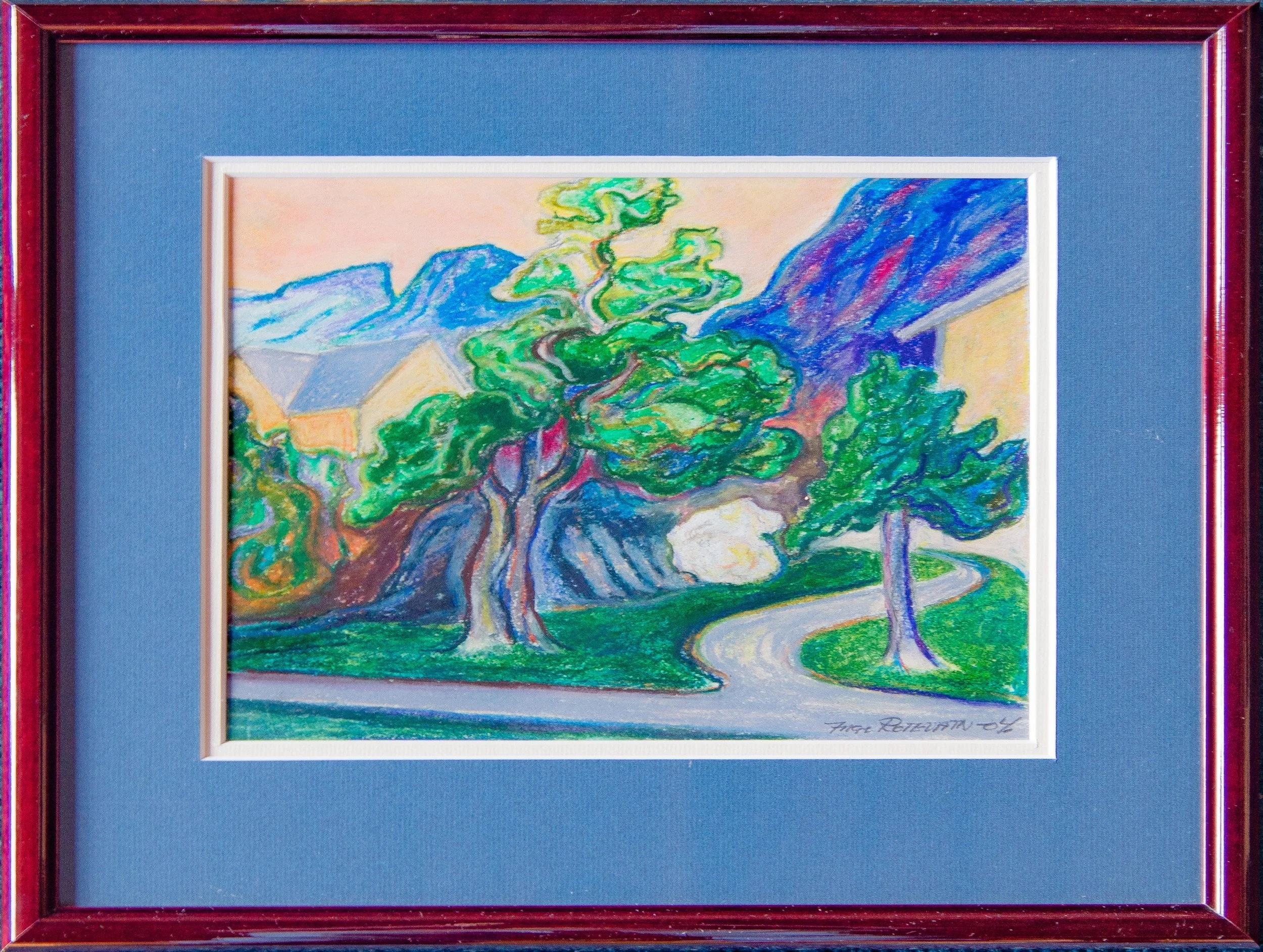
Inge Rotevatn - unknown motive
Rotevant is primarily known as a draftsman and graphic artist, but he also works with larger paintings in ink, tempera, watercolor and oil. His pictorial world has its starting point in classical cultural history. During his time at the academy, he cultivated a strongly abstracted idiom with Gothic architectural forms and classical temple facades as recurring themes. His stays in Paris, Greece, Italy and Spain were of decisive importance for this development, which culminated in a series of Notre Dame motifs from the 1960s. In these paintings, the architectural fragments appear both as symbols and as structures in a strict pictorial composition, e.g. The Iconostasis (watercolor and tempera, Autumn Exhibition 1963). Here, the building is decomposed into rectangular color fields that fill the entire picture surface in parallel planes. The muted, smoldering colors vary between transparent and dense areas and create a sense of space seen in a vibrating half-light. In pen drawings and etchings, the same city, house and architectural motifs are treated in a characteristically fine-line technique of dense, intersecting lines. The human figures often appear as small details in the overwhelming structures.
Rotevatn's more dramatic and painterly renderings of a number of literary motifs such as the Song of Solomon , La Divina Commedia , Daphne , Daphne , Cloë and Orpheus and Eurydice, as well as motifs from Kristin Lavransdatter. From the 1970s onwards, his images were largely characterised by a softer line, but the form of expression often depends on the technique he uses. Rotevatn works as a graphic artist with cold-needle etchings, etchings on plastic plate, and lithographs that are processed by hand after printing. He also uses ink and scratch techniques, e.g. in the illustrations for Per Lønning's Tora-dråpa, where a more decorative flat style is used. The series The Passion of St. Matthew (1980), on the other hand, are fleeting, poetic impressions from Italy, executed in ink with a quill pen. Rotevatn's work is distinguished by a precise and well-worked form and execution. The retrospective exhibitions, Classical Fragments, from 1981 and -82, showed that his range of motifs was still concentrated on a human environment with architecture as the supporting element. In 1974, Rotevatn took over the old magistrate's farm Løken in Nordfjordeid, where he and Siv Jørstad run the Leikvin art center and gallery.
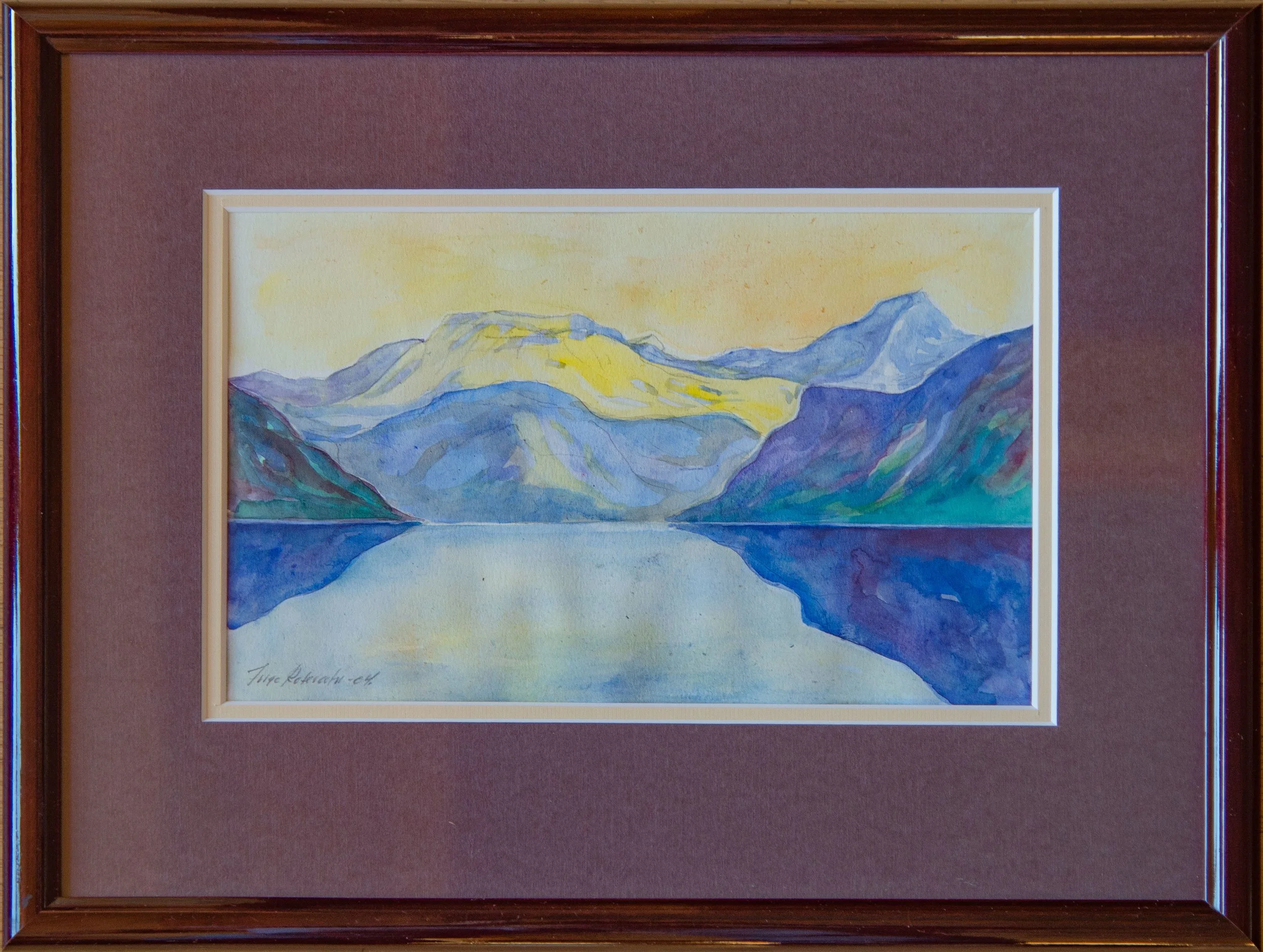
Inge Rotevatn - unknown motive
Rotevant is primarily known as a draftsman and graphic artist, but he also works with larger paintings in ink, tempera, watercolor and oil. His pictorial world has its starting point in classical cultural history. During his time at the academy, he cultivated a strongly abstracted idiom with Gothic architectural forms and classical temple facades as recurring themes. His stays in Paris, Greece, Italy and Spain were of decisive importance for this development, which culminated in a series of Notre Dame motifs from the 1960s. In these paintings, the architectural fragments appear both as symbols and as structures in a strict pictorial composition, e.g. The Iconostasis (watercolor and tempera, Autumn Exhibition 1963). Here, the building is decomposed into rectangular color fields that fill the entire picture surface in parallel planes. The muted, smoldering colors vary between transparent and dense areas and create a sense of space seen in a vibrating half-light. In pen drawings and etchings, the same city, house and architectural motifs are treated in a characteristically fine-line technique of dense, intersecting lines. The human figures often appear as small details in the overwhelming structures.
Rotevatn's more dramatic and painterly renderings of a number of literary motifs such as the Song of Solomon , La Divina Commedia , Daphne , Daphne , Cloë and Orpheus and Eurydice, as well as motifs from Kristin Lavransdatter. From the 1970s onwards, his images were largely characterised by a softer line, but the form of expression often depends on the technique he uses. Rotevatn works as a graphic artist with cold-needle etchings, etchings on plastic plate, and lithographs that are processed by hand after printing. He also uses ink and scratch techniques, e.g. in the illustrations for Per Lønning's Tora-dråpa, where a more decorative flat style is used. The series The Passion of St. Matthew (1980), on the other hand, are fleeting, poetic impressions from Italy, executed in ink with a quill pen. Rotevatn's work is distinguished by a precise and well-worked form and execution. The retrospective exhibitions, Classical Fragments, from 1981 and -82, showed that his range of motifs was still concentrated on a human environment with architecture as the supporting element. In 1974, Rotevatn took over the old magistrate's farm Løken in Nordfjordeid, where he and Siv Jørstad run the Leikvin art center and gallery.
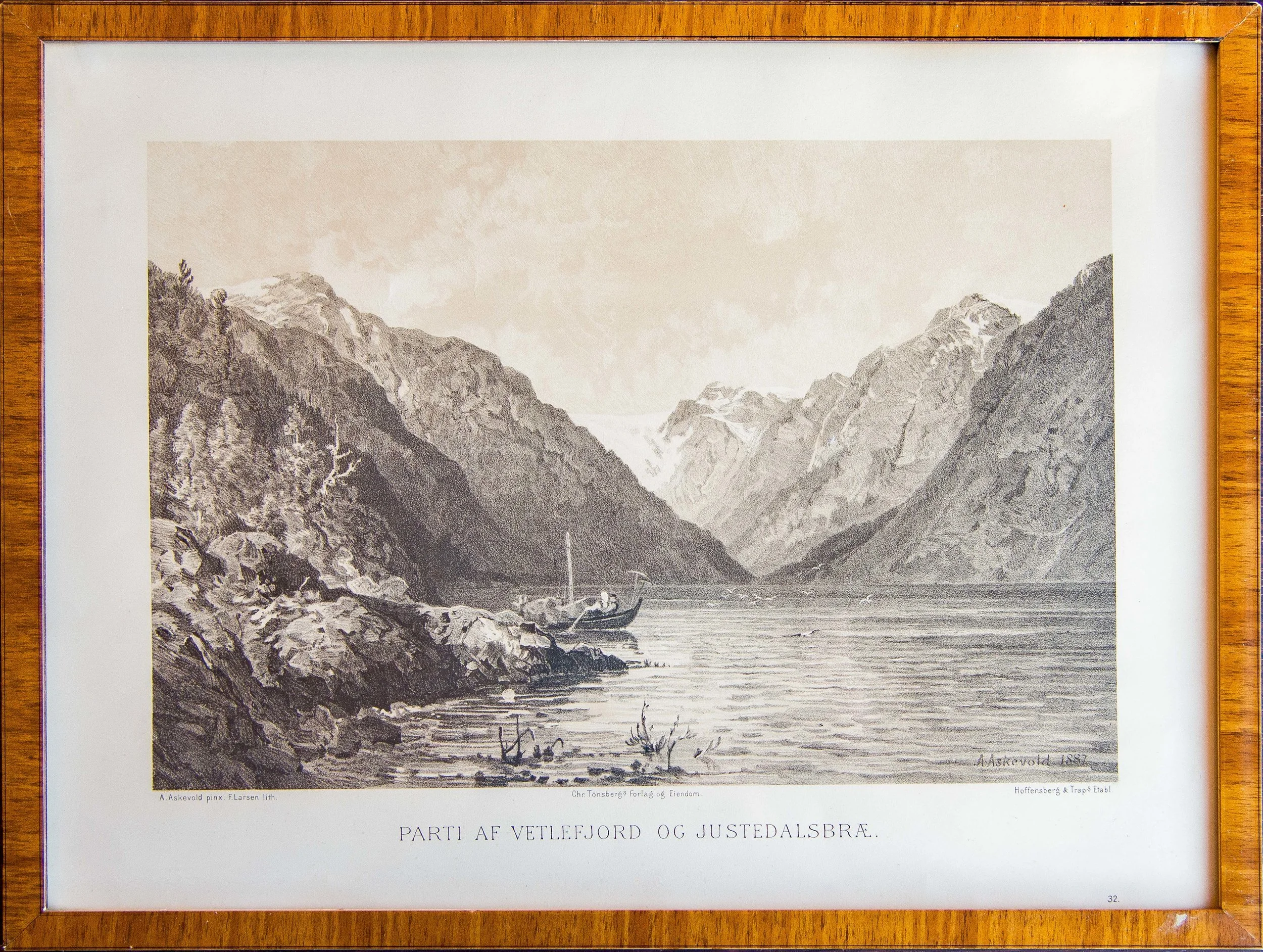
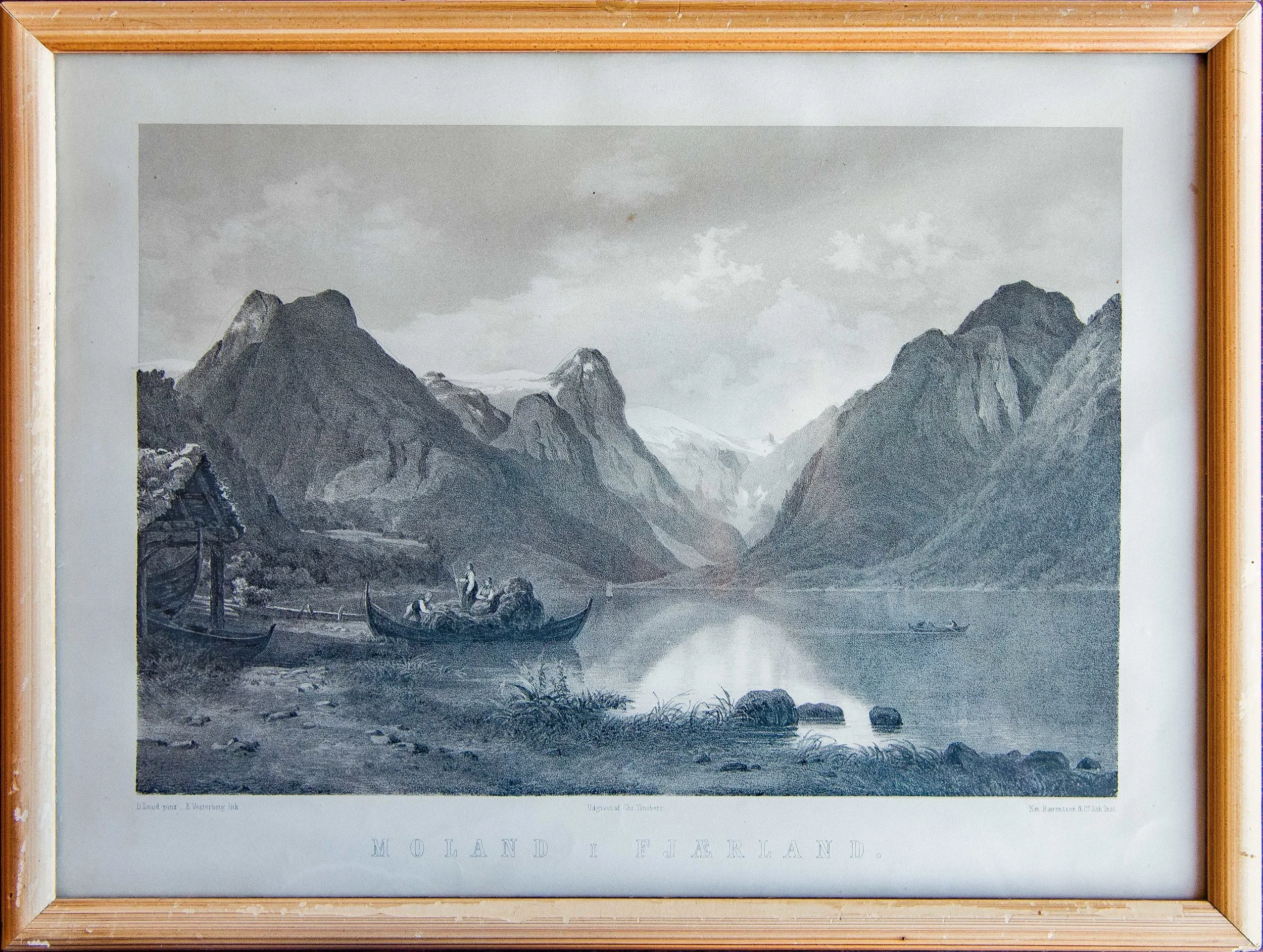
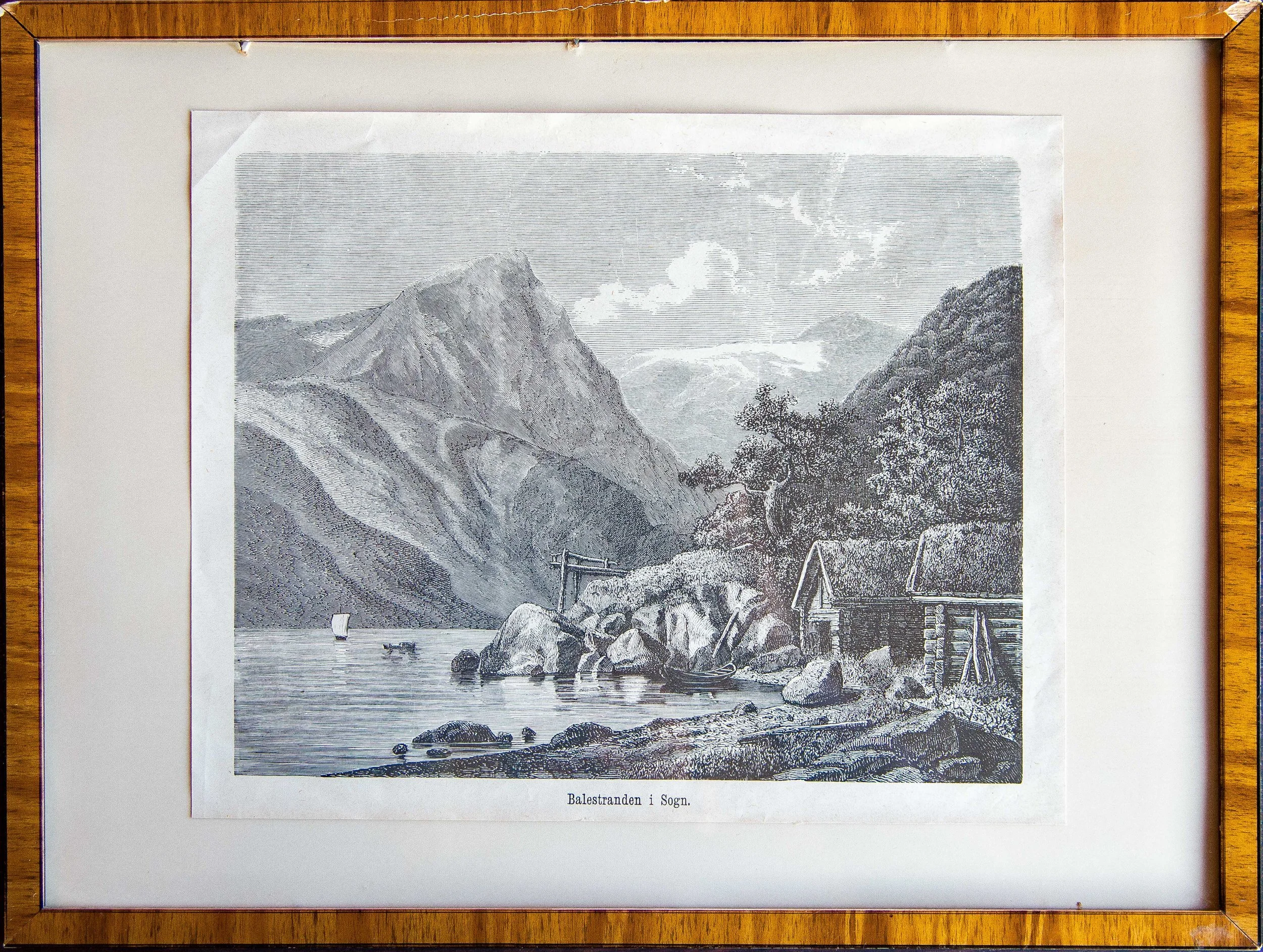
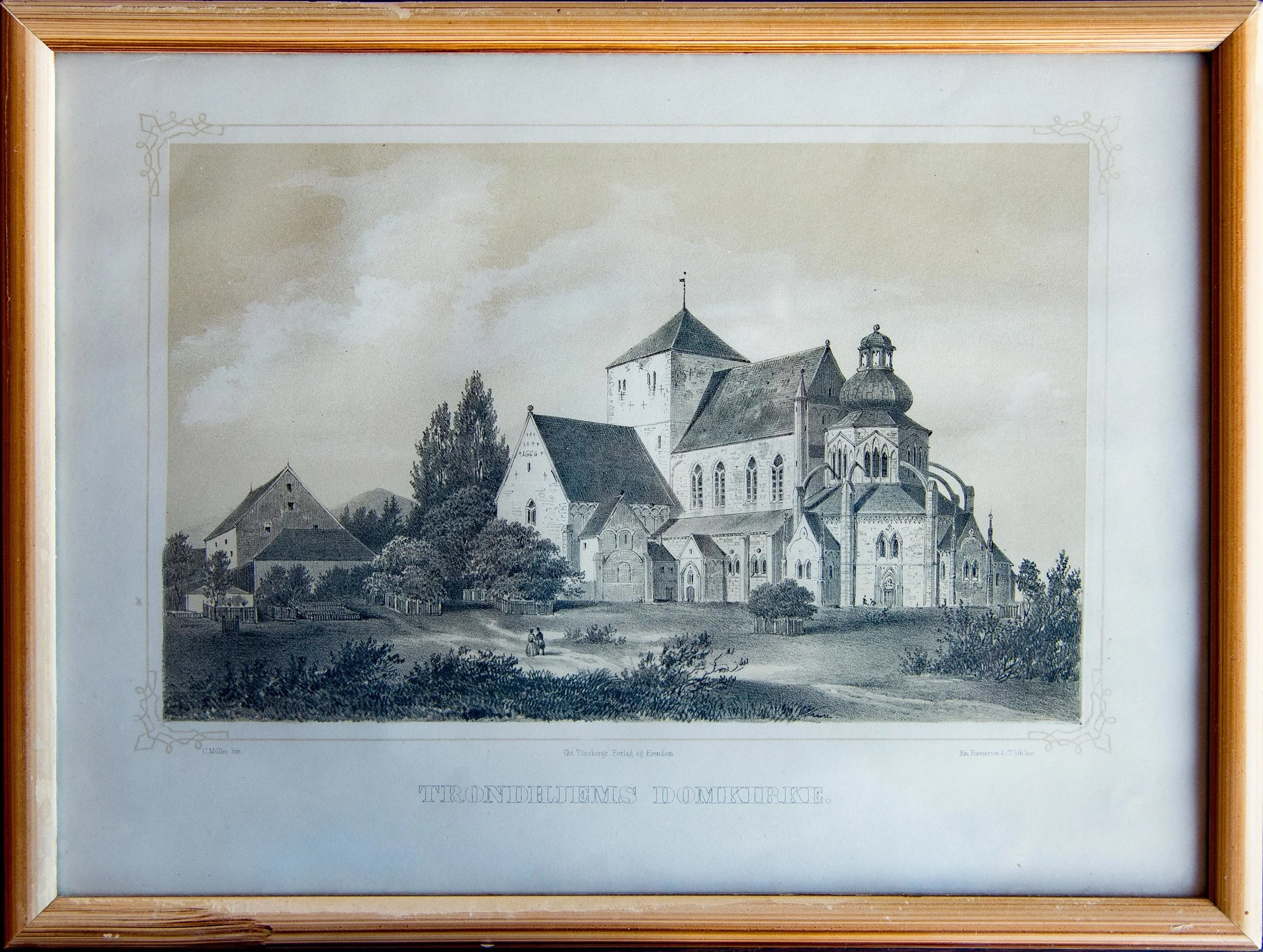
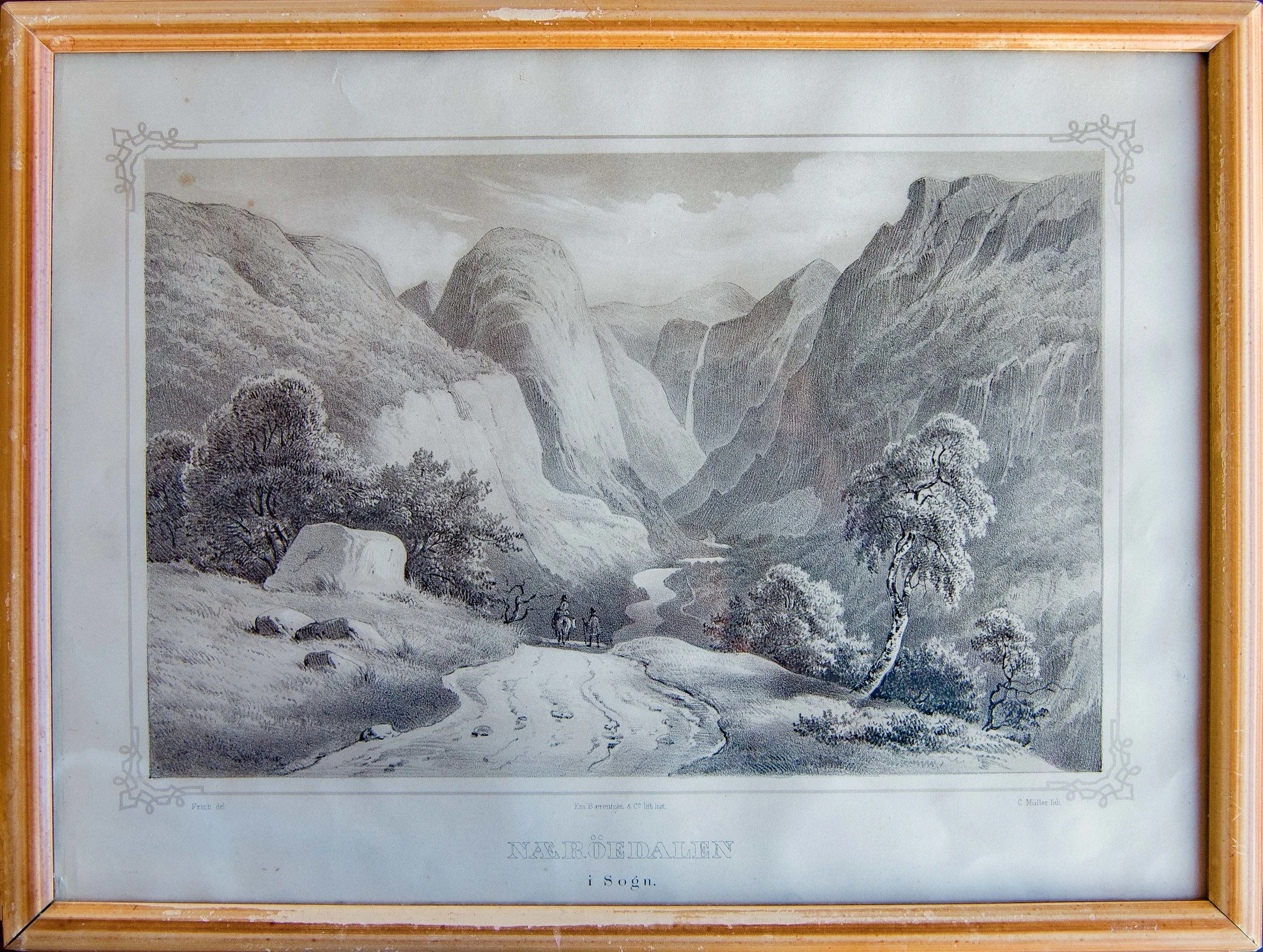
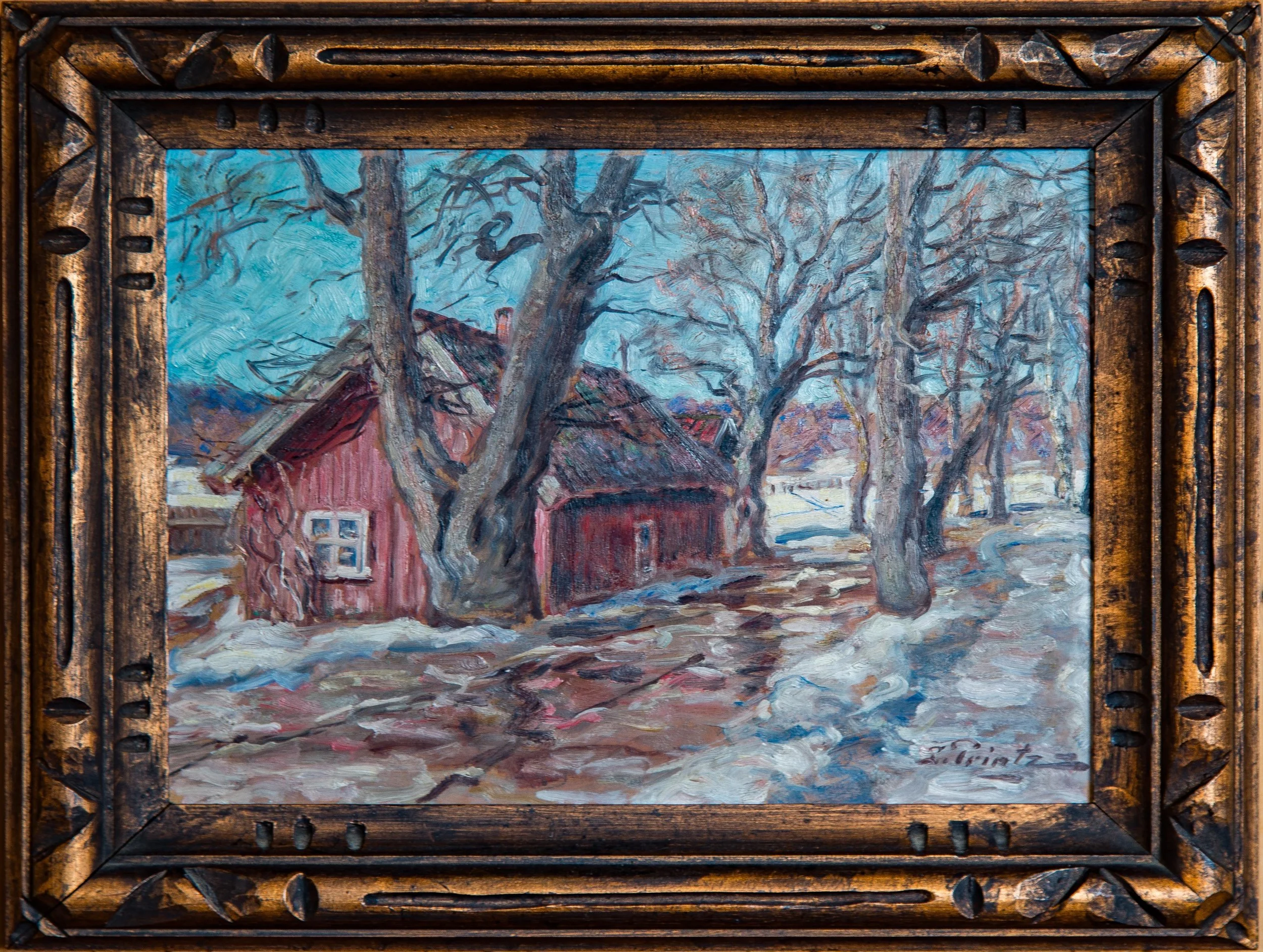
Lars Printz - unknown motive
(1889-1968)
Printz was born in Nes, Romerike. He studied in Kristiania under, among others, Christian Krogh and Halfdan Strøm.
He lived in Balestrand for quite a long time, and was well liked by the villagers. There are many pictures of Printz here in Balestrand.
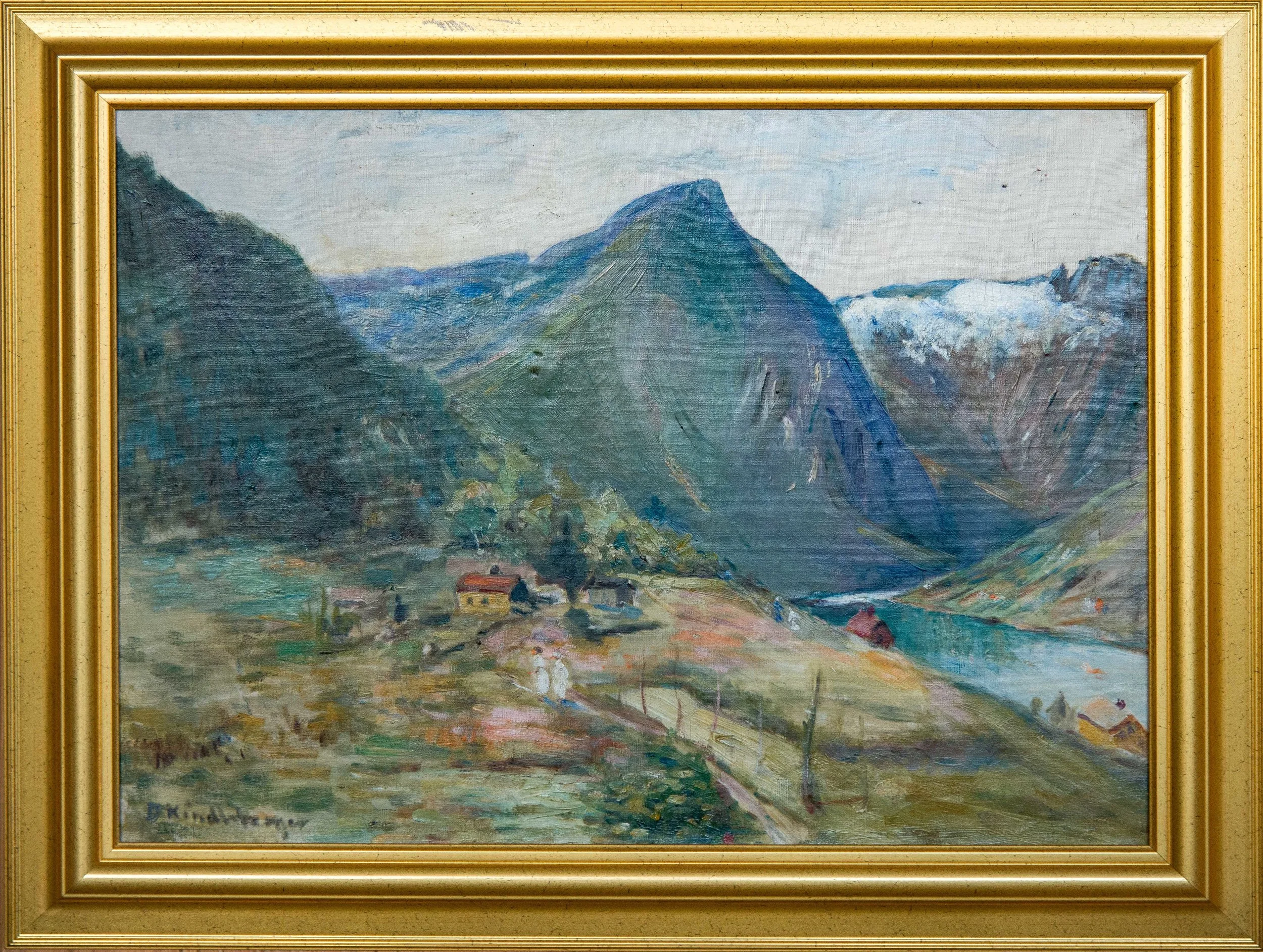
Kindelberger - Esefjella
David Kindleberger (1834-1921)
American naval doctor and hobby painter who settled in Balestrand in the 20th century. David was born in Smithville, Oregon. After studying at Wittenberg College, he joined the USN in 1859 as a naval doctor. He had a long military career, and even after he retired he held several positions in the American Medical Service, including chief of the US Naval Hospital in Philadelphia and chief of the Naval Hospital in Guatemala (1914). There is little information given that Kindleberger was a painter, but for Balestrand he is best known as a painter. He naturally fell in with the other painters who built dragon-style villas here. He was not a great painter, but at his best he could create great works of e.g. Balestrand.
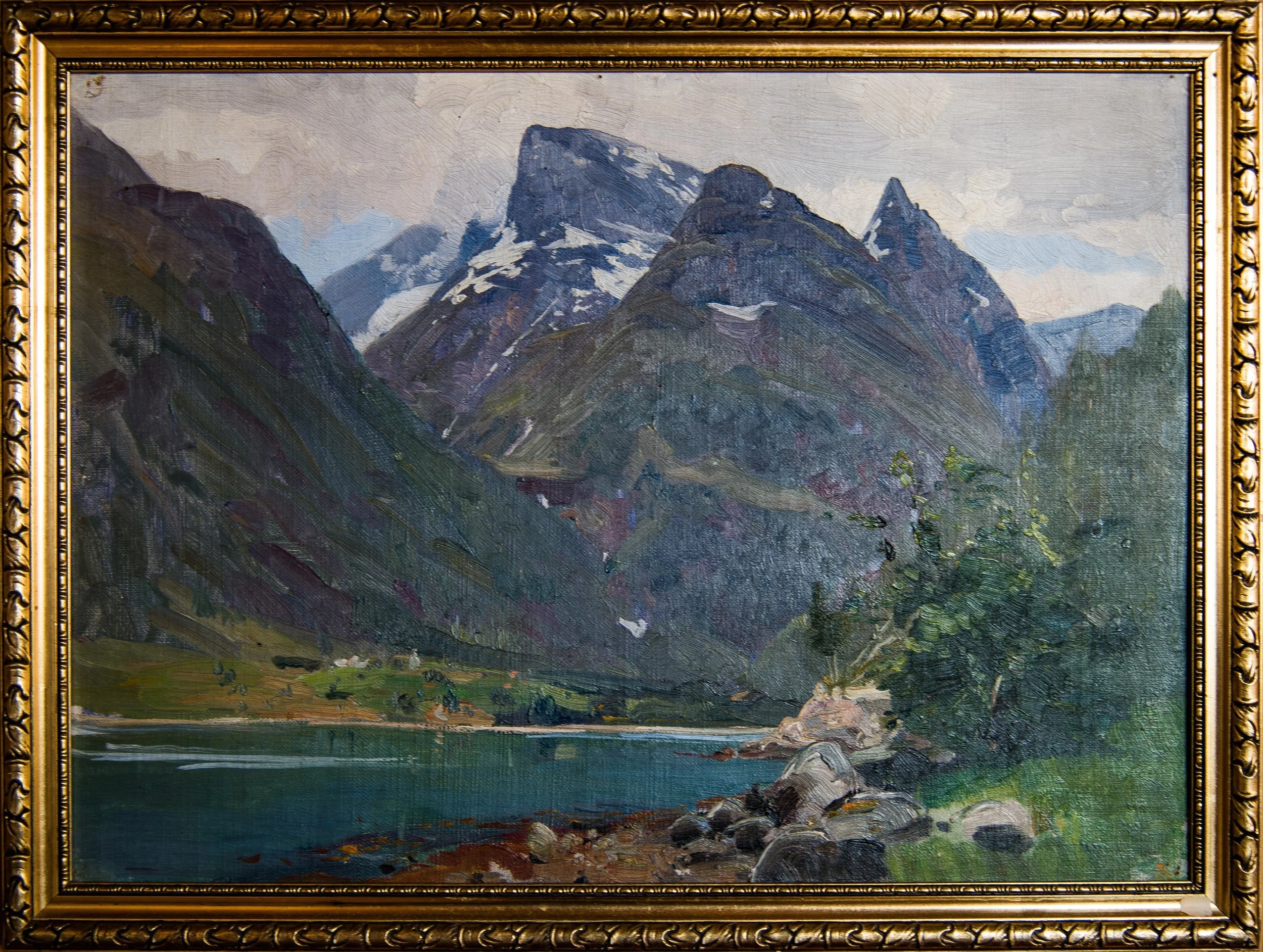
Hans Andreas Dahl - Landscape
(1881 - 1919)
Hans Andreas Dahl was the son of Prof. Hans Dahl and Helene Bewer. He was born in Düsseldorf, but grew up in Berlin. Hans Andreas was with his parents on summer vacation in Norway and Balestrand. The first time we know for sure was in 1891. He then lived with his mother and sister at Kvikne's Hotel for 10 weeks. He had no formal art education, but many believe that he was artistically better than his father. In 1910 he had his own studio built right above his father's villa.
Around 1908, Hans Andreas married Lorna Bellew from England, and they had two children, Francis and Eric. In 1919, Hans Andreas contracted pneumonia and died, only 38 years old.
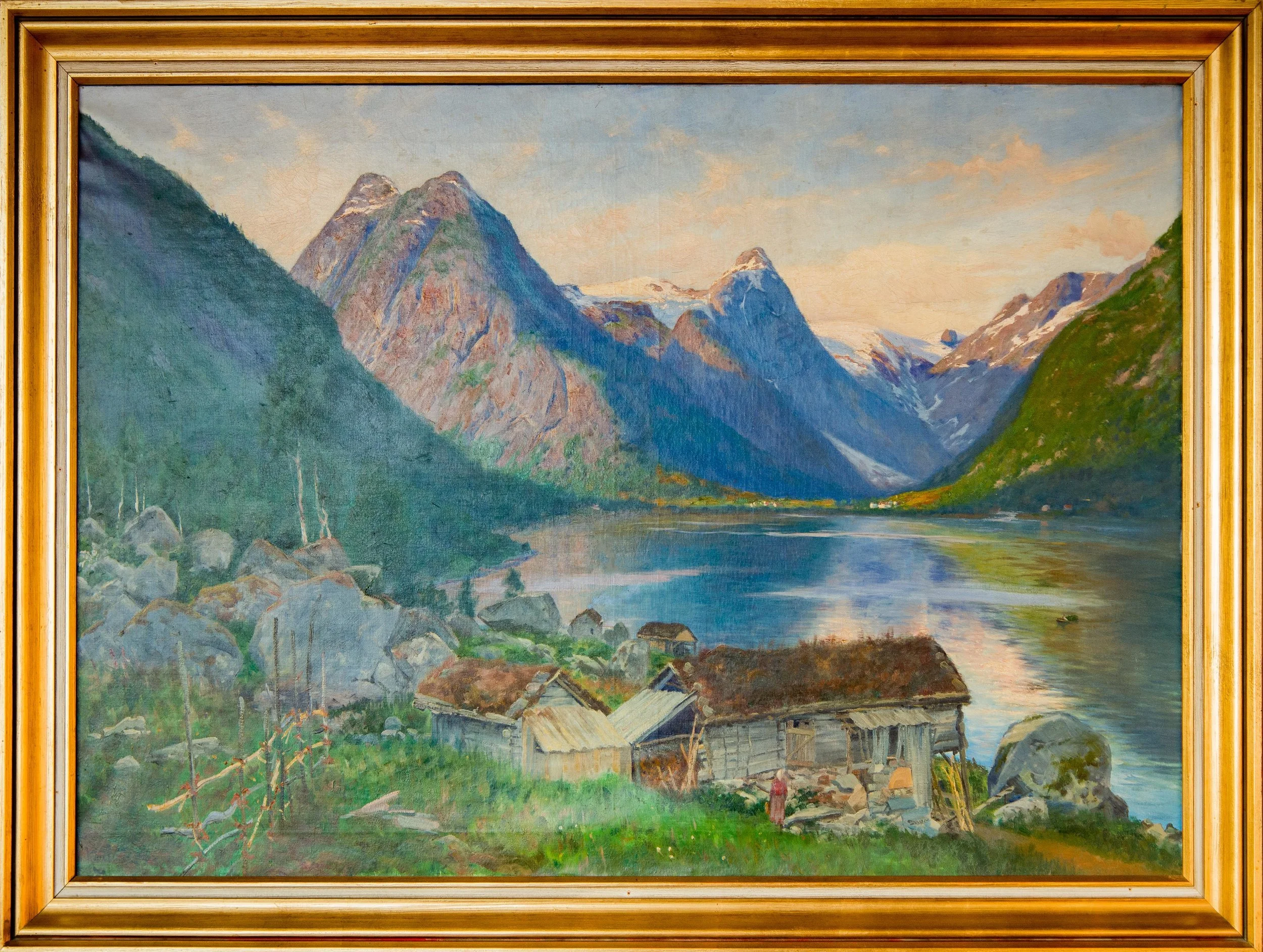
Håkon Kaulum - From Fjærland
(1863 - 1933)
Kaulum was born in Bergen. The first time Kaulum is found in Balestrand is in the hotel's guest books in 1897. He was particularly fond of Esefjell. He moved to Balestrand and built the house "Jotunheimen", which was covered by an avalanche in 1928. This year was a disastrous year for Balestrand, with many avalanches and human lives lost. When Jotunheimen was covered by the avalanche, an original house with a lot of art disappeared. He died in Kristiania.
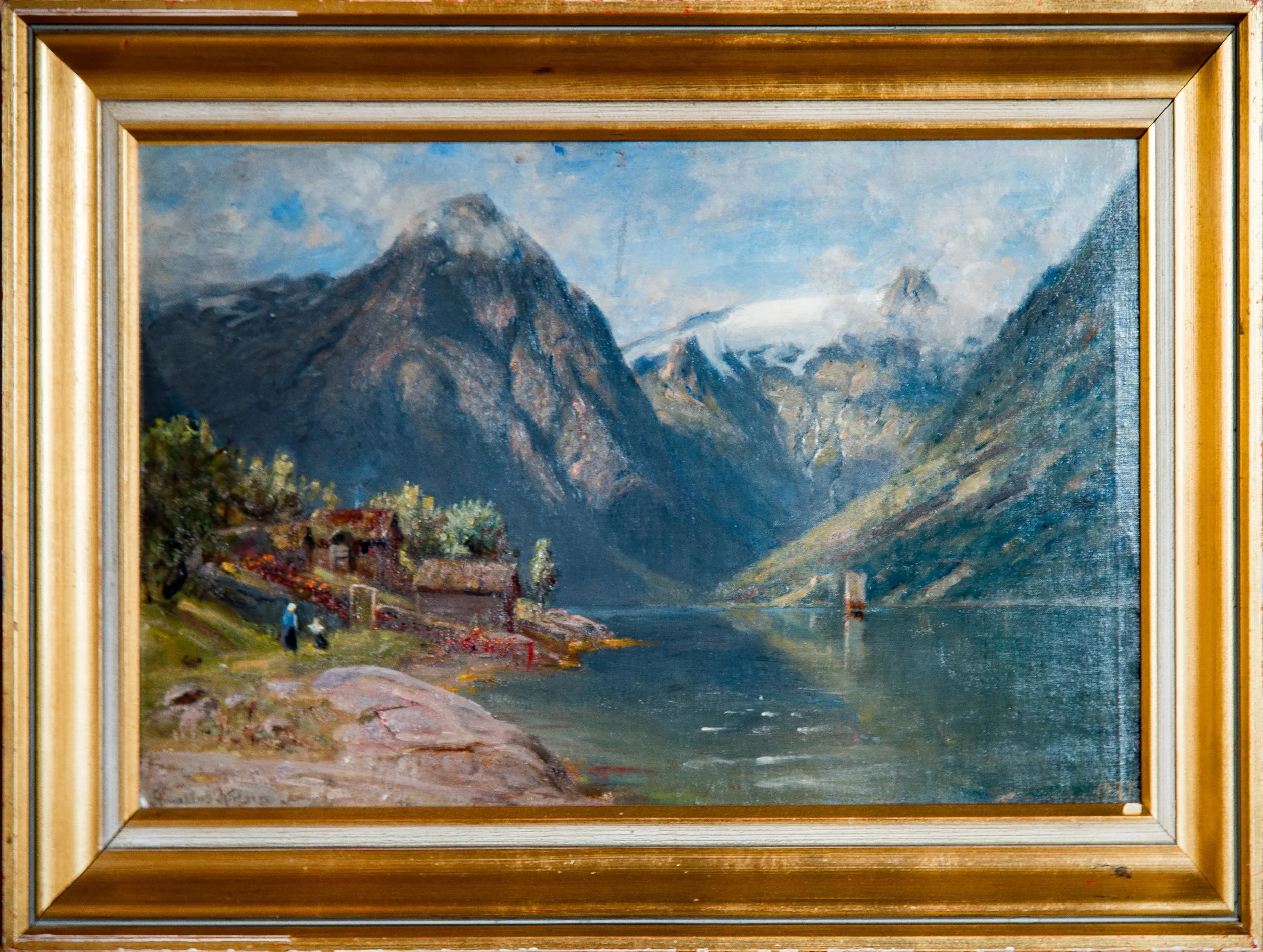
Clarin Amaldus Nielsen - From the Monk
(1838 - 1932)
Nielsen was born in Mandal, and is usually called a southern painter. He studied in Düsseldorf, where he had Hans Gude as his teacher. He made many study trips, and became interested in the Vestlandfjords. Nielsen is one of many who immortalized "Munkastova" in Munken. He did this in 1865. The picture is considered by experts to be one of Nielsen's best.
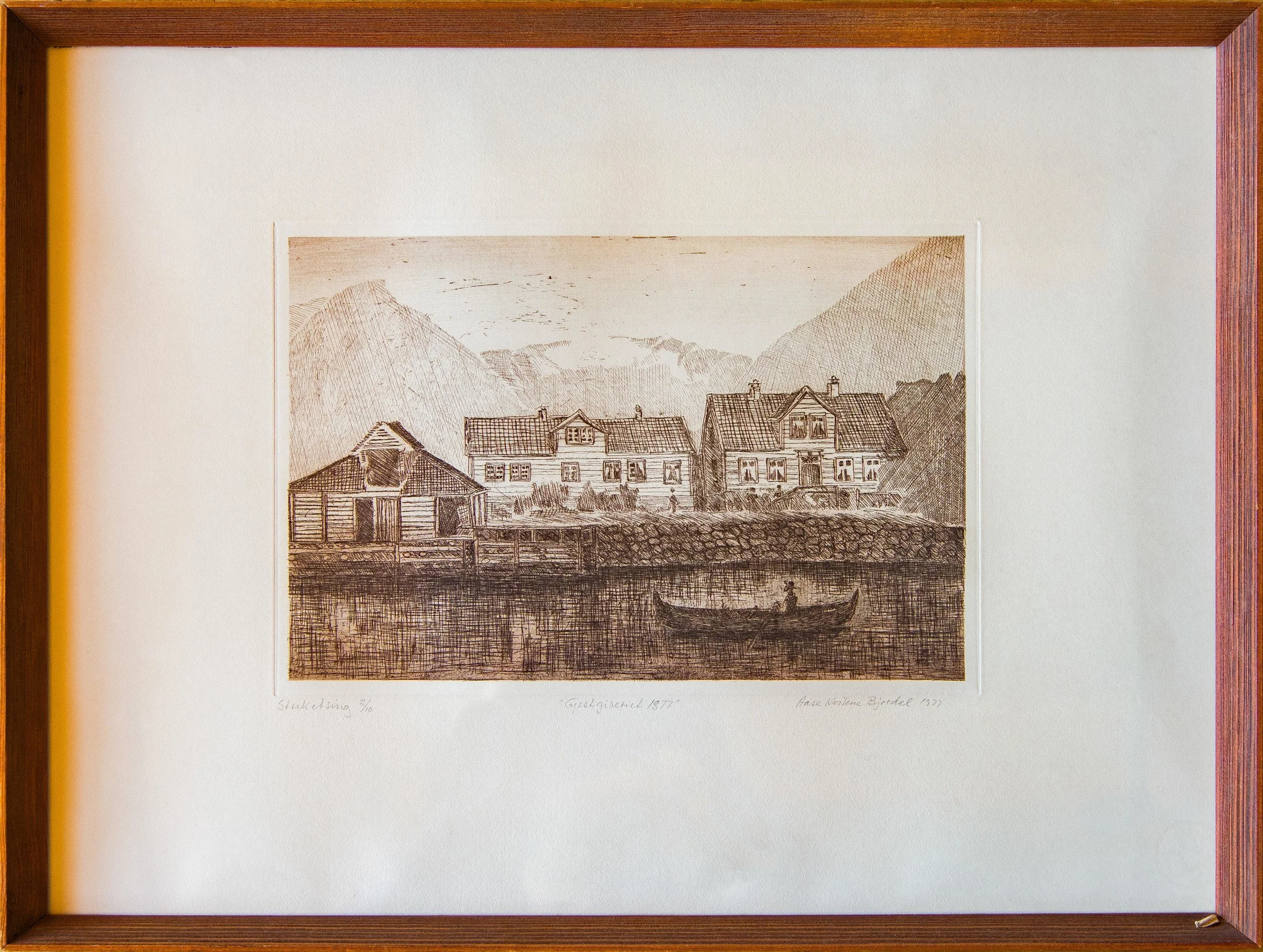
Aase Kvikne Bjordal - Guesthouse 1877
(1921 - 2009)
Bjordal was born and raised in Balestrand, and is the daughter of Sigurd and Marta Kvikne, who owned Kvikne's Hotel. She was educated at the State School of Arts and Crafts in Oslo, the Vestlandske kunstakademie in Bergen, and the Bergen School of Arts and Crafts.
Bjordal finds her motifs in the old rural environment. Techniques such as cold needle, aquatint, etching and serigraphy are well suited to these motifs. She has done many decorative assignments, and had many exhibitions.
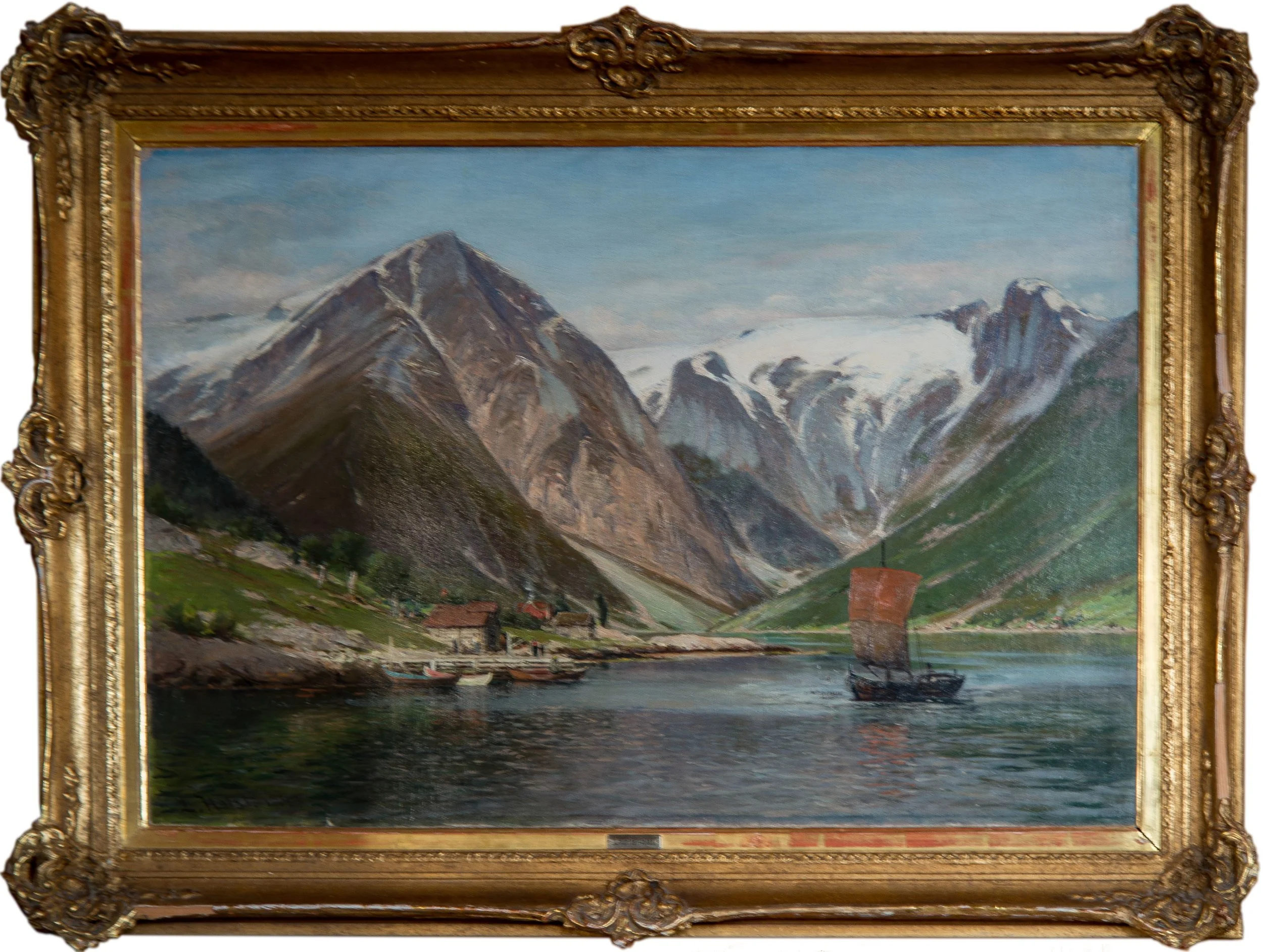
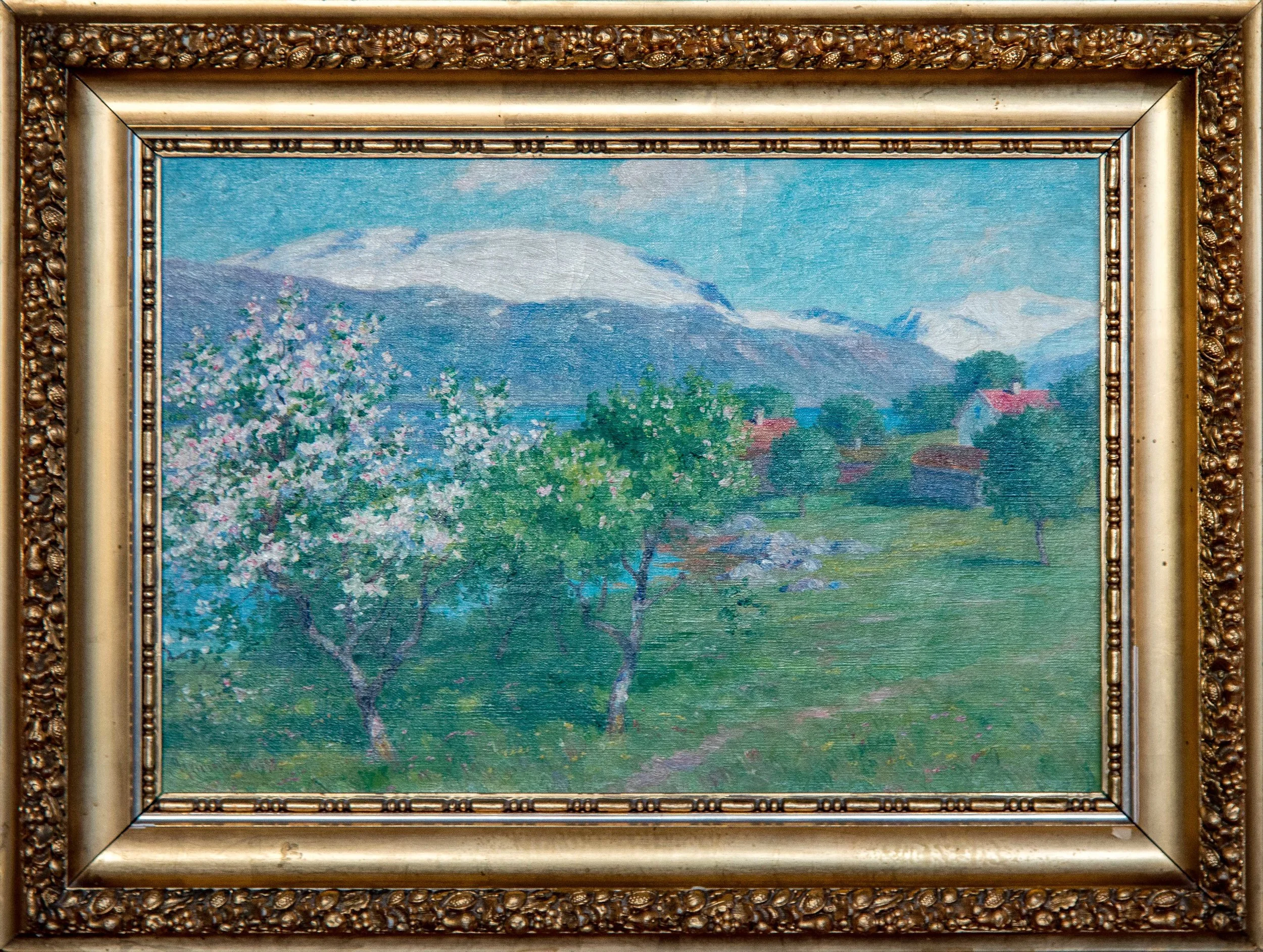
Johannes Grimelund - Fruit flower with Rambera in the background
(1842 - 1917)
G. had attended J.Fr. Eckersberg's painting school during his studies, but it was not until a recreational trip to Italy in 1869–70 that he seriously considered becoming an artist. During his downfall, he spent a couple of months with Gude in Karlsruhe, copied two of his watercolours, and was encouraged by Gude. In the summer of 1871 he painted studies in Fåberg in Gudbrandsdalen (Skuronn in Bergen Billedgalleri), then gave up his teaching position and went to Karlsruhe in the autumn at Gude's invitation. In the winter of 1871–72 he drew at the Academy of Fine Arts there. He wanted to train as both a figure and landscape painter, but soon decided on the latter. In the summers he went on study trips to the Black Forest (1872), together with Gude on Snarøya outside Sandvika (1873), and in 1875 and -76 in Bohuslän. In 1872 he made his debut in the Christiania Kunstforening with two landscapes. Initially, the motifs were often Norwegian summer moods with birch forests, as well as German motifs, popular themes that he sold to art societies in Christiania, Bergen, Trondheim, Stockholm and Karlsruhe. With Morning in the Birch Forest (1875) he won his first official recognition, a silver medal at the exhibition in Philadelphia in 1876. These youthful pictures are strongly influenced by Gude's school. After moving to Paris in 1875, his landscapes soon became popular there as well.
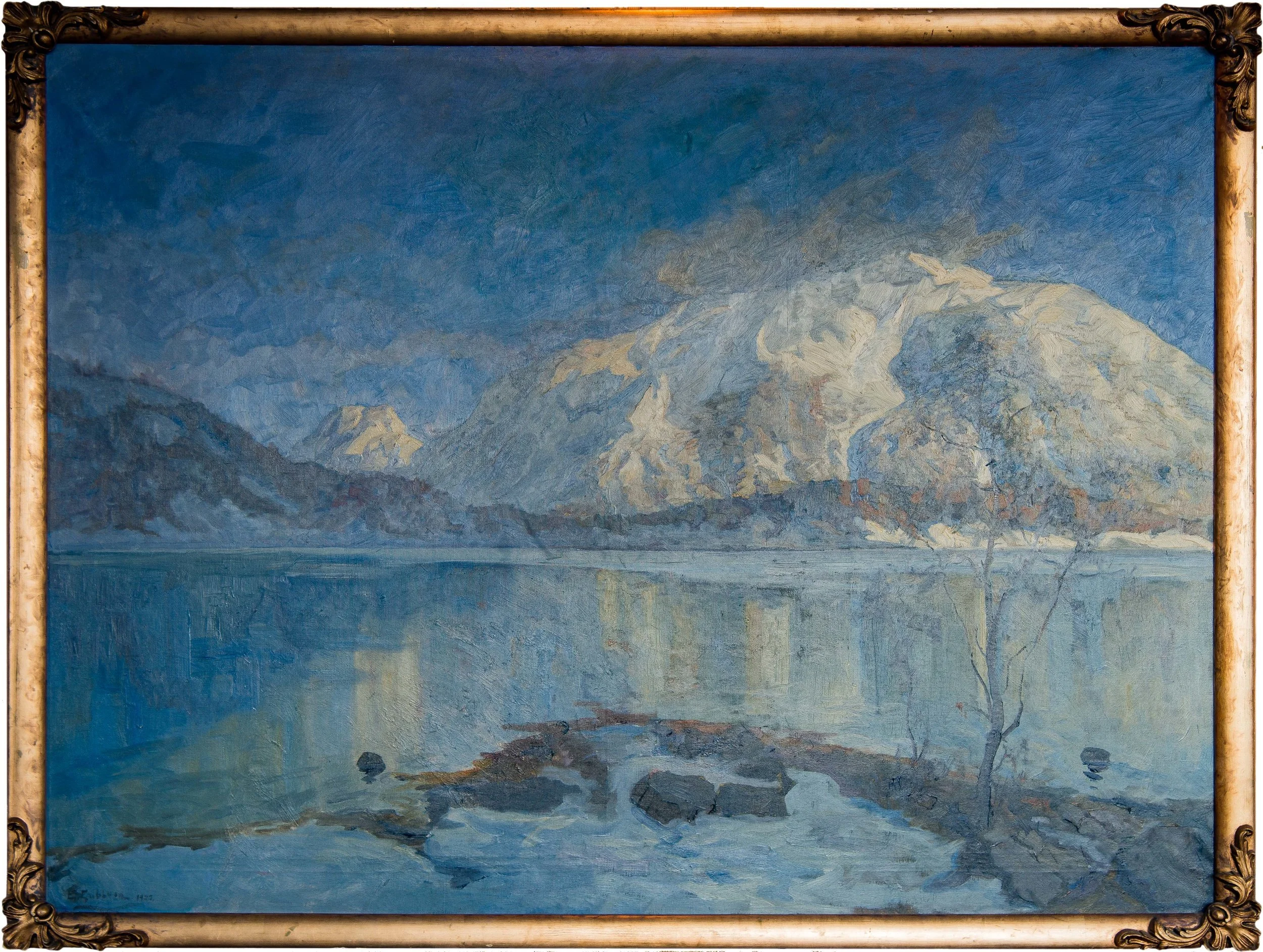
Einar Enblom - Against the Diaper
(1900-1936)
Enblom was Swedish, and was born in Stockholm. Despite his Swedish origin, it is correct to call Enblom "Balholm painter". We know that Enblom stayed in Balestrand for long periods. He was, among other things, a good friend of Sigurd Kvikne, and was called Uncle Einar by the Kvikne family.
He was in Balestrand in the summer, and in Switzerland in the winter. Enblom died in Switzerland at only 36 years old.