
Art guide:
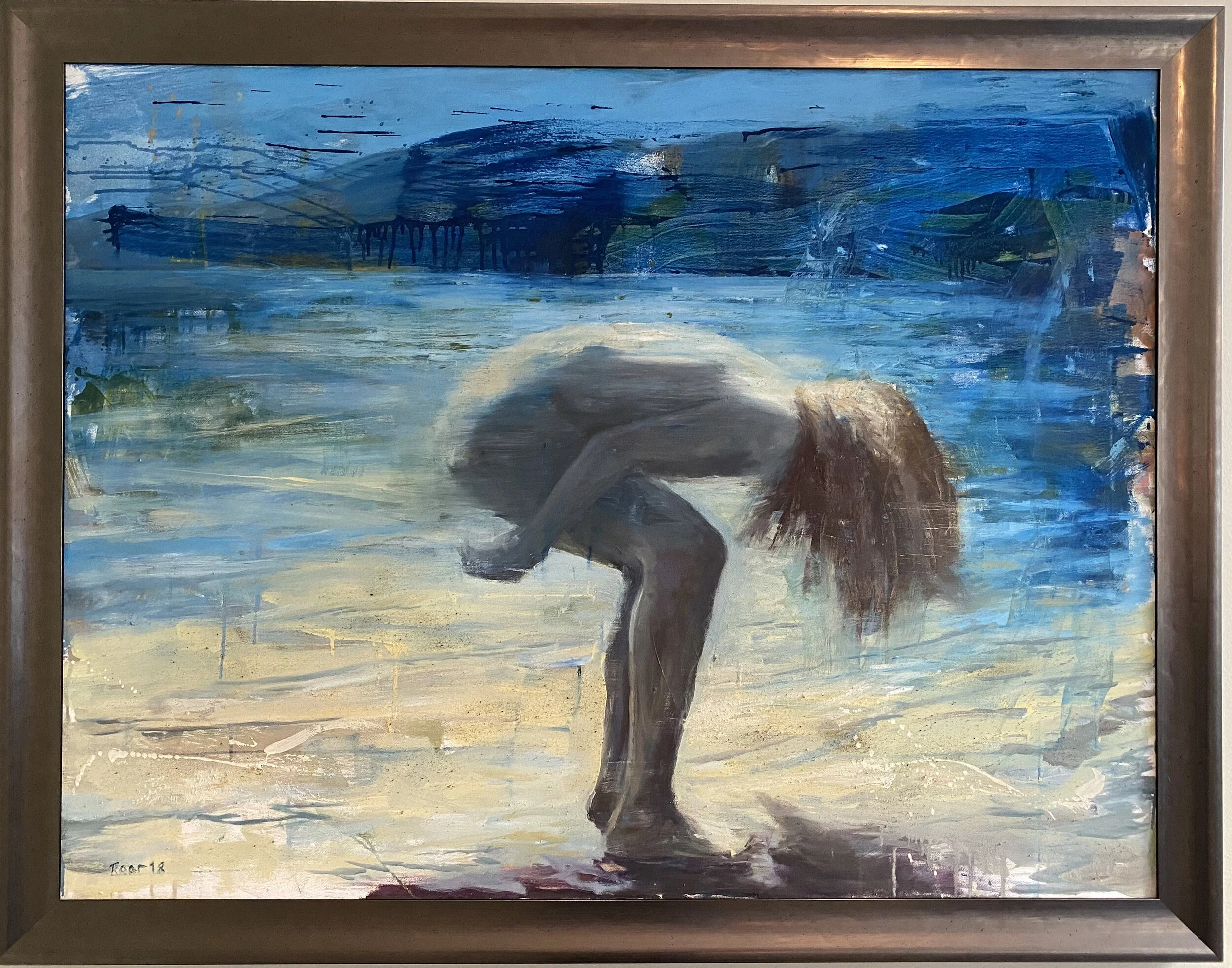
Roar Kjærnstad - Bathing Girl
Roar Kjærnstad is a Norwegian visual artist based in Stange, with a studio in Oslo affiliated with the Center for Free Arts. He works with oil painting, drawing, graphics and prints, in a classical figurative tradition with an emphasis on craftsmanship. Kjærnstad is educated at the Nansen School of Art and the Royal Art Academy in Antwerp.
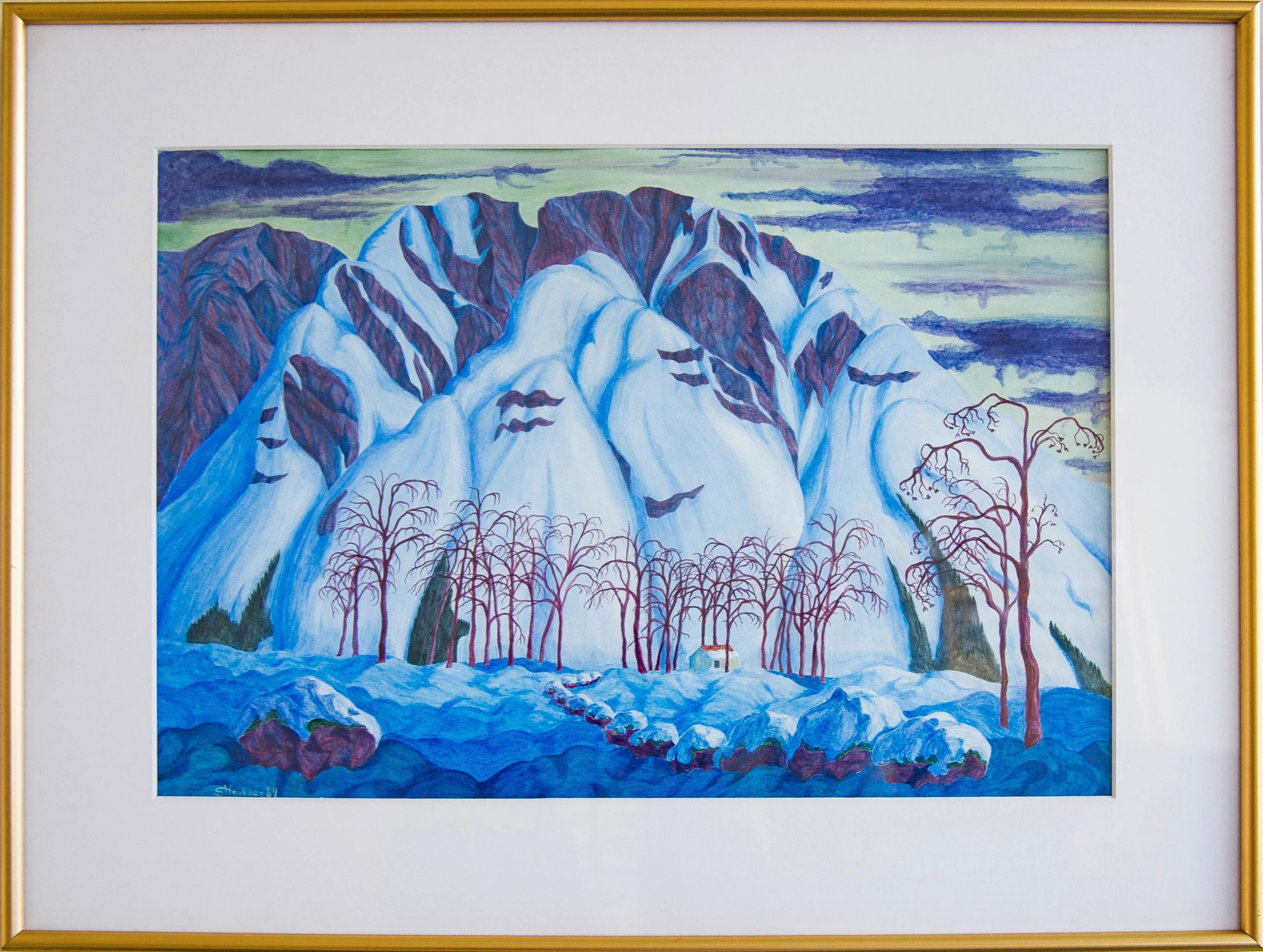
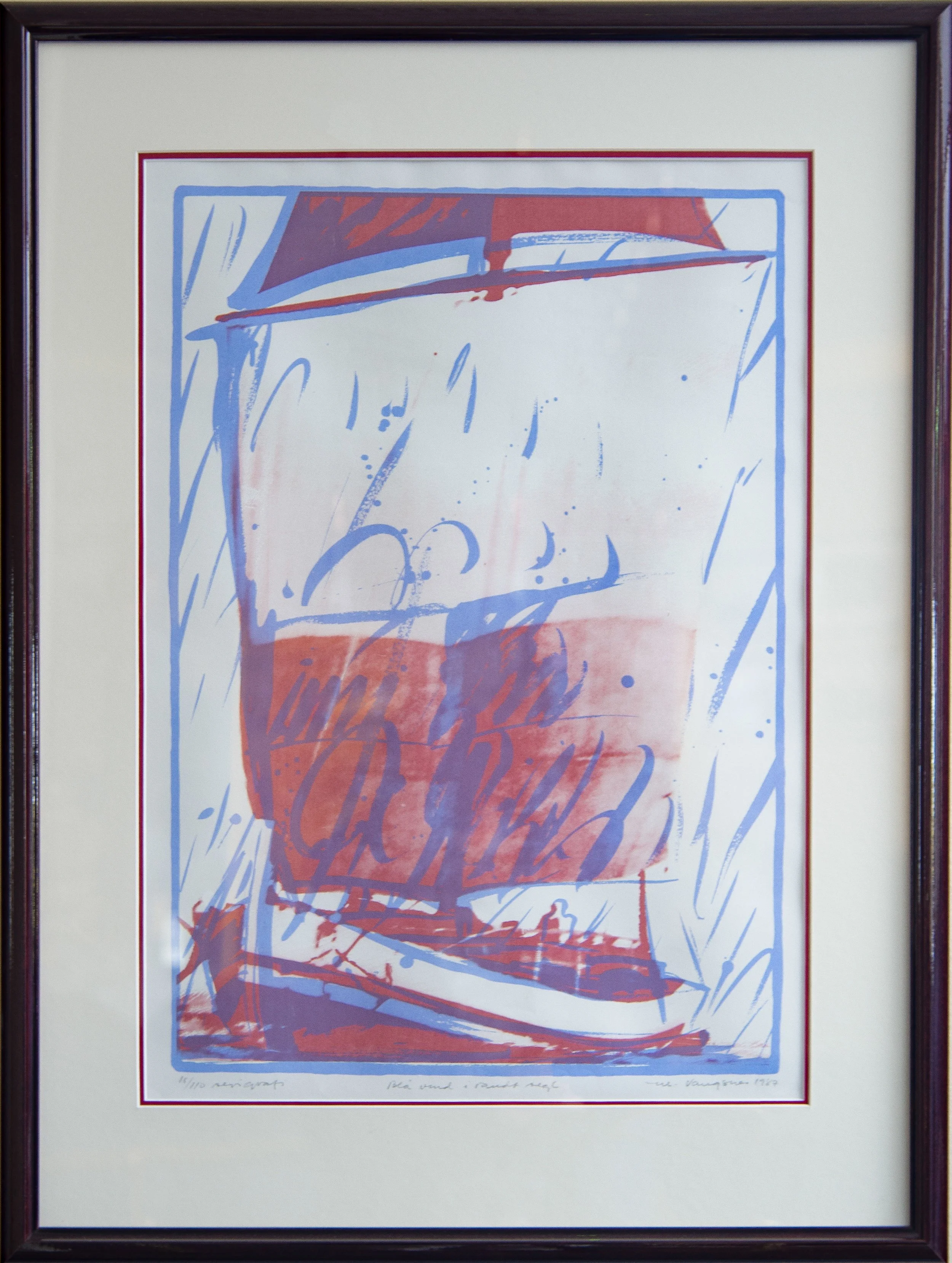
M. Vangsnes - unknown motive
Magne Vangsnes
Magne Oddvin Vangsnes, born 1945 in Vangsnes, is a visual artist who works with graphics, material images, land art and installations.
Trained as a teacher at Hamar Teachers' College and as a design teacher at Stord Teachers' College. Has also trained as an artist in Norway and during study stays in Germany and the USA. Debuted at the Vestlands-utstillinga in 1972, and has since been a frequent participant in this and the State Autumn Exhibition.
One of Magne Vangsnes's "land art" works: "Blue pear tree" in Leikanger.
He has had several solo exhibitions in the largest Norwegian cities and in Sogn og Fjordane, and has participated in a number of group exhibitions in Norway and abroad - including the USA, Germany, China, Denmark and Slovakia. His work has been purchased by the Norwegian Arts Council, Bergen Municipality's Art Collections and Sogn og Fjordane Art Museum. In Sogn og Fjordane he has had decoration assignments at the Medical School in Førde and at Årdalstangen Torg.
Among the material works, Ma's sculptural "breastplates" made of homemade paper have attracted attention, and in the field of "land art" Vangsnes Ma has carried out the project "Hes" at Fjærlandsfjorden in 1990.
Vangsnes was a co-owner of BK Sogn og Fjordane and of Sogn og Fjordane Kunstnarsenter, and has held board positions in both. He was coordinator of the large Environmental Art Week in Førde in 1989. He has been a board member of Norske Grafikere and a jury member for the Vestlandsutstillinga several times, and chairman of the jury for the Haustutstillinga 2002-2003. Director of the Sogn og Fjordane Art Museum 1999 -2001. Has held a three-year State work grant.
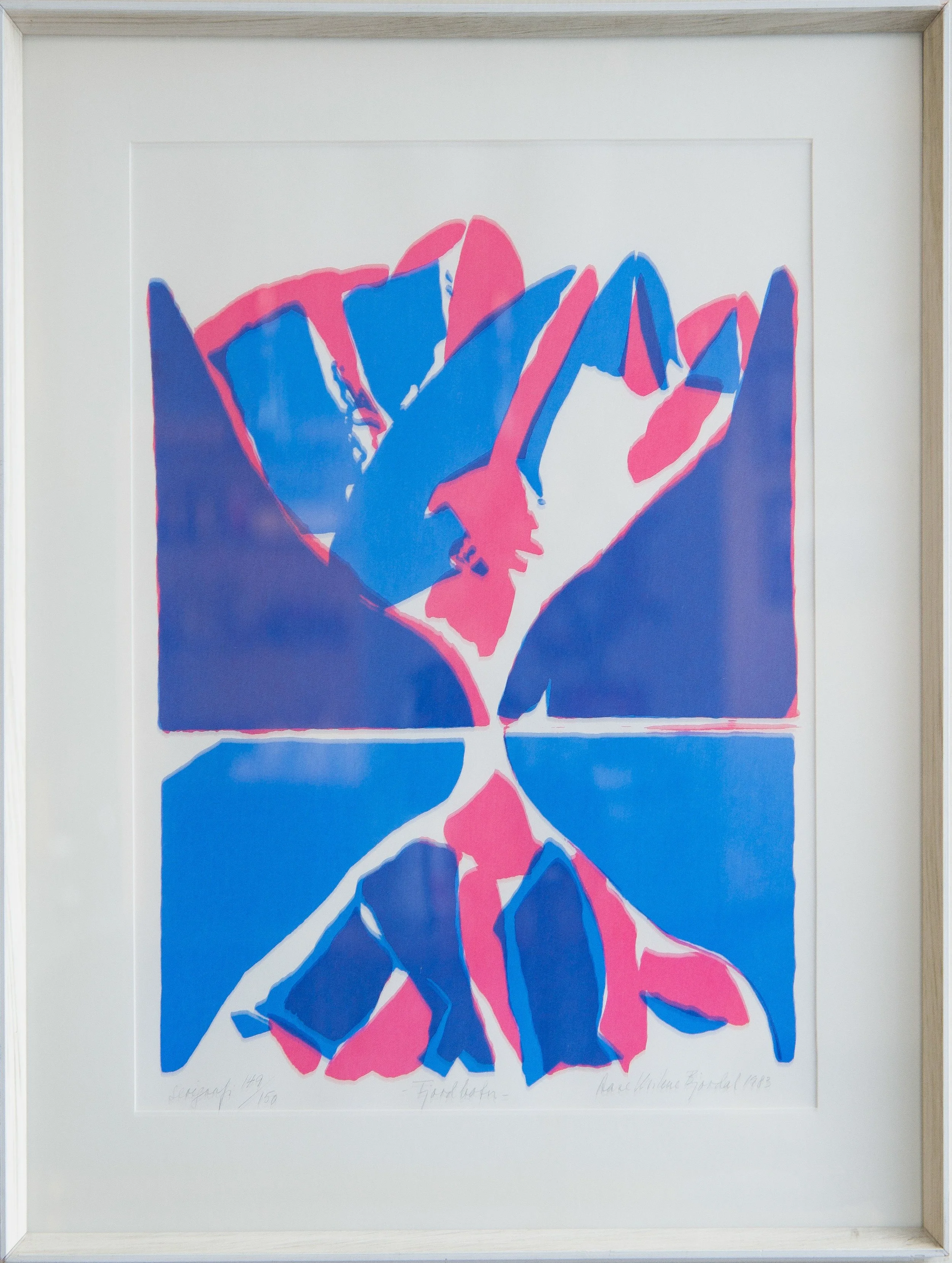
Aase Kvikne Bjordal - Fjordbotn
(1921 - 2009)
Bjordal was born and raised in Balestrand, and is the daughter of Sigurd and Marta Kvikne, who owned Kvikne's Hotel. She is educated at the State School of Crafts and Arts in Oslo, the Vestlandske kunstakade in Bergen and the Bergen kunstakadeskule. Bjordal finds her motifs in the old rural environment. Techniques such as cold needle, aquatint, etching and serigraphy are well suited to these motifs. She has done many decorative assignments, and has had many exhibitions.
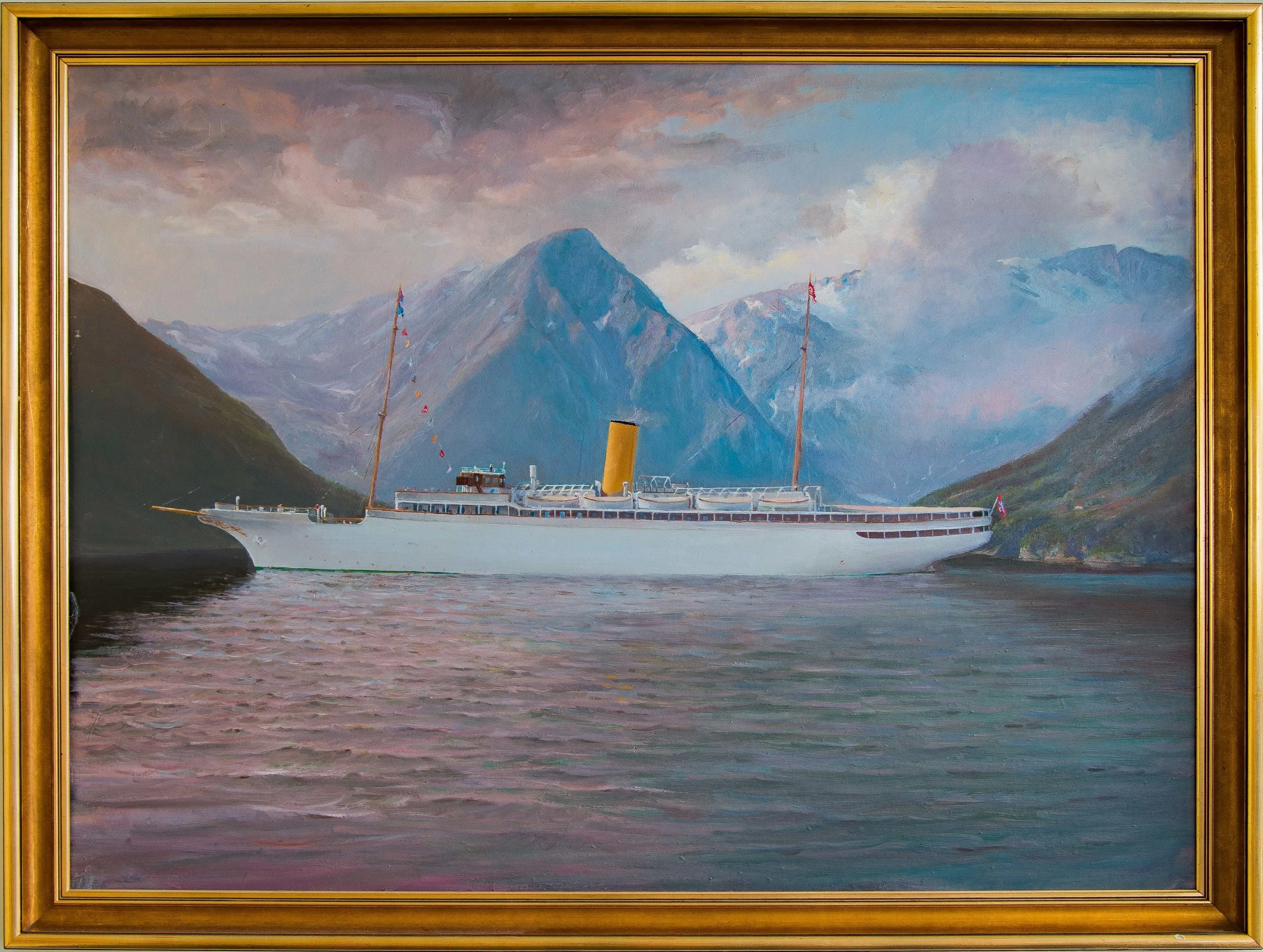
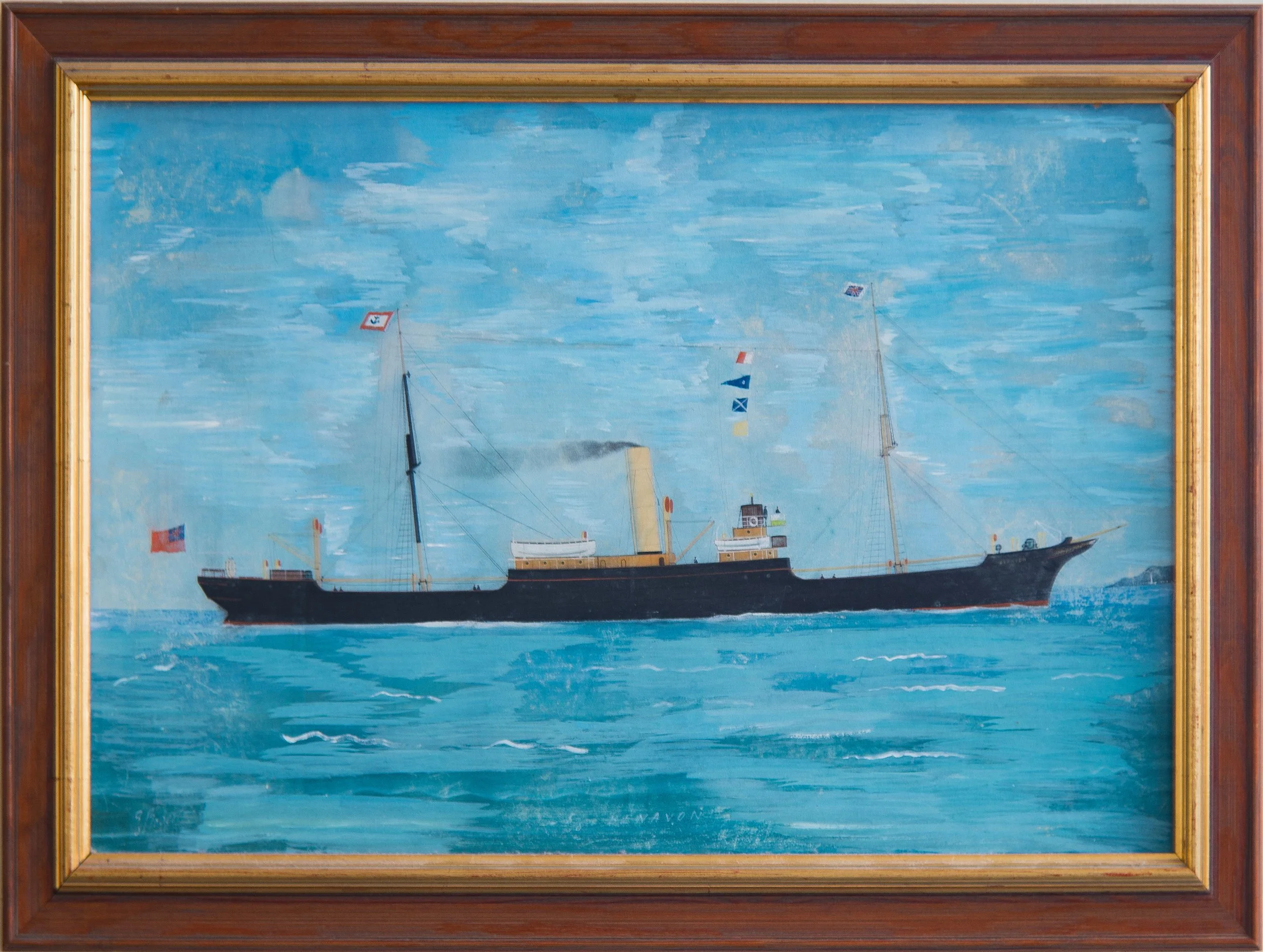
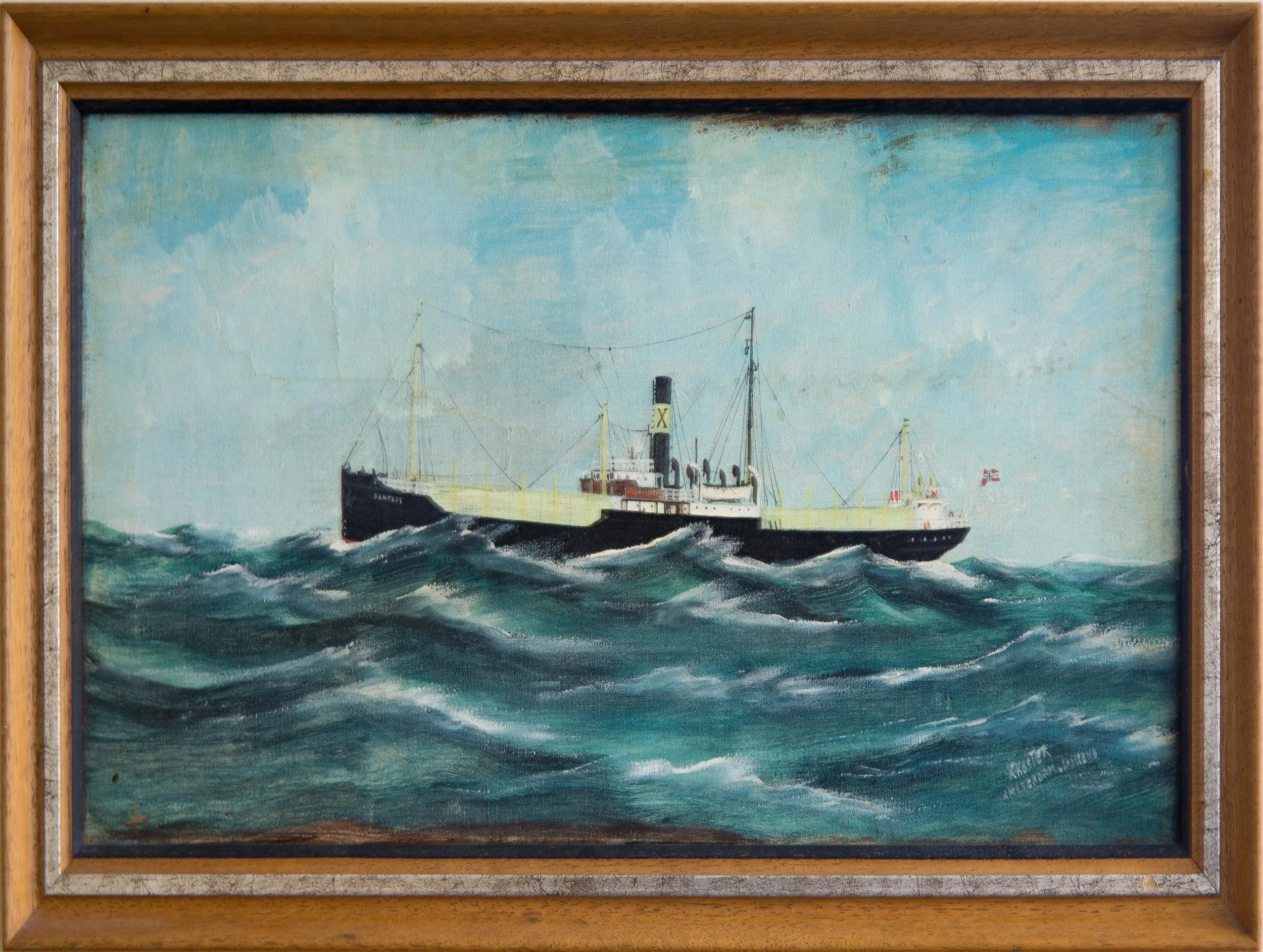
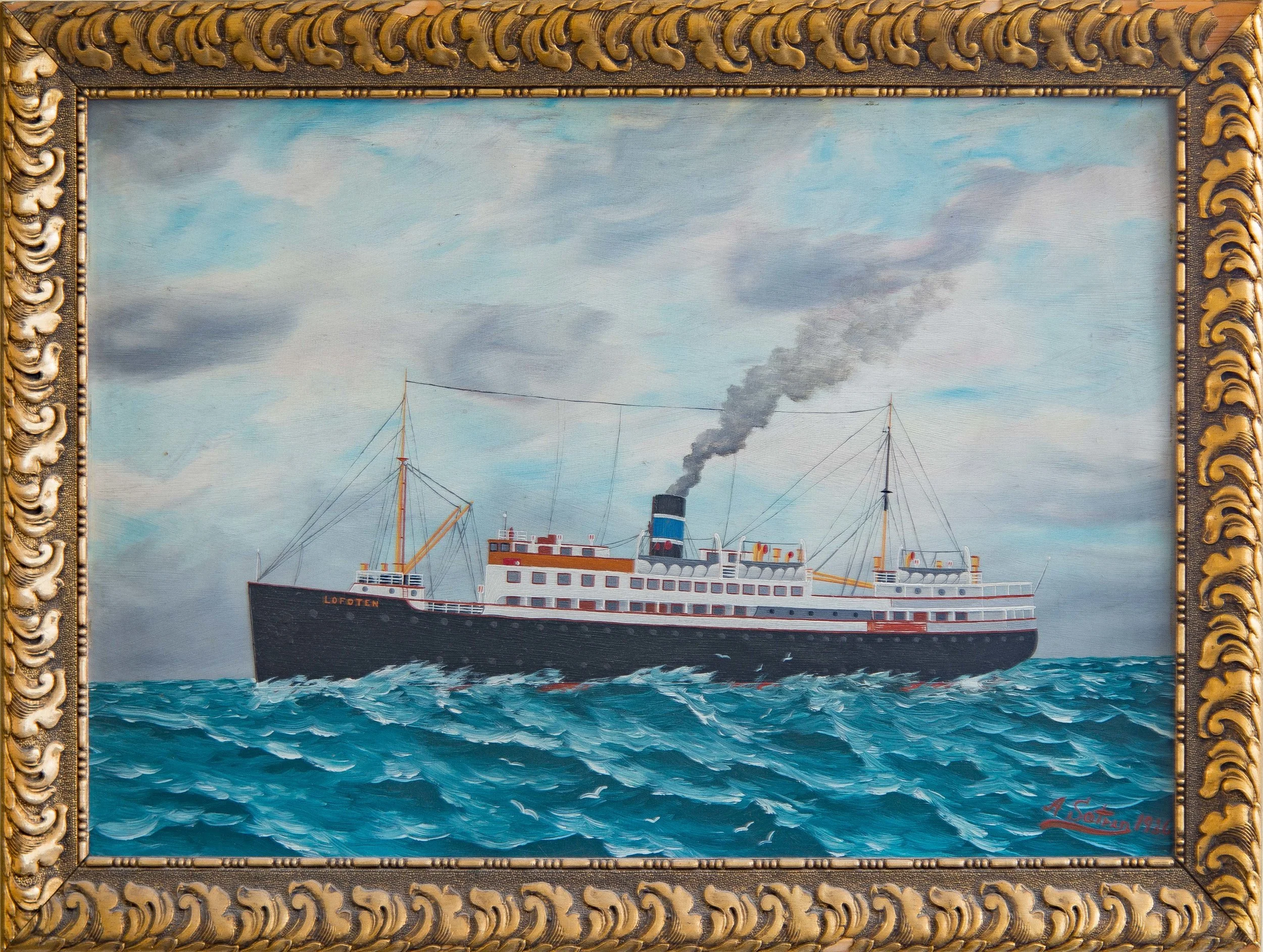
Abraham Saetren
(1914 - 1976)
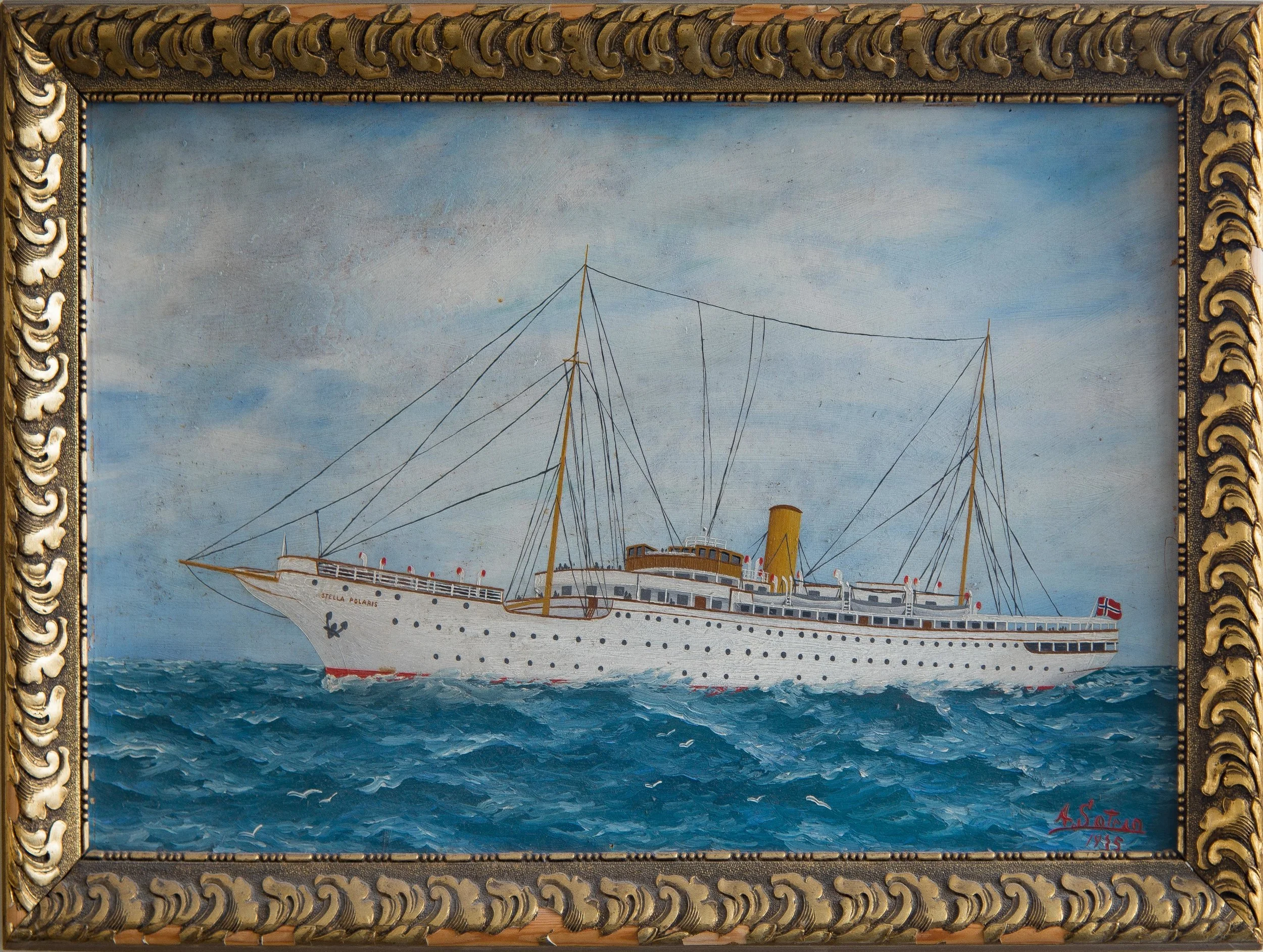
Abraham Sætren was born out to sea on the island of Vågsøy just south of Stadt, and was named Abraham Refvik after his father. Here, fishing and farming provided the bare necessities. In addition to helping in the barn and out at sea, Abraham drew and painted whenever he had a free moment, if there were no meetings in the Scout Association, which he was very busy with. In the 1930s, he moved to Gloppen in Nordfjord and took the name Sætren there. His health was not so good, his finances were bad, but his spirits were always good. Abraham's main income came from selling paintings, but at times he supplemented his finances with extra short-term jobs.
Abraham rarely painted from photographs, but preferred to make sketches of what he was going to paint and would often include in the sketches which colors were to be used here and there. Since he mostly painted paintings of fjords and mountains, Abraham was an outdoorsman. To transport himself around, he preferred to use a bicycle, but he made annual trips to Jotunheimen to paint from there. He also made some portraits of ships, and these were probably commissioned by the ship owners themselves.
Abraham Sætren probably had no schooling beyond elementary school, nor in drawing and painting. He was an autodidact who studied paintings by other painters and made the best of it. Paintings made by Sætren can be found in Western Norway, and most of all in Nordfjord. He never had a major breakthrough as an artist. In the fall of 1976, Sætren died and was buried at the church where he grew up. Out towards the sea.
Abraham Saetren
(1914 - 1976)
Abraham Sætren was born out to sea on the island of Vågsøy just south of Stadt, and was named Abraham Refvik after his father. Here, fishing and farming provided the bare necessities. In addition to helping in the barn and out at sea, Abraham drew and painted whenever he had a free moment, if there were no meetings in the Scout Association, which he was very busy with. In the 1930s, he moved to Gloppen in Nordfjord and took the name Sætren there. His health was not so good, his finances were bad, but his spirits were always good. Abraham's main income came from selling paintings, but at times he supplemented his finances with extra short-term jobs.
Abraham rarely painted from photographs, but preferred to make sketches of what he was going to paint and would often include in the sketches which colors were to be used here and there. Since he mostly painted paintings of fjords and mountains, Abraham was an outdoorsman. To transport himself around, he preferred to use a bicycle, but he made annual trips to Jotunheimen to paint from there. He also made some portraits of ships, and these were probably commissioned by the ship owners themselves.
Abraham Sætren probably had no schooling beyond elementary school, nor in drawing and painting. He was an autodidact who studied paintings by other painters and made the best of it. Paintings made by Sætren can be found in Western Norway, and most of all in Nordfjord. He never had a major breakthrough as an artist. In the fall of 1976, Sætren died and was buried at the church where he grew up. Out towards the sea.
Bernt Olaf Gulbrandsen
(1864 - 1924)
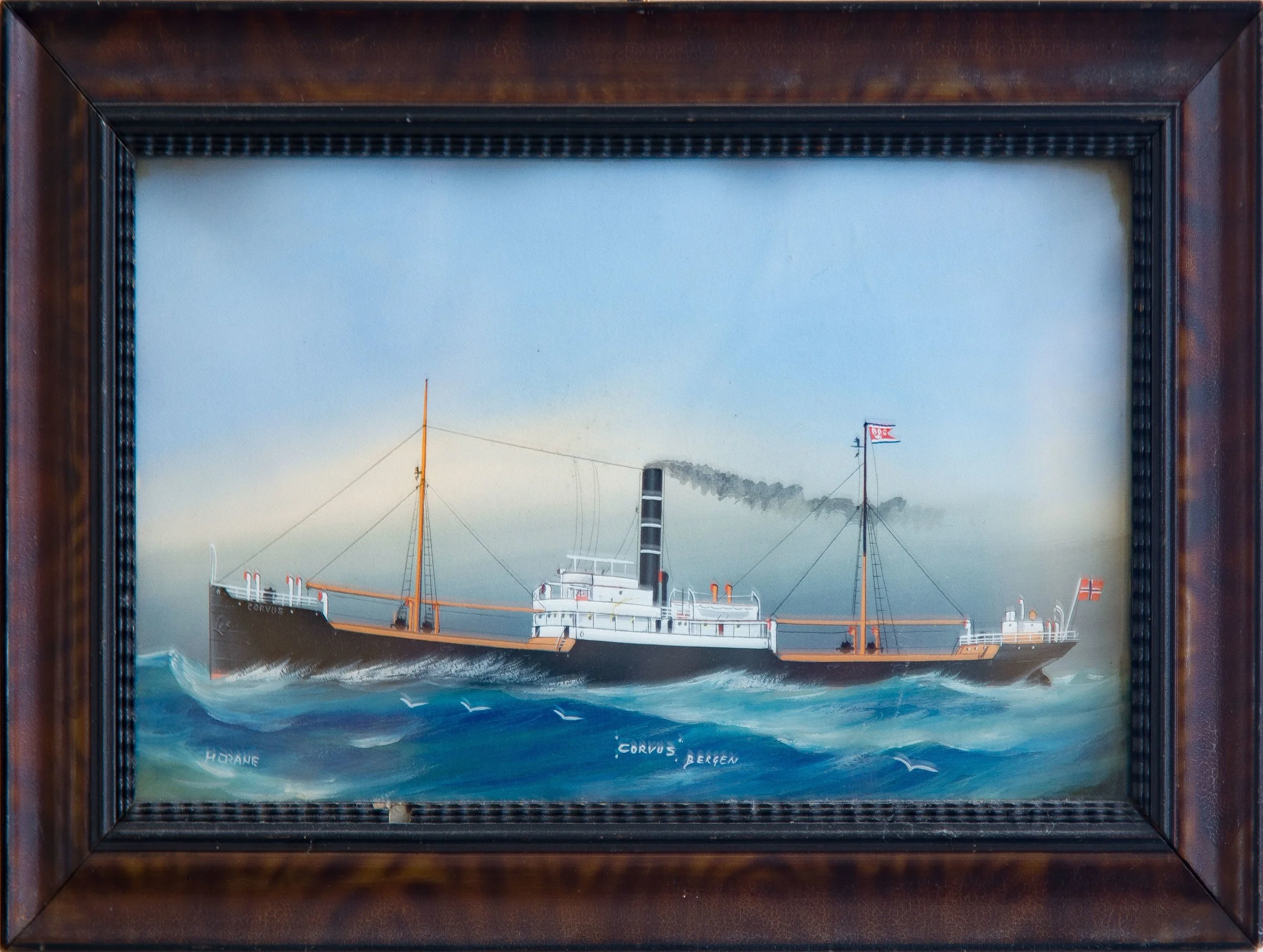
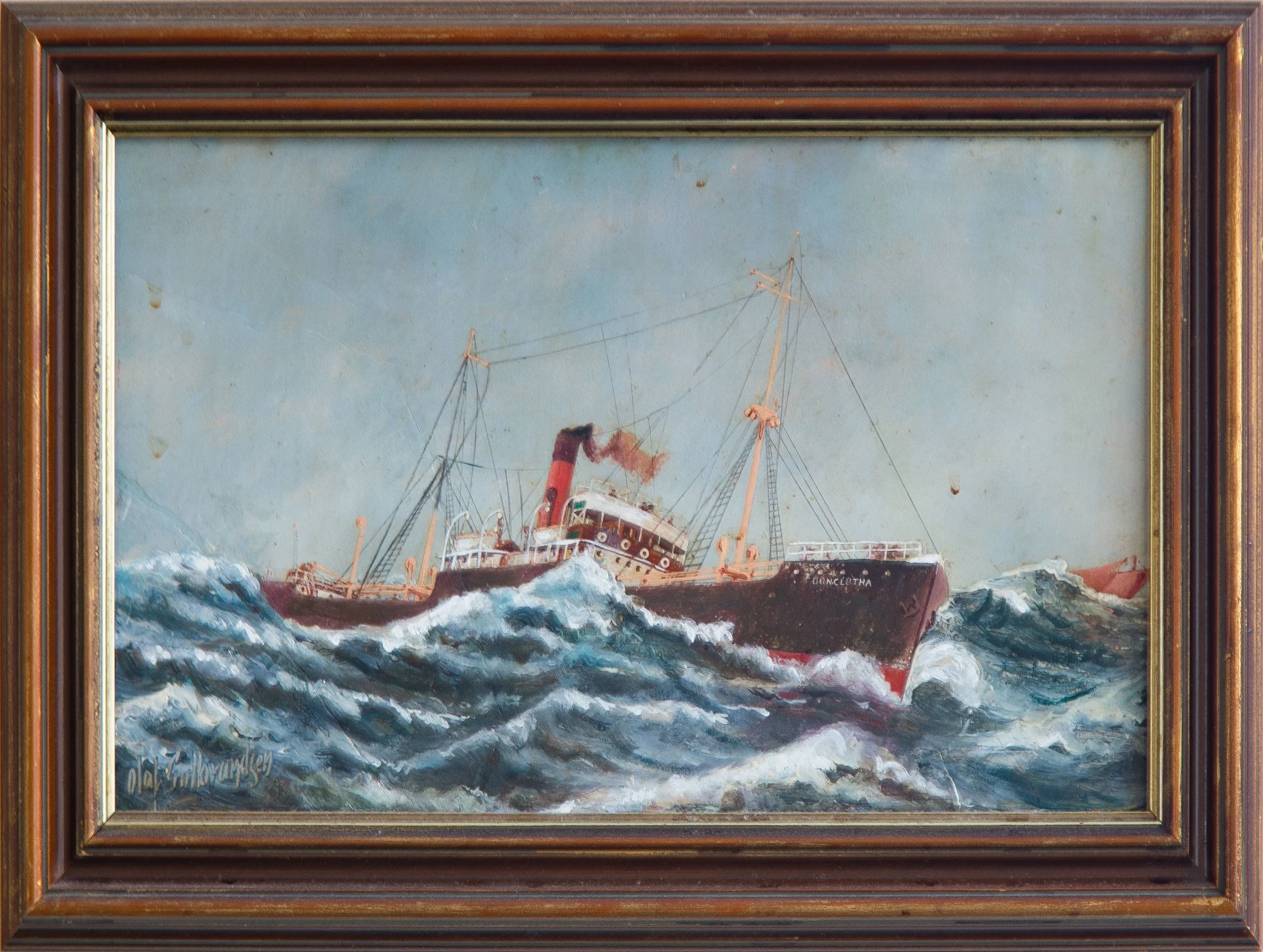
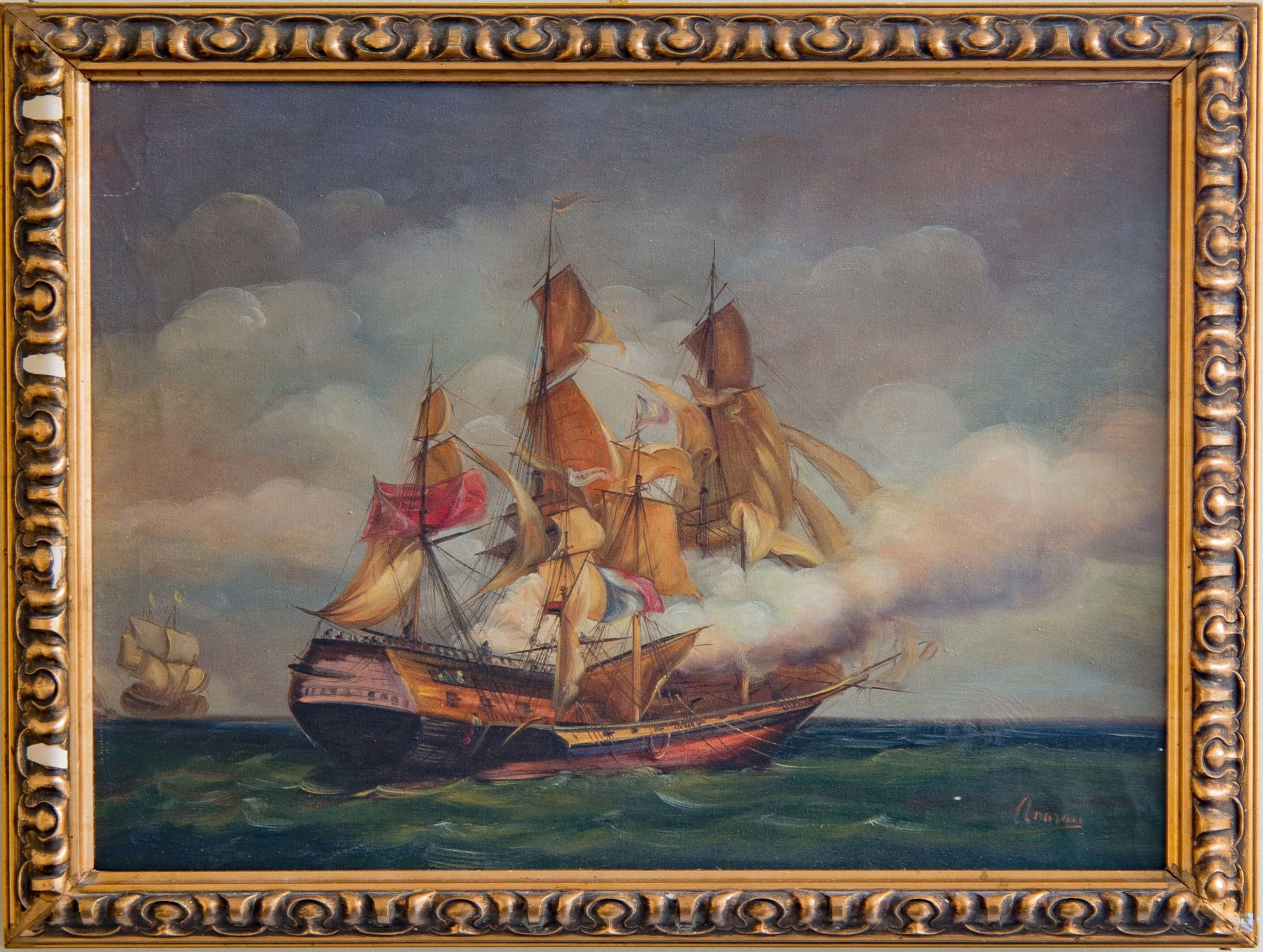
Bernt Olaf (Oluf in the church book at baptism) Gulbrandsen was born in Greenland in Kristiania in 1864. His parents were Ole Gulbrandsen and Anne Sophie Michelsdatter. Olaf sailed at sea, worked as a sailmaker and received his trade certificate in the early 1890s. He is said to have already painted ship portraits by then, if we are to believe his own advertisement from 1914 where he wrote that he had 25 years of experience. The oldest ship portraits we have seen from Olaf Gulbrandsen's hand are from the late 1890s. The pictures from this period are well made, but compared to his later production they are stiffer in expression. During this period he ran a frame and roller blind business in Kristiania at the same time as he had a large production of ship portraits.
In 1900, Olaf served six months in prison, and was then given the title of Portier. Towards the end of the new century, the number of paintings increased. He used the title of marine painter, but also engaged in other trades. In both 1905 and 1918, he was listed as a tobacconist, and his life in Kristiania was coming to an end. He separated and moved to Bergen, where his son Ragnar lived. Olaf also painted ship portraits here, and the last ones are dated 1924, the same year he died. During his career, Olaf painted many steamships, some sailing ships and some motor ships. At first, he stuck to the classic portrait where we see the ship from the side, while later he became a little freer in his style and painted many where the ship is seen obliquely from the front, working through the sea. Some of these seem as if he had put extra effort into them, and they are very beautiful.
Olaf Gulbrandsen signs his paintings in the corner at the end where the stern of the vessel is. Usually in the bottom right. Most of the paintings are signed with Olaf Gulbrandsen Kra:årstall. The F and K have a line that comes under the name and year.
Olaf and his wife Aagot Johane Fredrikke (née Eliassen) have 8 children. Of the 5 boys, 2 of them, Ragnar and Erling, continue in their father's footsteps and create ship portraits. In the first half of the 20th century, Olaf and his two sons were very active and prominent in their genre. There are countless paintings by them, both in museums and in private ownership. His son Aage Bernt is training in painting and participates in exhibitions.
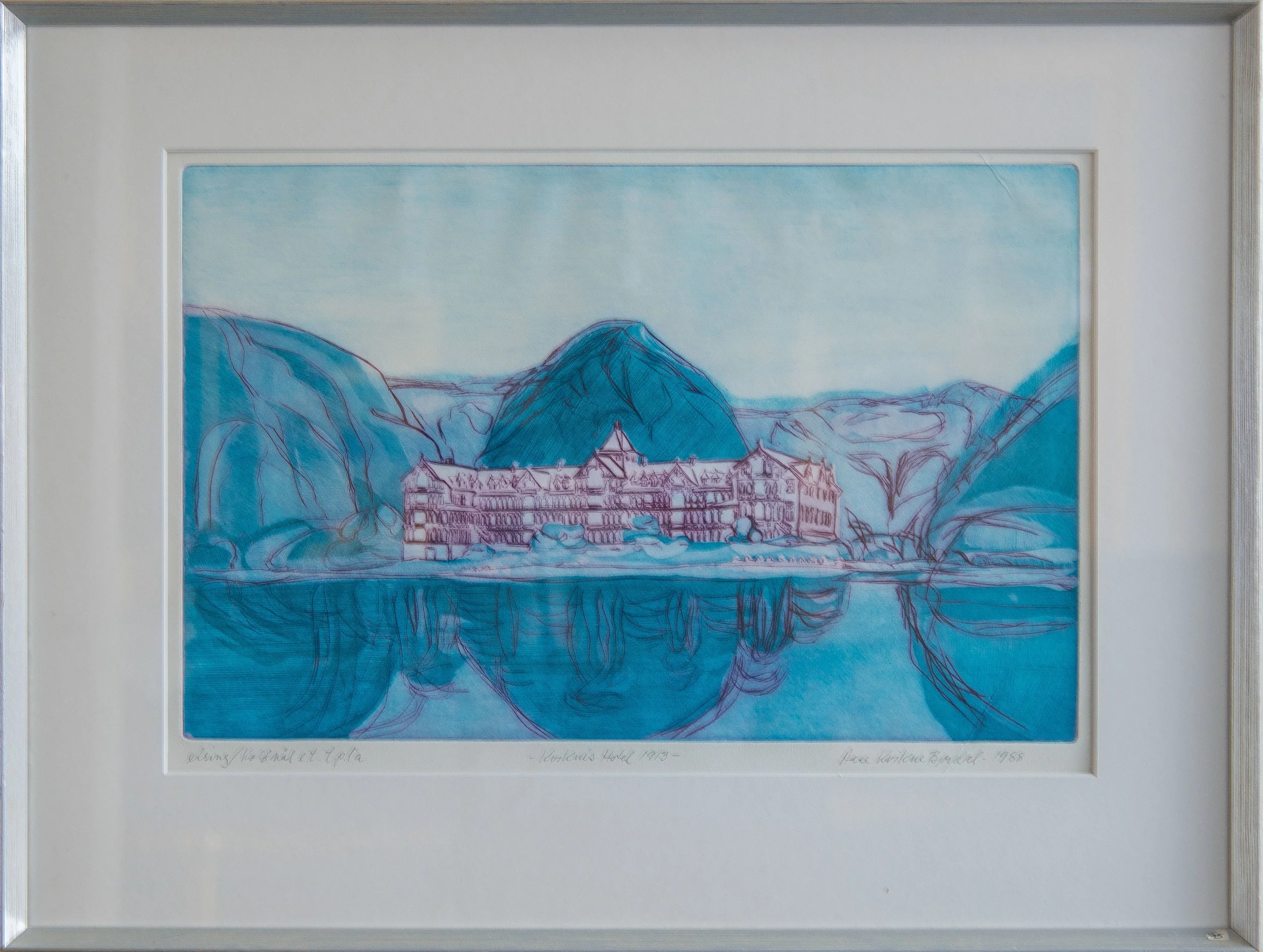
Aase Kvikne Bjordal - Kvikne's Hotel 1913
(1921 - 2009)
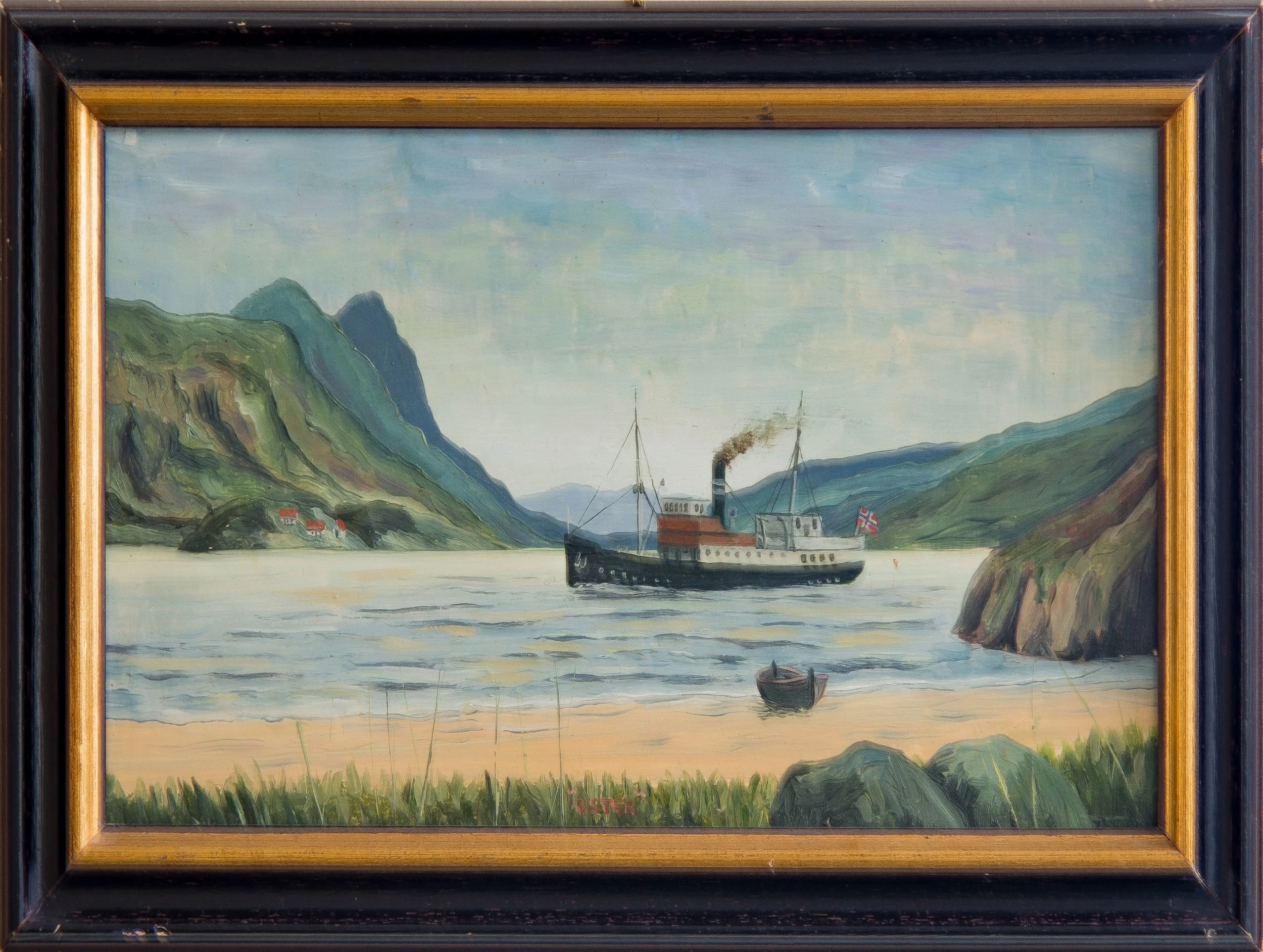
Bjordal was born and raised in Balestrand, and is the daughter of Sigurd and Marta Kvikne, who owned Kvikne's Hotel. She was educated at the State School of Arts and Crafts in Oslo, the Vestlandske kunstakademie in Bergen, and the Bergen School of Arts and Crafts.
Bjordal finds her motifs in the old rural environment. Techniques such as cold needle, aquatint, etching and serigraphy are well suited to these motifs. She has done many decorative assignments, and had many exhibitions.